Market Rules: Saudi Arabia Draws New Lines Around Camel Trade
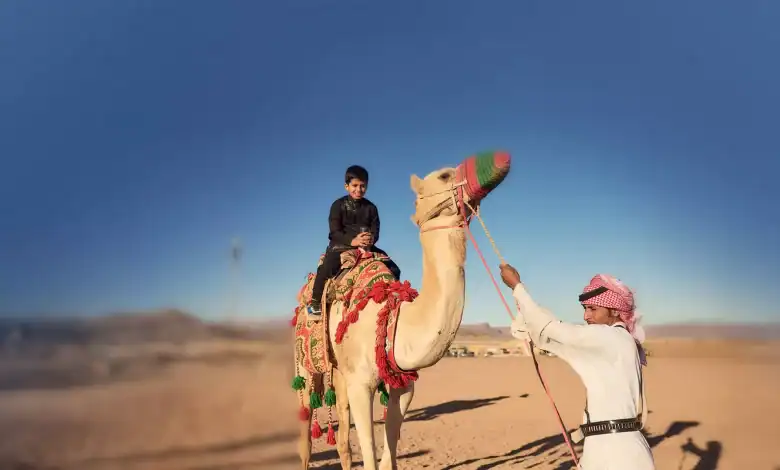
Few animals carry the cultural weight of the camel in Saudi Arabia, where it has evolved from an indispensable companion in the desert to a cherished emblem of the Kingdom’s heritage and an enduring symbol of resilience in the Arabian Peninsula.
That legacy is now being matched by a more defined regulatory framework. The Ministry of Environment, Water and Agriculture has approved new rules governing camel trading across the Kingdom.
Towards a More Traceable Trade
The rules are setting clearer parameters covering everything from sales and purchases to rentals and exchanges, bringing these transactions under a unified regulatory framework.
More significantly, the new framework seeks to bring greater structure to trading practices, safeguard the interests of owners and traders and strengthen the livestock sector, while reinforcing welfare standards for one of the Kingdom’s most celebrated animals.
A broader regulatory foundation takes center stage in the new regulatory system, bringing camel trading into closer alignment with Saudi Arabia’s agricultural, animal welfare and digital registration systems.
The rules, therefore, apply to individuals and entities involved in camel sales, purchases and trading, drawing on the Agriculture Law and its executive regulations, the GCC Animal Welfare Law and its implementing rules, as well as ministry procedures for electronic camel registration and management.
At a broader level, the framework aims to modernize camel trading by creating a more integrated system for documenting ownership and commercial transactions, while tightening compliance with health and biosecurity requirements.
Clear Terms, Clear Duties
For camel sales, the framework begins by bringing greater organization to the transaction itself from the validity of contracts and identification of individual animals to the prices agreed by sellers and buyers.
From there, the framework sets out responsibilities on both sides.
Sellers must complete the transfer of ownership, deliver the camels in the agreed condition and disclose their health status and any rights associated with them.
Buyers, meanwhile, are responsible for payment and receipt, as well as for ensuring compliance with requirements covering medical care, examinations, vaccinations, transportation and registration.
Tighter Auction Rules
As for camel auctions, the framework becomes even more specific. Temporary camel auctions must abide by approved ownership-transfer procedures, while details of the animals, sellers, buyers, prices and payment methods must be documented to strengthen traceability.
The condition of the animals is equally important. Camels showing signs of stress or illness cannot enter the sale, nor can those that have not completed approved vaccination programs, cannot be offered for sale.
More tellingly, auction records must carefully document the details of the camels, sellers and buyers, as well as prices and payment methods.
Apart from the auction floor, transporting camels must comply with livestock regulations and other supervisory requirements.
The framework further tightens oversight of movement, treating the transportation of camels without ministry approval as a violation subject to fines under the Agriculture Law and its executive regulations.
How Should Camels Be Treated?
Animal welfare is examined not only through vaccination and health requirements but also through clear boundaries governing the setting in which camels are displayed.
Markets, exhibitions and auctions must prohibit practices that provoke or disturb the animals, maintain appropriate distances and keep display areas clean.
That principle is supported by a reporting mechanism: cases of abuse or cruelty can be submitted through the ministry’s approved channels, with violations subject to legal measures.
Rental With a Record
Perhaps the boldest provision in the framework is this: renting out a camel does not sever its link to its original owner’s registry. The owner must be registered with the ministry and hold an active primary camel registry, while the rental agreement itself must be documented electronically and updated whenever an animal changes hands, location or registered details.
Crucially, the contracts must specify the rental period and value and meet health, biosecurity and vaccination requirements.
At the end of the rental, the camel returns to its original owner’s registry.
What Changes in an Exchange?
Camel exchanges will not sit outside the regulatory system. They also require electronic contracts, verified ownership and registration details, clear animal identification as well as disclosure of any rights attached to the animals.
What Happens When Rules Are Broken?
For those who fall outside the framework, the consequences can extend beyond the transaction itself. Registrations may be suspended, violations referred for further action and penalties imposed under the Agriculture Law and its executive regulations. Where applicable, government support may also be suspended or recovered.
Related Topics:
Camels to Carry Passports in Saudi Arabia’s New Initiative
Camel Riders Honor Eid Traditions in Tabuk’s Desert to Rhythmic Chants of Al-Hijini
Security Oasis Exhibition Warmly Welcomes Visitors at King Abdulaziz Camel Festival