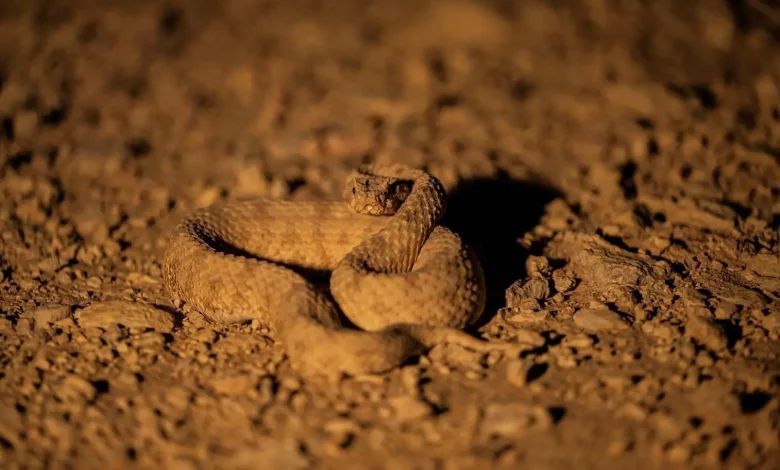
Hidden among the rugged, rocky landscapes of northern Saudi Arabia, a distinctive desert predator with an unusual appearance thrives in the harsh environment.
Field’s horned viper (Pseudocerastes fieldi), also known as the false horned viper, is a desert-dwelling species found across the Middle East.
Recorded in northern Saudi Arabia, the viper is remarkably adapted to life in some of the region’s most arid environments.
What Makes This Viper So Distinctive?
Field’s horned viper has a striking combination of physical characteristics that clearly distinguish it from other desert snakes.
Its broad, triangular head is remarkably demarcated from the neck, while its short snout adds to its distinctive profile.
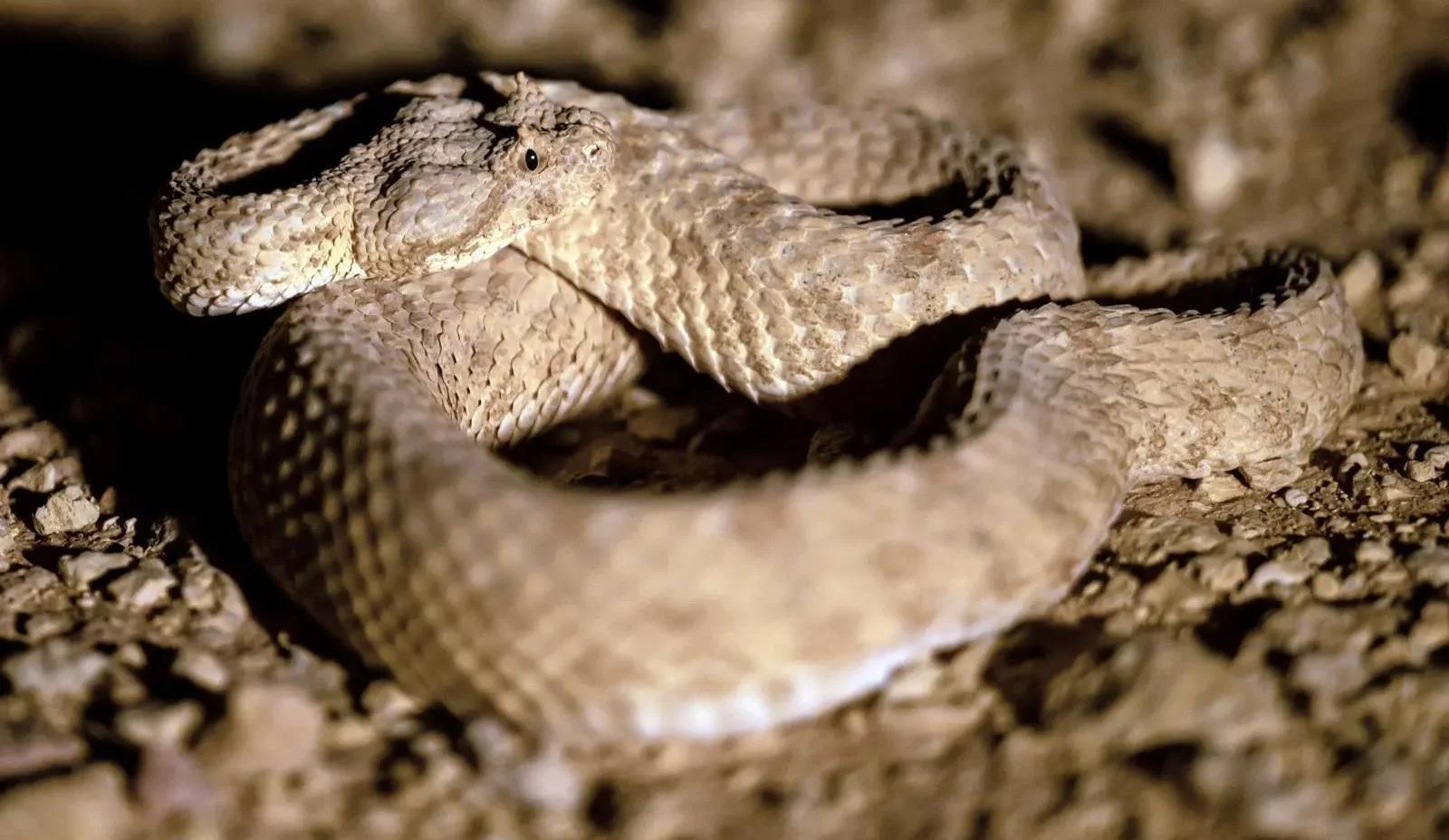
Above the eyes, clusters of small, overlapping scales rise into horn-like projections, creating one of the species’ defining morphological traits. Its tail ends in a sharply dark, nearly black tip.
Camouflaged by Nature
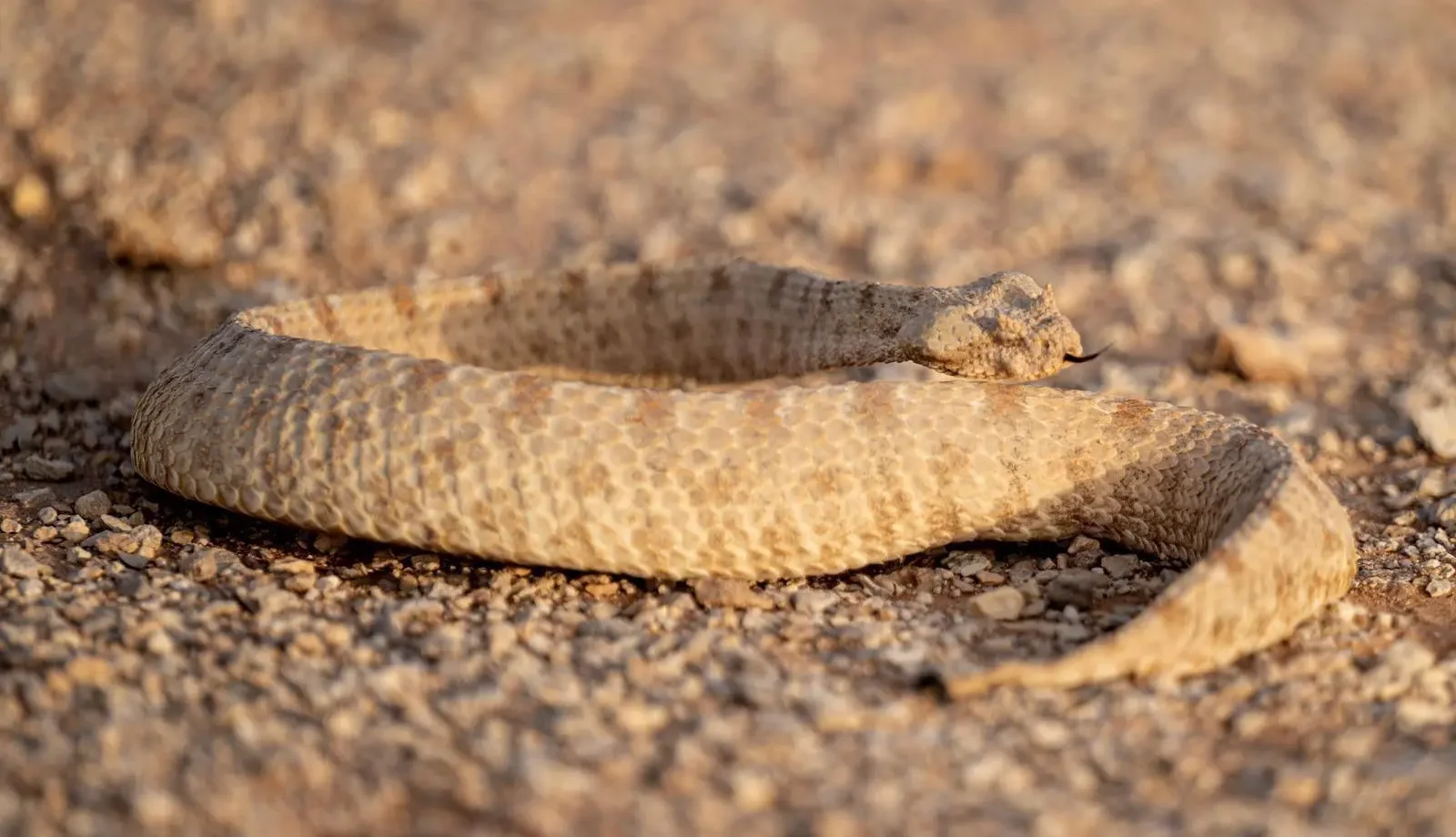
With an unmistakable appearance that closely echoes the desert terrain around it, the viper can be difficult to distinguish from its surroundings.
Through its brown and gray coloration, it closely reflects the tones of the soil and rocks, giving it an effective natural camouflage.

The species inhabits a variety of arid settings, including rocky, limestone, and basalt deserts, along with wadis and steppes, while having a clear preference for firm, rocky terrain rather than open sand dunes.
What Happens When the Viper Feels Threatened?
Despite its formidable appearance, Field’s horned viper is generally regarded as non-aggressive and depends largely on camouflage for protection.
However, when threatened, it can put on a striking defensive display, coiling its body, flattening its head, and producing a loud rasping hiss by rubbing its coils together. This strategy is known as stridulation.
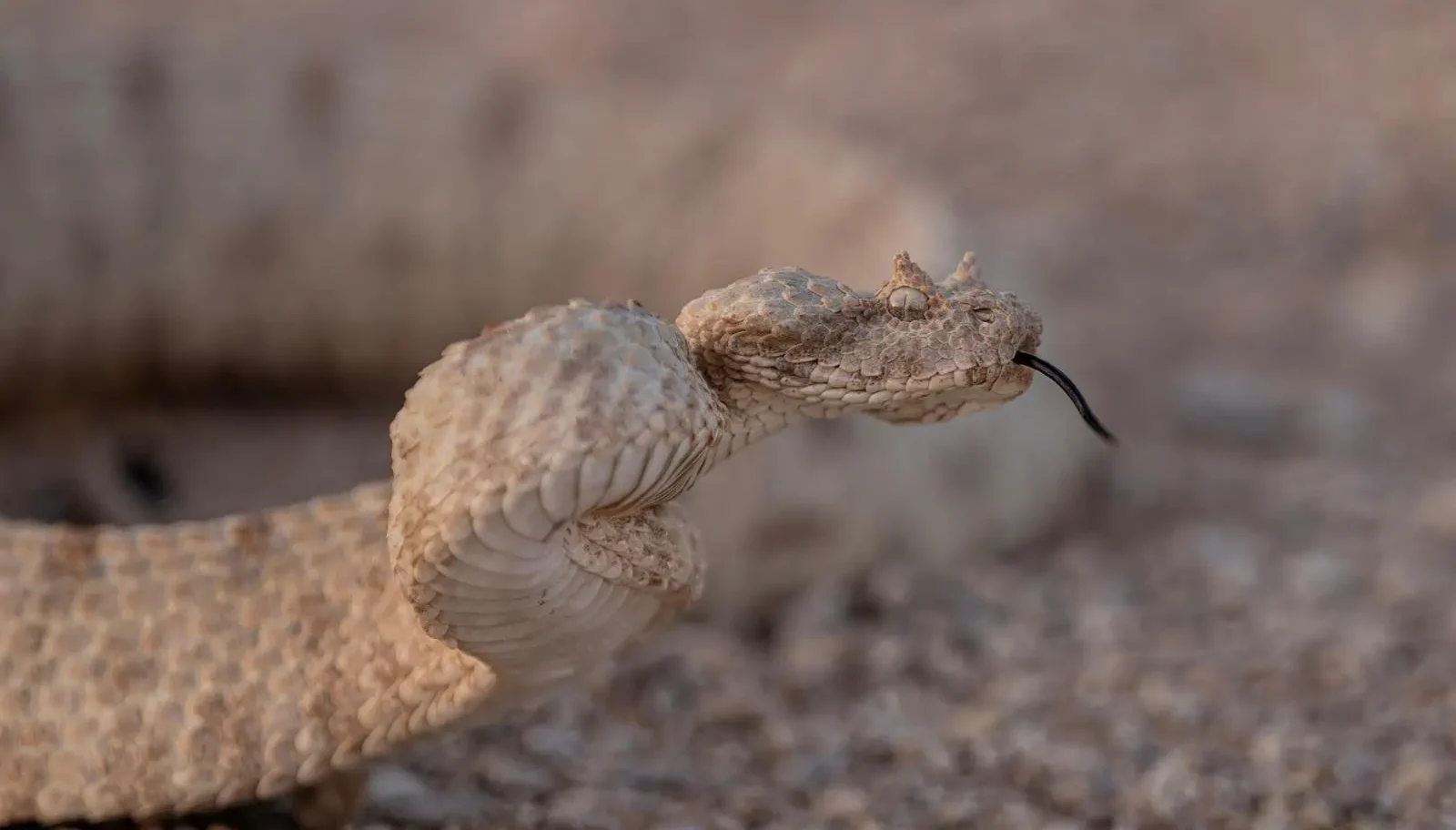
If the threat continues, the viper can strike rapidly and repeatedly, although its preference is to remain still and concealed.
The Desert’s Hidden Balancer
According to Adnan Khalifa, a member of the Aman Environmental Association involved in wildlife observation and documentation, the viper feeds basically on rodents, lizards, and birds with the ability of active hunting when prey is available.
Khalifa also emphasized that the species plays a pivotal role in preserving the biodiversity of desert ecosystems, contributing to maintaining their ecological balance in line with the Saudi Vision 2030.
What Should You Do If You Spot One?
Crucially, Khalifa urged caution when encountering the viper, warning against approaching, cornering, or attempting to handle the snake, while advising people to maintain a safe distance and avoid any action that could provoke it.
Rather, he urged individuals to calmly move away from the area, helping safeguard both people and the animal.
Related Topics:
Say Hello to Umm Quwaik: Saudi Arabia’s Silent Desert Guardian
Meet Neom’s Newest Wild Resident: The Striped Hyena Cub
Take a Look at the Chameleon: A Tiny Marvel of the Saudi Wild