
Energy & Sea Routes Security Prioritized: GCC, Russia Underline Regional Stability
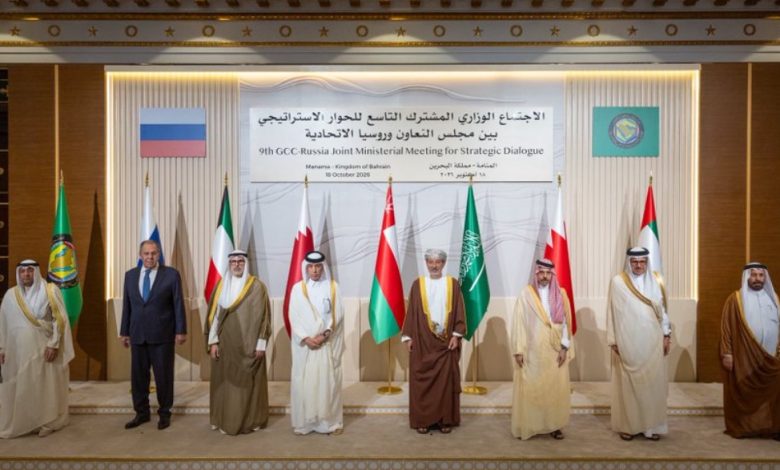
In Manama, the foreign ministers of the Gulf Cooperation Council (GCC) countries and Russia convened for the 9th Joint Ministerial Meeting of Strategic Dialogue.
Taking place at a critical juncture for regional stability, the meeting saw Gulf capitals and Moscow reiterate their aligned position on maintaining the security of global energy supplies and maritime chokepoints, as well as navigating crises through peaceful settlements.
GCC-Russia Consensus in Manama
Driving the News: Saudi Arabia’s Foreign Minister Prince Faisal bin Farhan joined the 9th Joint Ministerial Meeting of Strategic Dialogue between the GCC and Russia in Bahrain, alongside his Gulf counterparts, GCC Secretary-General Jasem Albudaiwi, and Russia’s top diplomat Sergey Lavrov, on October 18, 2026.
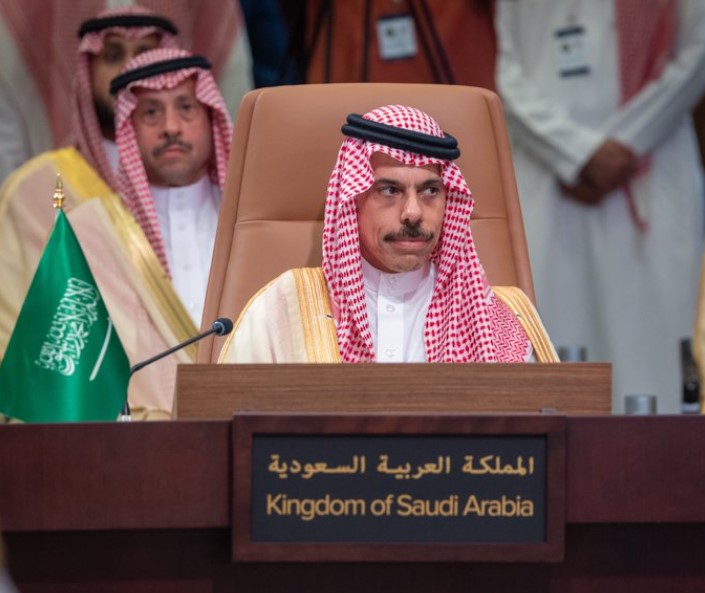
The Big Picture: The meeting focused on deepening GCC-Russian strategic partnership, intensifying consultation and coordination to resolve regional and international crises. Discussions centered on supporting efforts aimed at addressing disputes through diplomatic means.
Why It Matters: The ministerial summit took place at a critical time for the Gulf region and the world. The US-Iran conflict has triggered military tensions around strategic waterways. Iran has disrupted maritime navigation in the Strait of Hormuz, while the Iranian-backed Houthi militia has escalated attacks against Saudi civilian and energy facilities as well as the Bab al-Mandab Strait, sending shockwaves across global markets.
Seeking a Greater Russian Role
Between the Lines: GCC Secretary-General Albudaiwi urged Russia to leverage its UN Security Council permanent membership to play a more active role in urging Iran to comply with Resolution 2817 (2026). This entails ceasing its attacks against Gulf neighbors, respecting freedom of navigation, and engaging in serious dialogue with the GCC states based on the principles of good neighborliness, respect for sovereignty, and non-interference in internal affairs.
Zoom In: Albudaiwi outlined Iran’s violations against its Gulf neighbors since the start of the conflict. These included over 7,000 drone and missile attacks against airports, ports, power stations, water desalination plants, and energy facilities. The GCC chief also pointed to the Iranian-backed Houthi militia, which has escalated its aggression on Saudi Arabia, targeting airports, civilian objects, and energy facilities.

What He Said: “The GCC also calls upon the international community to adopt a firm and deterrent posture against the attacks targeting the Kingdom’s security and stability, condemning the threat they pose to regional peace and security and their violation of relevant UN Security Council resolutions, particularly Resolution 2722.” – Jasem Albudaiwi, GCC Secretary-General.
Energy Routes Under Threat
The Context: Albudaiwi highlighted threats posed by Iran and its proxies on freedom of navigation and maritime security around international waterways.
Iran has partially closed the Strait of Hormuz, through which around 20% of daily global oil and LNG supplies pass, attempting to impose transit fees. Meanwhile, its affiliated Houthi militia threatens shipping in the Red Sea and the Bab al-Mandab Strait, through which around 10% to 15% of all global trade passes annually.
He noted that these actions pose a direct threat to global energy security, food security, and international supply chains, calling for restoring maritime traffic in the Strait of Hormuz to its status prior to February 28, 2026, and for the full implementation of UNSC Resolution 2817 (2026).
What to Watch: In late July 2026, Saudi Arabia launched the Multinational Maritime Defense Coalition to address and deter the growing threats to maritime security, including attacks against commercial vessels, energy tankers, and naval infrastructure in the Bab al-Mandab Strait, the Red Sea, and the Gulf of Aden.
Russia’s Support for Gulf States
State of Play: Russia’s Lavrov, for his part, emphasized the importance of Gulf countries’ decisive participation in determining regional security arrangements, underscoring Moscow’s support for efforts aimed at preventing the region from sliding into a large-scale war.

In His Words: “We must give the Gulf states the decisive word and the firm decision in ensuring the security of the region.” – Sergey Lavrov, Russia’s Foreign Minister.
Bolstering GCC-Russian Ties
Go Deeper: Lavrov noted that Russia places great emphasis on strengthening the strategic dialogue with the Gulf states. This position was echoed by Albudaiwi, who voiced his aspirations for deepening joint GCC-Russian cooperation across the political, trade, cultural, educational, agricultural, health and energy sectors, in line with the framework of the Joint Action Plan between the GCC and the Russian Federation for 2023–2028.
The Anchor: GCC-Russian relations are grounded in the Memorandum of Understanding for Strategic Dialogue, signed in 2011, which laid an institutional framework for developing relations, conducting political consultations, and strengthening cooperation in areas of shared interest.
By the Numbers:
- $19 billion: Total trade volume between the GCC and Russia in 2025.
- 45%: The year-on-year increase in GCC-Russia trade in 2025.
- $4 billion: Saudi-Russian trade exchange.
- 40%: Surge in Saudi-Russian trade in 2025.
Saudi-Russian Engagements
The Big Picture: Saudi Foreign Minister Prince Faisal bin Farhan met with Lavrov on the sidelines of the GCC-Russia Joint Ministerial Meeting for Strategic Dialogue. The two officials explored bilateral relations and exchanged views on the recent regional developments, including the escalation in Yemen, ongoing threats to maritime navigation through the Strait of Hormuz and the Bab al-Mandab Strait, as well as efforts to maintain regional security and stability.
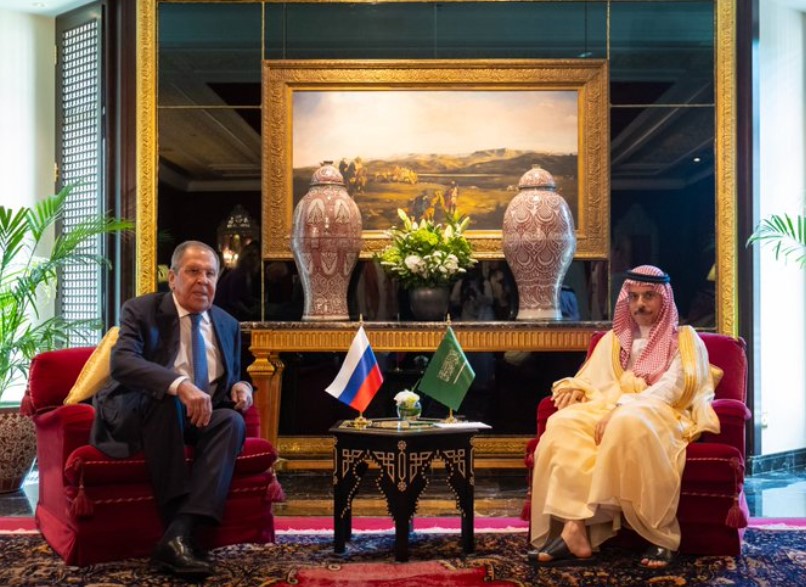
Catch Up Quick: Saudi Arabia and Russia share a century of bilateral ties. As two energy anchors, Riyadh and Moscow maintain close coordination to support the stability of global energy markets. Both countries co-chair the OPEC+ group, aimed at stabilizing the global crude oil market by balancing supply and demand.
Moreover, Saudi Arabia has played a vital mediation role in the Russia-Ukraine conflict, hosting several rounds of talks in Jeddah and Riyadh to discuss partial ceasefires, security of shipping in the Black Sea, and protection of energy infrastructure. The Kingdom also facilitated several prisoner exchanges between Moscow and Kyiv.
The Takeaway: The 9th GCC-Russia Joint Ministerial Meeting for Strategic Dialogue reinforces the GCC’s growing status as an indispensable global diplomatic bloc in a changing multipolar world. It underscores the strategic alignment among Saudi Arabia, GCC, and Russia on regional security and energy stability.