No Compromise on Jerusalem: Saudi Arabia Leads Rejection of Colombia’s Embassy Move
Saudi Arabia has rallied joint Arab-Islamic rejection of Colombia’s decision to relocate its embassy to Jerusalem in violation of the UN Security Council (UNSC) resolutions.
The Colombian move was viewed as an obstacle to international efforts aimed at achieving a just and lasting peace anchored in the implementation of the two-state solution – an Arab-backed plan envisioning an independent Palestinian state along the 1967 borders, with East Jerusalem as its capital, co-existing peacefully alongside Israel.
The 19-Nation Drive
Driving the News: The foreign ministers of Saudi Arabia, Palestine, Jordan, Indonesia, Pakistan, Türkiye, Algeria, Djibouti, Sudan, Syria, Somalia, Oman, Qatar, Kuwait, Lebanon, Libya, Malaysia, Egypt, and Yemen issued a joint statement on October 16, 2026, voicing their strong condemnation and unequivocal rejection of Colombia’s opening of its embassy in Jerusalem.
The Backstory: Colombia inaugurated its embassy in Jerusalem on October 14, one day after reinstating the terminated free trade agreement with Israel. The move, taken by the newly-elected far-right President Abelardo De La Espriella, overturns decisions taken by former President Gustavo Petro, who severed diplomatic relations with Israel in 2024 and halted coal exports in protest against Israeli actions in Gaza. La Espriella also recognized Israel’s sovereignty over the occupied Syrian Golan Heights in August 2026.
Jerusalem’s Status Safeguarded
The Big Picture: In their joint statement, the Arab and Islamic foreign ministers reiterated that any measure or decision aiming to alter the legal or historical status of occupied Jerusalem, or to recognize it as Israel’s capital, is null and void and has no legal effect.
The Legal Basis: The statement cited relevant resolutions released by the UN Security Council and General Assembly, namely UNSC Resolutions 476 (1980) and 478 (1980) which deem changes to Jerusalem’s status invalid and call on countries to relocate their diplomatic missions out of the city.
State of Play: The foreign ministers urged Colombia to reconsider and reverse this move, abide by international law, and avoid actions that undermine the Palestinian people’s rights, particularly their right to an independent, sovereign state with East Jerusalem as its capital.
Arab Alignment on Palestine
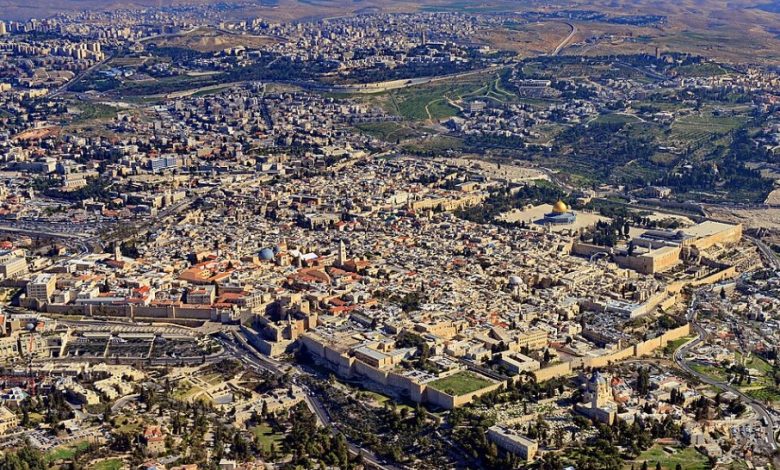
The Context: Jerusalem is home to Al-Aqsa Mosque (Al-Haram Al-Sharif) – the third holiest site in Islam. The Al-Aqsa compound has been a flashpoint since the Israeli occupation of East Jerusalem in June 1967, amid frequent raids by Israeli settlers, restrictions on Muslim worshippers, and Israeli claims of Jerusalem as its capital.
Between the Lines: Arab and Islamic countries have maintained a firm stance on Jerusalem’s status as the capital of Palestine, rejecting any unilateral moves that alter the city’s legal or historical status. This position was further reiterated at the Ministerial Meeting in Support of Jerusalem and Its Holy Sites, held in Jordan in early August 2026.
Saudi Arabia: The Staunch Defender
Zoom In: Saudi Arabia has been a strong advocate for the Palestinian people’s right to a sovereign and independent state along the 1967 borders, with East Jerusalem as its capital. During the Ministerial Meeting in Support of Jerusalem, Saudi Foreign Minister Prince Faisal bin Farhan reaffirmed the Kingdom’s categorical rejection of attempts to alter East Jerusalem’s legal, historical, and religious status quo, or to use freedom of worship narratives to justify new occupation-driven realities on the ground.
The Deep Dive: Riyadh has leveraged its diplomatic weight across multilateral platforms to mobilize regional and international support for the two-state solution, which forms the bedrock of Palestinian Statehood. The Kingdom has also categorically rejected expanding illegal Israeli settlements in the occupied West Bank and annexation efforts.
Key Initiatives:
- March 2002: Launched the Arab Peace Initiative which called for the normalization of relations between Arab states and Israel in exchange for a complete Israeli withdrawal from territories occupied in 1967, a just solution for Palestinian refugees, and establishment of an independent Palestinian State with East Jerusalem as its capital.
- September 2024: Launched the Global Alliance for the Implementation of the Two-State Solution, in partnership with Norway and the European Union (EU).
- July and September 2025: Co-chaired the High-Level International Conference for the Implementation of the Two-State Solution with France at the UN Headquarters, yielding the landmark New York Declaration.
The Impact: Many major Western countries, including France, the UK, and Canada, officially recognized the State of Palestine. Moreover, the New York Declaration has been established as the primary international roadmap toward a sovereign Palestinian State.
More recently, the UK imposed sweeping sanctions on trade with illegal Israeli settlements in the occupied West Bank, citing “ethnic cleansing” committed by settlers against Palestinians living there. The British move prompted 11 Western nations to follow suit and reiterate their support for the two-state solution.
The Bottom Line: The recent joint statement underscores Saudi Arabia’s unwavering commitment to international legitimacy and the protection of Jerusalem’s legal status against unilateral moves aimed at altering its status quo. It also solidifies the Kingdom’s position as a champion of regional peace and stability.