
Defending Holy Sites’ Sanctity: Riyadh Condemns Israeli Incursion at Al-Aqsa Mosque
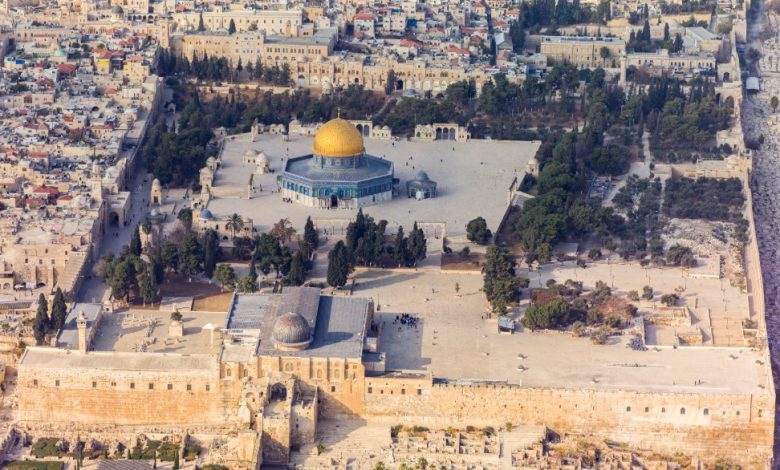
Saudi Arabia has voiced its strong condemnation of the storming of the Al-Aqsa Mosque compound by a far-right Israeli official and a group of settlers.
The Kingdom has firmly emphasized the status of East Jerusalem as the capital of Palestine, rejecting any attempts to alter the city’s legal and historical status quo or its historic Islamic and Christian identity. This approach is grounded in Saudi Arabia’s unwavering commitment to defending Islamic holy sites and advocating for Palestinian rights under international law.
Denouncing the Flagrant Violation
The Big Picture: Saudi Arabia’s Foreign Ministry issued a statement on Sunday, September 20, 2026, expressing Riyadh’s condemnation of the storming of the Al-Aqsa Mosque under the protection of Israeli forces as a “flagrant violation” and a “provocation” to millions of Muslims around the world.
The Kingdom urged the international community to act to stop such attacks that constitute a violation of international law and international humanitarian law.
What It Said: “Saudi Arabia reiterates its categorical rejection of the provocative practices and illegal and extremist acts of incitement and violence committed by Israeli occupation officials against Palestinians and the holy lands in occupied Palestine.” – Saudi Arabia’s Foreign Ministry.
Why It Matters: The Al-Aqsa Mosque (Al-Haram Al-Sharif) holds great sanctity for Muslims worldwide. It is the third holiest site in Islam. The Al-Aqsa compound has been a flashpoint since the Israeli occupation of East Jerusalem in June 1967, amid frequent raids by Israeli settlers and restrictions on Muslim worshippers.
Israel’s Provocative Acts
Driving the News: Far-right Israeli National Security Minister Itamar Ben-Gvir triggered a fierce backlash across Arab and Muslim countries after he stormed the Al-Aqsa compound (Temple Mount) in occupied East Jerusalem, alongside a group of settler and under Israeli police protection. The Israeli official performed Talmudic rituals in the eastern side of the site, observing a major Jewish religious holiday.
Go Deeper: Israeli Prime Minister Benjamin Netanyahu visited tunnels and excavation sites beneath Al-Aqsa and the Al-Buraq Wall (Western Wall), taking part in prayers there and sharing footage of the visit.
Arab Consensus on Jerusalem
State of Play: The Israeli provocations sparked outrage across Arab and Muslim capitals. Alongside Saudi Arabia, Jordan, Qatar, Kuwait, and the Gulf Cooperation Council (GCC) issued separate statements denouncing Ben-Gvir’s storming of the holy site. They described this act as “provocative and unlawful,” warning that it undermines peace efforts and risks fueling further tensions.
What to Know: Jordan plays custodial role over the Islamic holy sites in Jerusalem, with its Jerusalem Islamic Waqf, affiliated with Jordan’s Ministry of Awqaf, Islamic Affairs and Holy Places, taking charge of administration and access to Al-Aqsa.
Saudi Arabia’s Stance on East Jerusalem
Between the Lines: Saudi Arabia maintains a firm stance on East Jerusalem as the capital of Palestine and the fundamental pillar of any just and sustainable peace, rejecting all unilateral measures aimed at changing reality on the ground.
The Context: During the Ministerial Meeting in Support of Jerusalem and Its Holy Sites, held in Jordan in early August 2026, Saudi Foreign Minister Prince Faisal bin Farhan reaffirmed the Kingdom’s categorical rejection of attempts to alter East Jerusalem’s legal, historical, and religious status quo, or to use freedom of worship narratives to justify new occupation-driven realities on the ground.
Furthermore, the Saudi Foreign Minister reiterated that justifying or inciting violence on the basis of religious or ideological claims represents a grave departure from the shared values of the Abrahamic faiths and directly undermines the principles of equal human dignity.
Saudi Commitment to Peace
The Backstory: Riyadh has been a steadfast advocate for Palestinian rights, anchored in the establishment of a sovereign, independent Palestinian State along the 1967 borders. To this end, the Kingdom has mobilized regional and international efforts to support Palestinian statehood.
Saudi Arabia’s Key Initiatives:
- March 2002: Launched the Arab Peace Initiative which called for the normalization of relations between Arab states and Israel in exchange for a complete Israeli withdrawal from territories occupied in 1967, a just solution for Palestinian refugees, and establishment of an independent Palestinian State with East Jerusalem as its capital.
- September 2024: Launched the Global Alliance for the Implementation of the Two-State Solution, in partnership with Norway and the European Union (EU).
- July and September 2025: Co-chaired the High-Level International Conference for the Implementation of the Two-State Solution with France at the UN Headquarters, yielding the landmark New York Declaration.
Zoom In: Saudi Arabia has spearheaded Arab and Islamic nations’ rejection of Israel’s E1 settlement project which aims to divide the occupied West Bank into north and south, severing the territorial contiguity of a future Palestinian state. It will also separate East Jerusalem from the rest of the West Bank.
The Impact: Riyadh’s championing of the two-state solution has driven many Western countries, including France, the UK, and Canada, to officially recognize the State of Palestine, while cementing the New York Declaration as the primary international roadmap toward a sovereign Palestinian State.
In a recent milestone, the UK announced sweeping sanctions on trade with illegal Israeli settlements in the occupied West Bank, accusing settlers of committing “ethnic cleansing” against Palestinians living there. The British move prompted 11 Western nations to follow suit and reiterate their support for the two-state solution.
The Bottom Line: Recognizing that sustainable peace requires respecting religious sanctity, enforcing international accountability, and ending violations against the Palestinian people, Saudi Arabia’s defense of the Al-Aqsa Mosque is a core pillar of its foreign policy.