Saudi Arabia Extends Global Economic Leadership as IMF Panel Warns of Rising Risks
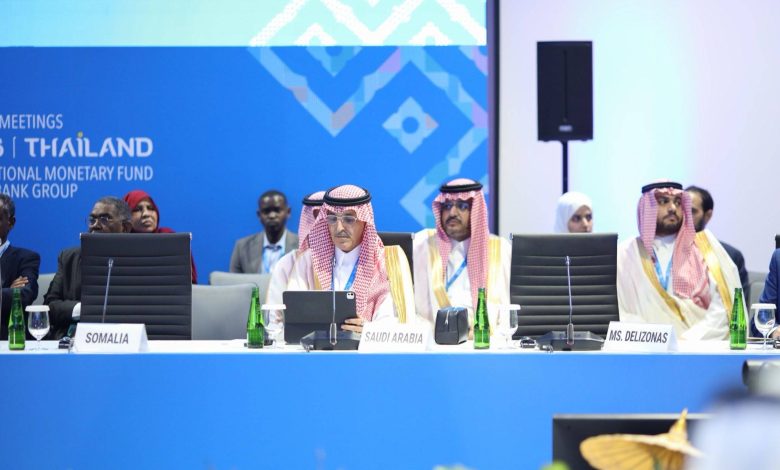
Driving the news: Saudi Finance Minister Mohammed Al-Jadaan says wars and supply disruptions are raising risks for the global economy. He chairs the International Monetary and Financial Committee (IMFC), the International Monetary Fund’s top advisory body.
Why it matters: Prolonged conflicts carry heavy human and economic costs. Moreover, they push up prices, and the poorest and most fragile countries feel the pressure first. Al-Jadaan therefore called for stronger economic and financial stability, closer international cooperation and an end to conflicts. In his view, those steps offer the surest route to sustainable growth.
The chair’s statement from the committee’s 54th meeting came out in Bangkok on Saturday. It struck a measured tone. The global economy absorbed the latest string of shocks better than forecasters expected. However, the safety margins that cushioned those shocks have worn away. As a result, the committee said its resilience no longer comes with any guarantee.
Furthermore, the statement flagged several threats. Escalating conflicts and trade tensions could disrupt vital trade routes. They could also lift prices for basic commodities, including refined energy products, and sharpen risks to energy and food supplies. Rising sovereign bond yields in systemically important economies could tighten global financial conditions. Many countries already carry high public debt and face large refinancing needs.
Meanwhile, advances in artificial intelligence (AI) are boosting investment and trade. They could also raise productivity. Gains remain uneven, though, and low-income and fragile states risk falling further behind.
Fiscal discipline, Energy Security and Free Navigation
Consequently, the committee urged governments to repair public finances without delay. It called for steady spending and revenue measures, backed by credible medium-term fiscal frameworks. At the same time, it urged leaders to shield vulnerable groups and protect priority investments that lift productivity and growth.
On monetary policy, central banks stay committed to price stability. They will keep adjusting policy as data evolves and explain their decisions clearly. The committee called central bank independence a cornerstone of policy credibility and stable inflation expectations.
Zoom in: On energy, the committee stressed secure, reliable energy flows and respect for freedom of navigation. It described both as essential to global economic stability. Members also reaffirmed their April 2021 exchange rate commitments.
In addition, the committee welcomed the “Bangkok Blueprint.” The initiative strengthens safeguards in digital finance, builds resilience against cyberattacks and advances the fight against digital fraud. The committee also backed private-sector reforms. Likewise, it urged countries to use AI and digital transformation to lift productivity while they manage the risks.
On debt, members pressed for faster, more orderly and more predictable sovereign debt restructurings, including under the Common Framework. They also urged all creditors, private lenders included, to improve transparency.
By the numbers:
- 54th: meeting of the IMFC, held in Bangkok.
- 191: IMF member countries the committee represents.
- 4 January, 2024: start of Al-Jadaan’s initial three-year term as chair.
- January 2028: new end date after the one-year extension.
- 15+ years: how long it has been since the IMF last saw quota and governance reforms as significant as the Diriyah Guiding Principles, according to Al-Jadaan.
- 2008: year the IMF agreed its current quota formula.
- 16th and 17th: the General Reviews of Quotas the committee discussed.
- April 2027: the next IMFC meeting, in Washington, D.C.
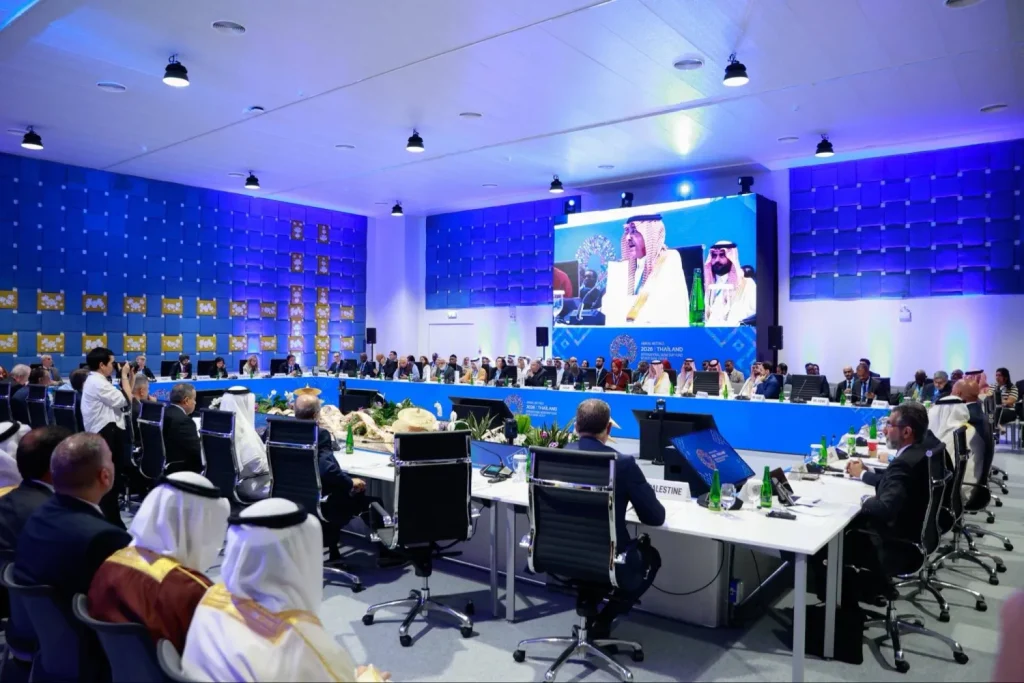 Saudi Arabia’s Expanding Global Role
Notably, the committee praised Saudi Arabia’s leadership and welcomed Al-Jadaan’s one-year extension as chair. Members first picked him in December 2023 for a term that began in January 2024. At the time, he said the choice reflected the Kingdom’s “pivotal role it plays in promoting international multilateral efforts.”
His record on the world stage supports that view. He chaired the G20 finance track during Saudi Arabia’s 2020 presidency, a year of unprecedented global challenges. Saudi Arabia also leads the committee’s deputies, and Dr. Ryadh Alkhareif chaired their sixth meeting on 29 September, 2026, which prepared the Bangkok talks.
The big picture: Saudi Arabia has used its chairmanship to push IMF reform. The April 2025 Diriyah Declaration asked the IMF Executive Board to draft general principles on quota and governance reform, and the Fund published the Diriyah Guiding Principles in April 2026. Al-Jadaan called them among the most significant IMF reforms in more than 15 years. In Bangkok, the committee said those principles will anchor future quota and governance talks, including the 17th General Review.
Beyond reform, Riyadh promotes regional stability. In April, Al-Jadaan pointed to unprecedented Gulf economic integration and said the region’s shared infrastructure helps protect global markets. He also stressed the strength of the Saudi economy and its steady, balanced growth under Vision 2030. Meanwhile, the Kingdom’s delegation to the Bangkok meetings included the Saudi Central Bank governor and the Saudi Fund for Development’s chief executive, which underlines Riyadh’s focus on both financial stability and development support.
At the Fund itself, the committee welcomed the Managing Director’s global policy agenda and a package of reviews that strengthen oversight, debt analysis, lending and capacity building. It urged swift, even-handed implementation. It also called on members to finish domestic approvals for the 16th review’s quota increase without further delay. Finally, it asked the IMF to improve the representation of women and regions among its staff and leadership.
What’s next: The IMFC meets again in Washington, D.C., in April 2027. Until then, Saudi Arabia will keep steering the committee as it pushes for steadier public finances, secure energy flows, open sea lanes and a stronger IMF.