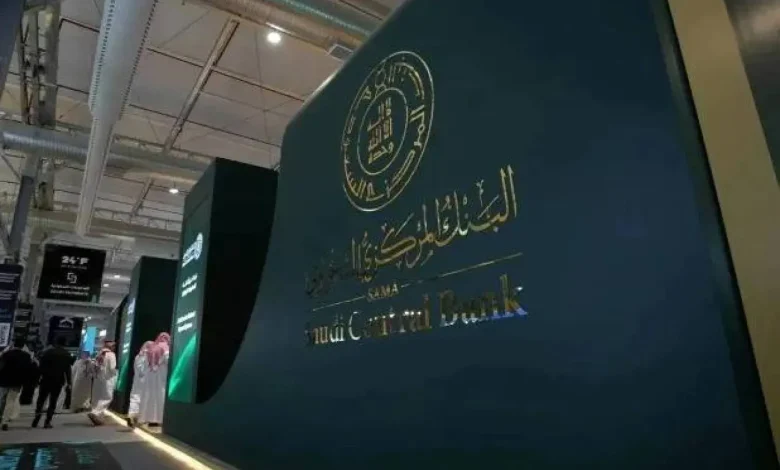
Driving the news: Net foreign assets at the Saudi Central Bank (SAMA) rose 3.73% year on year at the end of September. They reached about $442.69 billion (SAR 1.660 trillion), according to SAMA’s monthly survey. A year earlier, the figure stood at $426.77 billion (SAR 1.600 trillion).
Why it matters: Foreign assets support the riyal’s peg to the US dollar. They also give the Kingdom a deep financial cushion as it funds Vision 2030 projects. Moreover, the annual gain shows that SAMA’s external position remains solid.
The big picture: On a monthly basis, net foreign assets slipped 4.6% from August’s $464.14 billion (SAR 1.740 trillion). The figure has eased for three straight months. September’s level is the lowest since December 2025, when it stood at $436.59 billion (SAR 1.637 trillion). Even so, the balance remains well above its level of a year ago.
Foreign Securities Lead the Annual Gain
Zoom in: Wider SAMA data adds useful context. Total SAMA assets stood at SAR 1.94 trillion ($517.59 billion) at the end of August, according to the analysis of the bank’s monthly statistics. That figure sits 2.08% below the SAR 1.982 trillion ($528.57 billion) recorded a year earlier.
However, the mix of assets shifted toward longer-term holdings. SAMA’s investments in foreign securities jumped 17.31% year on year to SAR 1.16 trillion ($309.7 billion). They now account for about 60% of total assets. Meanwhile, foreign currencies and gold fell 5.21% to SAR 274.84 billion ($73.29 billion).
Earlier figures point the same way, as reports revealed that the Kingdom’s reserve assets abroad reached SAR 1,854.6 billion ($494.56 billion) in June 2026. That marked a 1% rise from May. Net foreign assets also climbed 8% year on year, or SAR 138.3 billion ($36.88 billion), in that month. Foreign currency reserves made up about 95% of the total. In addition, the Kingdom’s gold reserve has stayed at SAR 1.62 billion ($432 million) since February 2008.
By the numbers:
- Net foreign assets (end-September 2026): $442.69 billion (SAR 1.660 trillion), up 3.73% year on year from $426.77 billion (SAR 1.600 trillion).
- Monthly change: down 4.6% from $464.14 billion (SAR 1.740 trillion) in August.
- Lowest level since: December 2025, at $436.59 billion (SAR 1.637 trillion).
- Monetary base: $117.6 billion (SAR 440.99 billion), up about 3.7% from $113.36 billion (SAR 425.11 billion) a year earlier.
- Liabilities to the government: $86.02 billion (SAR 322.56 billion), down 18.4% from $105.41 billion (SAR 395.28 billion).
- Total SAMA assets (end-August 2026): $517.59 billion (SAR 1.941 trillion), down 2.08% from $528.57 billion (SAR 1.982 trillion).
- Foreign securities holdings (end-August 2026): SAR 1.16 trillion ($309.7 billion), up 17.31% year on year.
Monetary Base Grows, Government Liabilities Fall
The monetary base rose about 3.7% year on year at the end of September. It reached $117.6 billion (SAR 440.99 billion), compared with $113.36 billion (SAR 425.11 billion) in September 2025. On a monthly basis, the base eased from August’s $118.27 billion (SAR 443.52 billion).
The monetary base has three components: deposits at the central bank, cash in vault, and currency circulating outside banks. At the end of August, deposits from local banks totaled $46.46 billion (SAR 174.23 billion). Cash in vault stood at $5.45 billion (SAR 20.45 billion). Currency circulating outside banks reached $66.36 billion (SAR 248.84 billion).
SAMA’s liabilities to the government also fell. They dropped 18.4% year on year to $86.02 billion (SAR 322.56 billion), compared with $105.41 billion (SAR 395.28 billion) a year earlier. On a monthly basis, they declined 9.87% from August’s $95.44 billion (SAR 357.9 billion). As a result, the central bank now carries lower obligations toward the government than it did a year ago.
What’s next: SAMA’s assets also eased 2.08% year on year at the end of August, to $517.59 billion (SAR 1.941 trillion). They include the cash reserve cover, which covers foreign currency and gold, cash in vault, deposits with banks abroad, and investments in foreign securities, plus other assets.
Analysts will now watch SAMA’s October survey. It will show whether net foreign assets stabilize after three monthly declines. Meanwhile, the sharp rise in foreign securities holdings signals that SAMA continues to channel its reserves into longer-term global investments. Overall, the annual gain in net foreign assets, the growing monetary base, and the lower government liabilities all point to a stable monetary position.