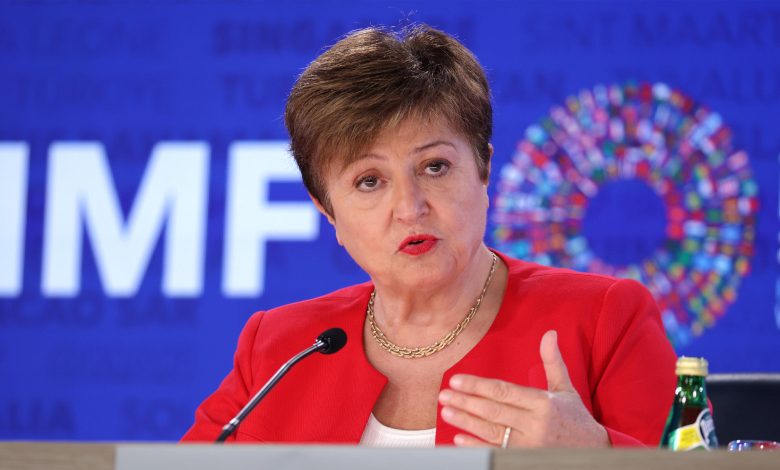
Driving the news: International Monetary Fund (IMF) Managing Director Kristalina Georgieva warned on Wednesday that the recent attacks on Saudi Arabia could hurt economies far beyond the Gulf. She spoke at a press conference during the IMF and World Bank Annual Meetings in Bangkok.
“The Saudi economy is important for the region and the world,” Georgieva said. She added that recent developments could carry “potential negative repercussions that affect everyone, everywhere.”
Why it matters: Saudi Arabia anchors global energy supply. As a result, any threat to its output, exports or shipping routes raises costs for importers worldwide.
Zoom in: The warning comes as energy flows and shipping across the region face heavy pressure. Supply disruption lifts energy, trade and business costs. Economies that rely on imported oil and gas feel the strain most.
Reuters reported that finance officials arrived in Bangkok under the shadow of the Middle East war and a major energy supply shock. In addition, about 18,000 people registered for the meetings, which is 4,000 more than the last off-site gathering in Morocco in 2023.
Why Saudi Energy Security Carries Global Weight
Saudi Arabia plays a central role as a global energy hub. The Kingdom exports crude on a scale few countries match. It also ships refined products to international buyers.
The war on Iran, which began in late February, has tested that role. The conflict has choked traffic through the Strait of Hormuz, which carried about 15 million barrels per day of crude before the fighting. In response, Riyadh turned to its East-West Pipeline, also known as Petroline. The 1,200-kilometre line, which Saudi Arabia built in 1981, links Abqaiq in the Eastern Province to the Red Sea port of Yanbu. Crucially, it bypasses Hormuz entirely.
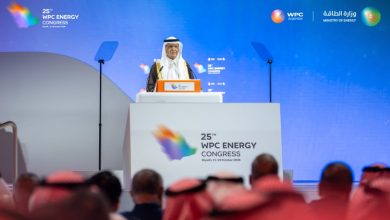
Petroline has proved its value. Energy Minister Prince Abdulaziz bin Salman said on 6 October that flows had reached 5.8 million barrels per day. That figure sits close to the pipeline’s maximum capacity of 7 million barrels per day.
The route did face a test. Drone attacks on 11 September forced the Kingdom to shut the line as a precaution and halt loadings at Yanbu. Riyadh blamed Iraqi militias for the strikes. Saudi Arabia then restarted operations, and crude shipments resumed after roughly 17 days.
The recovery has moved quickly. Kpler data show Saudi crude exports reached 6 million barrels per day in September, the highest level since the war began. That figure sits nearly 80% above August. Meanwhile, Bloomberg reported that Yanbu exports have reached about 5 million barrels per day at their peak, with another 700,000 to 900,000 barrels of refined products on top. Analysts credit this bypass with helping to keep oil prices from spiking even higher.
The IMF has taken note of this resilience. In April, the Fund ranked Saudi Arabia, Oman and the UAE among the Gulf economies least affected by the war. It pointed to the availability of alternative export routes. Furthermore, the IMF’s July Article IV report called Saudi public debt sustainable and sovereign risk low. The report also cited ample central bank reserves, strong banking buffers and a new Public Investment Fund strategy for 2026-2030 that expands the private sector’s role.
By the numbers:
- 8 million barrels per day: Petroline flows on 6 October, against a 7 million capacity.
- 6 million barrels per day: Saudi crude exports in September, nearly 80% above August (Kpler).
- 15 million barrels per day: Crude that crossed the Strait of Hormuz before the war.
- -0.3% in 2026, then 6.3% in 2027: IMF forecast for Middle East and Central Asia economies.
- -3.3% in 2026, then 7.9% in 2027: IMF forecast for Saudi Arabia, versus 12.8% from the Saudi Ministry of Finance for 2027.
- About $110 (SAR 412.5) per barrel: Brent crude in early April, against roughly $70 (SAR 262.5) before the war began on 28 February.
- $20 billion to $50 billion (SAR 75 billion to SAR 187.5 billion): The IMF’s April estimate of near-term demand for Fund support because of the war.
- 18,000: People registered for the Bangkok meetings.
The IMF Outlook: a Dip, Then a Rebound
The IMF’s latest forecasts, released on Tuesday, show the scale of the regional shock. The Fund expects Middle East and Central Asia economies to contract by 0.3% in 2026. It then projects growth of 6.3% in 2027. This path reflects today’s crisis pressure and an assumed recovery as disruptions ease and energy and trade flows return.
However, the effects differ across the region. Exposure to shipping disruption and the ability to keep exporting decide who suffers most. Saudi Arabia benefits from the second factor.
For the Kingdom, the IMF now projects a 3.3% contraction in 2026. It also lifted its 2027 growth forecast to 7.9%. Saudi Arabia’s Ministry of Finance sees an even stronger rebound. Its preliminary budget statement projects growth of 12.8% in 2027.
Still, both forecasts rest on one assumption. Production and exports must regain momentum as shipping disruption fades. Therefore, the speed and size of the recovery depend on the security situation and on a return to normal energy and trade flows.
The big picture: Georgieva has stressed all year that shocks now arrive more often and that no clean return to the pre-war order exists. Saudi Arabia’s pipeline network, reserves and diversified economy give it a buffer that many importers lack. Even so, her message on Wednesday was clear. Energy security in the Kingdom directly shapes prices, inflation and growth everywhere.
What’s next: Georgieva joins US Federal Reserve Chairman Kevin Warsh for a public event in Bangkok on 16 October. Markets will also watch Petroline flows and Yanbu loadings closely in the coming weeks.