10 Million Barrels a Day: Inside Saudi Arabia’s Plans to Insulate Global Energy Markets
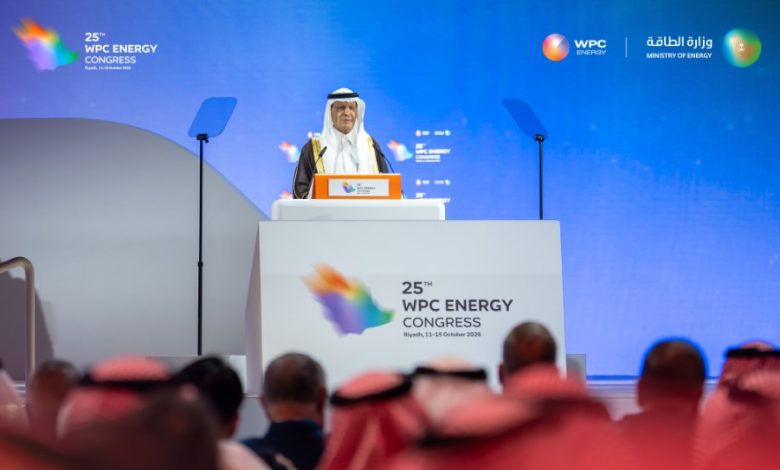
As energy leaders and policymakers from around the world gather in Riyadh, Saudi Arabia has outlined its vision for a more resilient energy infrastructure that can withstand geopolitical disruptions.
During the 25th WPC Energy Congress, Saudi Energy Minister Prince Abdulaziz bin Salman and Aramco President and CEO Amin Nasser unveiled the Kingdom’s ambitious plans to expand its pipeline network and export routes, underscoring Saudi Arabia’s commitment to maintaining the stability of global energy supply.
East-West Pipeline Expansion
Driving the News: Speaking at the 25th WPC Energy Congress in Riyadh, Prince Abdulaziz bin Salman announced that the Kingdom is studying plans to increase the capacity of the East-West Pipeline to 10 million barrels per day within two to three years.
These remarks were echoed by Aramco’s Nasser, who noted that the company, alongside the Ministry of Energy, was considering additional crude export routes and expanded overseas storage capacity.
The Big Picture: Taking place in Saudi Arabia for the first time, the WPC Energy Congress addresses key challenges facing the future of energy, including security and reliability of supply, global markets and investment, technological innovation, sustainability, and human capital development.
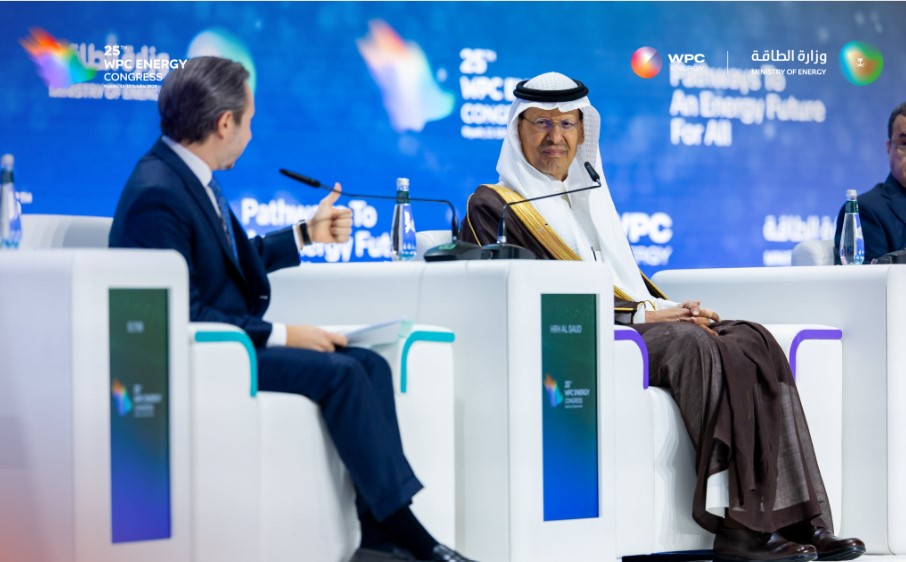
Why It Matters: Expanding overland energy infrastructure acts as an operational shield for Saudi exports, insulating them from regional maritime bottlenecks, such as the Strait of Hormuz.
In His Words: “The word fear does not exist in the Saudi dictionary. We, Saudis, are fearless, combatant, and determined. We shall prove to the world that whatever we are going through, we will overcome it.” – Prince Abdulaziz bin Salman, Saudi Arabia’s Energy Minister.
The Shock Buffer
Zoom In: Prince Abdulaziz highlighted the significance of the East-West Pipeline and its vital role in providing an alternative route for oil exports that bypasses the Strait of Hormuz, maintaining the steady flow of oil supplies during regional tensions.
The Context: The East-West Crude Oil Pipeline, also known as Petroline, is a 1,200-km-long pipeline that runs from the Abqaiq oilfield in the Eastern Province to Yanbu along the Red Sea coast. In response to maritime disruptions in the Arabian Gulf and the Strait of Hormuz, the Kingdom leveraged the pipeline to a maximum capacity of 7 million barrels per day (bpd) in the first half of 2026.
Resilience at the Core
State of Play: The Saudi officials emphasized resilience as the driving force behind the Kingdom’s high performance during the recent crisis. In this regard, Aramco’s CEO noted that resilience must be designed, engineered, and built long before a crisis. It is based on rigorous facility standards, the operational flexibility of spare capacity, diverse export routes, and the digital protection required in an age of cyber vulnerability.
Flashback: Drone attacks launched by Iranian-backed militias in Iraq targeted the East-West Pipeline in the Riyadh and Madinah regions on September 10, 2026, resulting in injuries and the temporary shutdown of the pipeline as a precautionary measure. As of October 6, Aramco has restored the pipeline’s capacity to 5.8 million bpd.
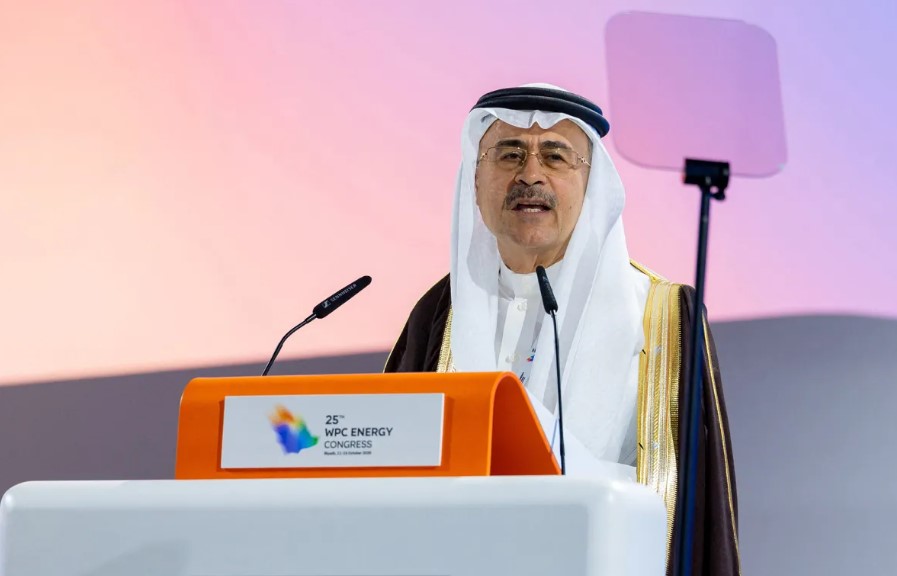
Shared Responsibility: While Saudi Arabia invests heavily in protecting energy supplies, Nasser warned that the implications of attacks on these supplies reverberate across the global economy. He stated that protecting energy supplies, infrastructure, and routes requires collective international efforts, rather than relying on a single nation.
What He Said: “Guided by the Kingdom’s visionary leadership, we have been helping to build resilience at home and deliver reliability abroad through decades of aligned choices.” – Amin Nasser, Aramco President and CEO.
Grid Transformation
Between the Lines: Nasser reaffirmed Aramco‘s plans to achieve an 80% increase in sales-gas production capacity by 2030, compared to 2021 production levels. He also highlighted the Kingdom’s ambitions to ramp up solar and wind power, diversify electricity supplies, and help lower emissions under the National Renewable Energy Program.
The Target: Saudi Arabia aims to reach the goal of 50% natural gas and 50% renewable energy for domestic electricity generation by 2030.
Technology Investment: According to Nasser, Aramco is investing in sustainable energy technologies, including hydrogen, Carbon Capture, Utilization, and Storage (CCUS), circular carbon technologies, AI, and other advanced digital technologies.
The Takeaway: Saudi Arabia’s robust infrastructure and resilience establish its position as the world’s most reliable energy supplier, maintaining global energy stability and advancing economic growth under Vision 2030.