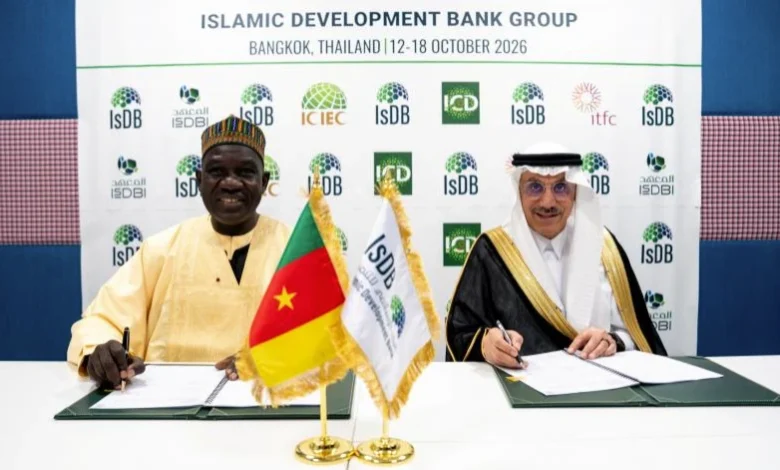
The Islamic Development Bank (IsDB) is supporting Cameroon’s efforts to reinforce regional connectivity with €212.35 million ($238 million) in financing for the Douala–Bafoussam Road Rehabilitation Project, which targets a key transport corridor linking the country’s Littoral and West regions.
IsDB Group Chairman Muhammad Al-Jasser and Alamine Ousmane Mey, Cameroon’s Minister of Economy, Planning and Regional Development and the bank’s governor for the country, signed the agreement on the sidelines of the World Bank Group–International Monetary Fund Annual Meetings in Bangkok.
Building Local Economies
Remarkably, the rehabilitation is poised to deliver benefits beyond the transport network, enhancing economic links between Cameroon’s regions and its wider trading network. By boosting connectivity and streamlining the movement of goods through the Port of Douala, the project seeks to lower transportation costs, facilitate access to domestic and international markets, and multiply economic opportunities for communities along the corridor, according to the IsDB.
The project also features the rehabilitation of 218 kilometers of national roads and 108 kilometers of feeder roads, as well as upgrades to essential social and economic infrastructure.
At a broader level, planned improvements include classrooms, health centers, water facilities, markets, and agricultural facilities, extending the investment’s scope beyond transport to the services and infrastructure that sustain local communities and livelihoods.
How Is the IsDB Supporting Cameroon’s Development?
The latest financing agreement reflects the longstanding partnership between the IsDB and Cameroon, with the bank maintaining an active portfolio across energy, transport, and agriculture.
Commenting on the partnership, IsDB Group Chairman Muhammad Al-Jasser noted that financing approvals had exceeded Cameroon’s target.
He also underscored the importance of accelerating project implementation to translate approved financing into tangible development outcomes, emphasizing the group’s commitment to advancing sustainable and inclusive growth in the country.
Cameroon’s partnership with the IsDB dates back to 1977. Since then, the IsDB has approved $4.22 billion in financing for Cameroon.
Backing Syria’s Reconstruction Agenda
The bank’s development agenda also encompasses efforts to support Syria’s recovery and reconstruction.
Al-Jasser discussed these priorities with Syrian Finance Minister Mohammed Yisr Barnieh, who also serves as the country’s governor at the IsDB, exploring ways to strengthen the group’s support for Syria’s development.
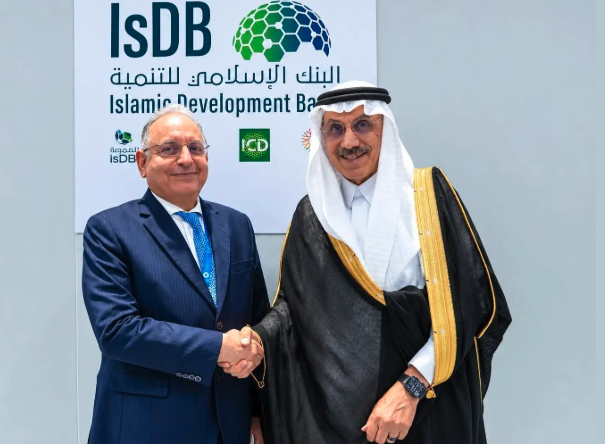
The meeting stressed the importance of mobilizing financial resources and technical expertise to advance reconstruction and promote sustainable development.
In this context, Al-Jasser reaffirmed the group’s commitment to collaborating with Syria to address its national priorities and support its recovery efforts, according to the Saudi Press Agency.
How Can Cooperation Strengthen Islamic Finance?
The rapid expansion of Islamic finance across markets places greater attention to regulatory cooperation, institutional readiness, and the ability to address emerging financial risks.
Against this backdrop, the IsDB Group and the Islamic Financial Services Board (IFSB) have signed a strategic framework to bolster coordination, enhance financial inclusion, and support sustainable growth in the industry.
Their multi-year work program, therefore, will focus on institutional capacity-building, technical assistance, and research into emerging risks and opportunities.
More significantly, the agreement provides for the exchange of best practices to strengthen regulatory frameworks and support the effective implementation of Islamic finance across member countries.
Expanding Financing for Mozambique’s Priorities
The IsDB Group is also exploring financing avenues to support Mozambique’s development priorities, with particular focus on social services and infrastructure.
During a separate meeting with Mozambique’s Finance Minister and IsDB Governor Carla Alexandra Oreste do Rosario Fernandes Loveira, Chairman Muhammad Al-Jasser discussed opportunities to expand the bank’s engagement.
The discussions examined potential financing arrangements, including blended finance and concessional financing, which could help mobilize resources for priority development projects.
Such arrangements were among the options discussed to help support the country’s development objectives.
Deepening Ties With the IMF
The IsDB Group used its participation in the 2026 World Bank Group and International Monetary Fund (IMF) Annual Meetings in Bangkok to advance its development agenda, placing greater emphasis on stronger financial partnerships, institutional capacity, and the role of Islamic finance in supporting economic resilience.
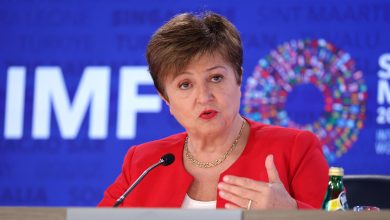
On the sidelines of the meetings, Al Jasser also met with IMF Managing Director Kristalina Georgieva to explore ways to expand cooperation in financial stability, capacity development, and knowledge exchange.

The discussions focused on opportunities to improve coordination on financial stability, with particular attention to the conditions and challenges shaping economies across IsDB member countries.
How Can Co-financing Advance Benin’s Development?
Alongside its engagement with the IMF, the IsDB Group also advanced its development partnerships through talks with Benin on expanding bilateral cooperation.
Al Jasser met with Hugues Oscar Lokossou, Benin’s minister delegate responsible for external resource mobilization and debt management, to discuss the country’s development priorities and opportunities for closer collaboration.
Following their meeting, the IsDB and Benin signed two co-financing agreements addressing the country’s transport and agricultural priorities.
With a total cost of €576.06 million ($643.87 million), the Godomey–Ouidah–Hillacondji road widening and upgrading project represents the larger of the two investments.
The IsDB will provide €306.89 million to support safer roads, more efficient traffic, shorter journeys, and lower transport costs. The project is also poised to strengthen regional connectivity and trade along the Abidjan–Lagos Corridor.
Meanwhile, the second project targets the foundations of agricultural productivity. The Sustainable Intensification of Legume-Based Agricultural Systems initiative has a budget of €20.70 million, including €19.17 million in IsDB financing.
Related Topics:
IsDB Signs Partnership with UN Population Fund, UNICEF to Provide Clean Water in Afghanistan
SAMA Issues Updated Oversight Framework for Payment Systems, Operators