From Oil Reserves to Strategic Growth: Inside the Expanding Saudi-Japanese Partnership
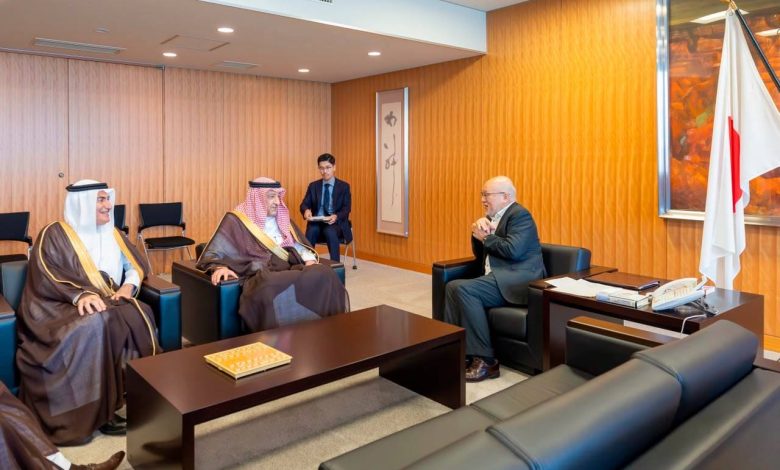
Japan’s partnership with Saudi Arabia now reaches well beyond oil. Tokyo wants to extend it into development, industry and maritime security.
Driving the news: Tsukasa Uemura, Japan’s special envoy for the Middle East peace process, outlined that vision in remarks to Asharq Al-Awsat. He said bilateral cooperation links directly to Saudi Vision 2030, energy security and the protection of sea lanes. Uemura served as Japan’s ambassador to Saudi Arabia from 2017 to 2020. He added that both countries agree on the importance of a stable Gulf. Existing cooperation, he said, still leaves the field open to new ideas.
Why it matters: Saudi Arabia supplies roughly 40% of Japan’s crude oil, according to Saudi and Japanese officials. Japan, in turn, brings technology, industrial expertise and investment to the Kingdom’s diversification drive. Moreover, both sides depend on open shipping lanes.
Zoom in: Uemura said Japan’s interest in the Middle East extends beyond oil and gas, although both matter for Japanese energy security. The region sits “at the heart of global trade,” he said. He called the Strait of Hormuz, the Bab el-Mandeb Strait and the Suez Canal “vital corridors for international trade.” Any disruption there, he warned, would ripple far beyond the region. These routes matter especially to Japan, which relies on stable trade and energy flows. Furthermore, Tokyo values the region’s natural wealth, human potential and cultural depth. Its security and prosperity matter “not to Japan alone, but to the entire world,” he said.
Beyond Oil: Vision 2030 Anchors the Partnership
Uemura looked back on his years in Riyadh. During that time, he said, cooperation widened across many sectors under Saudi Vision 2030. Japanese ministries now work with Saudi counterparts on education and industrial development. In addition, the two countries built a ministerial meeting mechanism. Officials from both sides use it to discuss shared priorities.
That mechanism grew out of the Saudi-Japan Vision 2030, which King Salman and then-Prime Minister Shinzo Abe launched in 2017. The framework covers energy, infrastructure, healthcare, water desalination, small businesses and entertainment. During Prime Minister Fumio Kishida’s 2023 visit, Saudi media reported that it involves more than 60 ministries and agencies and over 100 projects.
Momentum continues. In September 2025, Investment Minister Khalid Al-Falih led a Saudi delegation to Japan. The visit included the eighth Vision 2030 ministerial meeting in Tokyo and a large investment forum in Osaka. Al-Falih urged Japan to move from traditional partnership to strategic integration. Meanwhile, the two sides agreed to carry lessons from Expo Osaka 2025 into Expo Riyadh 2030.
Uemura sees room for even more. He proposed trilateral cooperation, in which Japan and Saudi Arabia run development projects together in third countries. Riyadh would contribute resources and capabilities. Tokyo would offer expertise, particularly in the least developed regions.
By the numbers:
- About 40%: Saudi Arabia’s share of Japan’s crude oil imports.
- 38%: growth in bilateral trade between 2016 and 2024, reaching SAR 138 billion ($36.8 billion). Al-Falih called Japan the Kingdom’s third-largest trading partner.
- SAR 38.2 billion ($10.2 billion): value of Saudi imports from Japan in 2025, led by vehicles and parts, then machinery.
- SAR 22.7 billion (about $6 billion): Saudi exports to Japan in December 2025, or 11.7% of the Kingdom’s total exports that month.
- SAR 3.6 billion ($960 million): Saudi imports from Japan in December 2025, or 4.3% of total imports.
- SAR 47.7 million ($12.7 million): Saudi non-oil exports to Japan in April 2026.
- 100+ projects, 60+ ministries and agencies: scale of the Saudi-Japan Vision 2030 framework.
- 70 years: diplomatic relations the two countries marked in 2025.
Energy Security: a Storage Model That Serves Both Sides
Energy offers a concrete example. Uemura described Japan’s crude oil storage arrangement with Saudi Arabia and the UAE. Japan built large tanks on its territory, and the two Gulf states keep ownership of the oil inside. In normal times, they can sell that stock commercially. During a crisis or supply disruption, however, Japan can release the oil onto its domestic market.
The Japanese diplomat called the formula a win for both sides. It guarantees Japan emergency supplies. Meanwhile, it gives Saudi Arabia and the UAE direct access to the Japanese market. Uemura added that Tokyo is studying financial aid for Asian countries that face fallout from the Gulf crisis, including shortages of crude oil and natural gas. Japan would also help them draw up crisis-preparedness plans.
Shared Stakes in the Gulf, the Red Sea and Yemen
Japan watches the widening confrontation between Iran and the United States “with grave concern,” Uemura said. Tokyo fears the conflict could spill into other countries and regions. “We now see the crisis expanding to include the Houthis and the Bab el-Mandeb Strait,” he said. He urged calm and de-escalation. Navigation security, he stressed, is “a shared interest” for Japan, Saudi Arabia and other parties.
Diplomacy backs those words. Foreign Minister Toshimitsu Motegi phoned Saudi Foreign Minister Prince Faisal bin Farhan Al-Saud this week. According to Japan’s Foreign Ministry, Motegi strongly denounced the Houthi attacks. He said Japan never tolerates strikes on civilians and civilian facilities. He also said Tokyo has pressed Iran directly to urge Houthi restraint. Additionally, he praised Saudi efforts to promote peace in the Middle East, including Yemen.
Prince Faisal thanked Japan for its firm stance and offered cooperation on protecting Japanese nationals. He also said Saudi Arabia wants to work with Japan to strengthen the economic and energy resilience of the GCC countries. The Saudi readout added that the ministers reviewed bilateral ties and ways to safeguard energy security and freedom of navigation.
On Yemen, Uemura said Japan calls for an end to escalation and to attacks on regional states, including Saudi Arabia. Japanese aid currently reaches Yemen through international organizations, mainly the United Nations. Future formats could include trilateral projects with East Asian partners.
What’s next: Uemura closed by tying the relationship to a wider goal. Stronger Japan-Saudi ties and deeper cooperation with the Gulf states aim to safeguard stability and prosperity, protect international trade and open the way for shared development. Trilateral projects and crisis-preparedness planning now top the agenda.