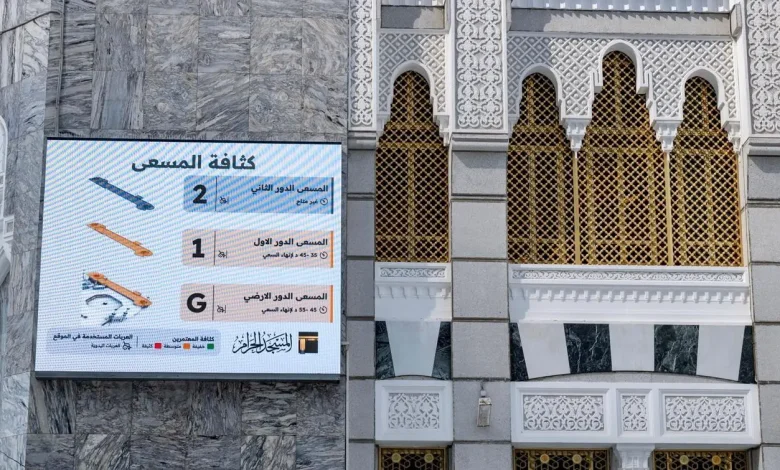
Crowd management is an essential part of organizing the movement of worshippers at the Grand Mosque, particularly in the Tawaf and Sa’i areas, where visitor flows can change throughout the day.
Addressing this challenge, digital services are providing visitors with an access to live displays, real-time crowd updates, and indicators that identify less crowded periods.
These tools offer worshippers greater visibility into conditions around them, allowing them to make more informed decisions about when to move through these areas.
Anticipating Crowds Through Technology
The availability of timely information introduces a more proactive dimension to the visitor experience.
Instead of responding to congestion only after encountering it, worshippers can use crowd indicators to plan their movements more carefully.
This helps make navigation more predictable while supporting the broader push to facilitate movement through spaces central to the pilgrimage experience.
How Is Technology Mapping Sacred Sites?
Navigation across the Two Holy Mosques presents a distinct challenge when it comes to the number of religious landmarks, facilities, and designated routes spread throughout the sites.
An interactive digital map addresses this need by providing worshippers with a structured way to explore their surroundings, identify important destinations, and locate facilities.
Featuring nearly 950 points of interest, the map covers prominent landmarks, including the Holy Kaaba, Maqam Ibrahim, Safa and Marwa, Al-Rawdah Al-Sharifah, the Prophet’s Chamber, prayer niches, and the Prophet’s Pulpit.
By bringing these locations together within a single digital interface, the map helps visitors access information about the sites they wish to reach without having to rely exclusively on physical signs or on-site directions.
Its extensive coverage also reflects the complexity of navigation across the Two Holy Mosques, where religious landmarks and visitor facilities serve different purposes.
That is why digital mapping becomes more than a directional tool. Rather, it provides a practical means of connecting worshippers with the places and services that shape their experience.
What Makes Navigation More Inclusive?
Providing directions across the Two Holy Mosques requires navigation systems capable of accommodating several destinations and different visitor needs.
The digital platform addresses this complexity through more than 100,000 potential routes divided into over 17 categories, offering an extensive range of options for navigating the sites.
Its more than 650 QR codes add another layer of convenience by enabling visitors to access information directly.
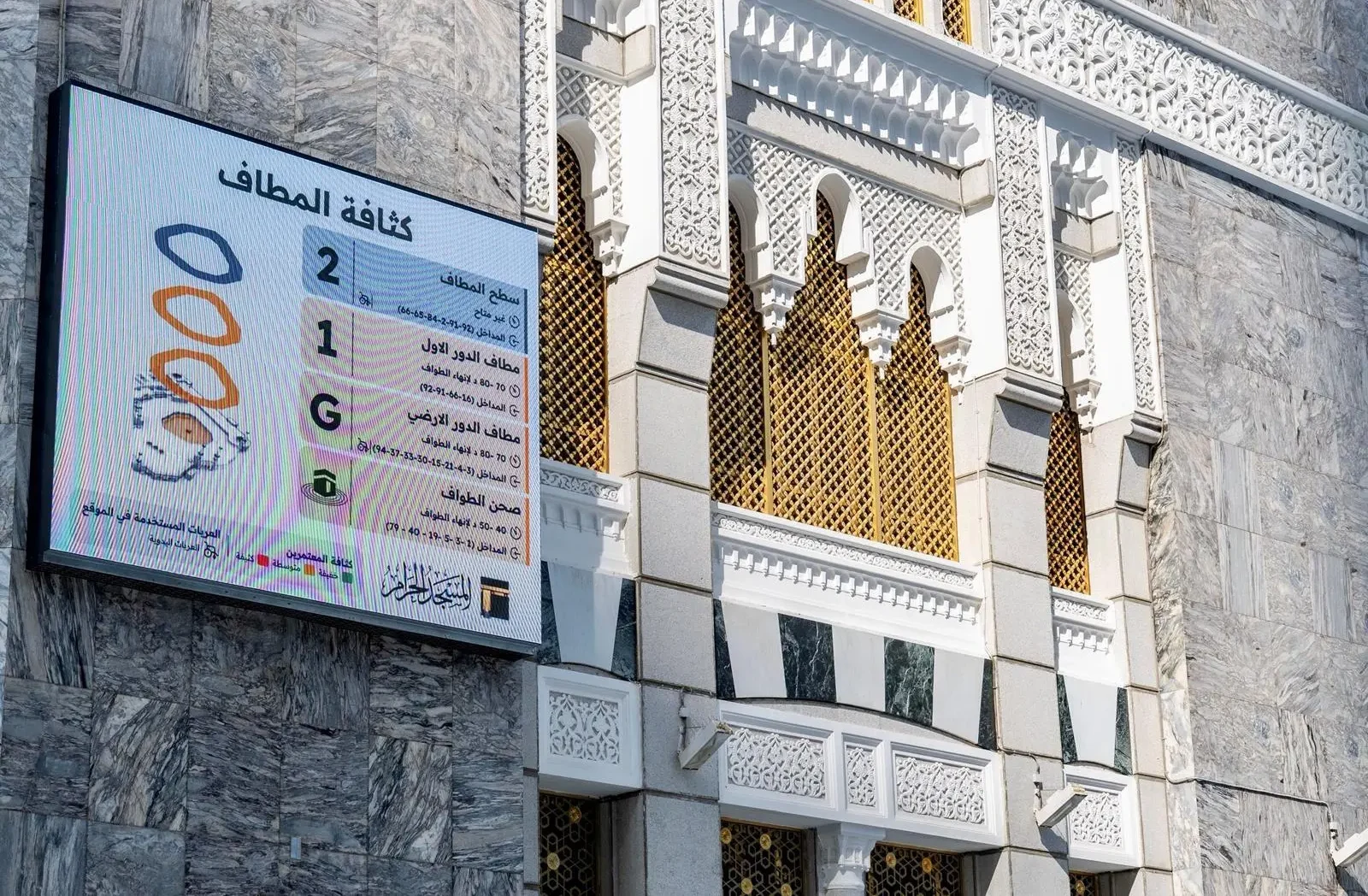
Remarkably, the system also extends beyond digital access on personal devices. More than six interactive screens are available on-site, providing visitors with additional navigation support and information about accessible routes and facilities for persons with disabilities.
Putting Accessibility First
Accessibility guidance further broadens the purpose of these services.
By incorporating information relevant to persons with disabilities, the platform acknowledges that visitors may encounter different mobility requirements when navigating the same environment.
The initiative therefore connects technological development with a practical consideration: making information about routes and facilities easier to access for a wider range of worshippers.
How Is Technology Enhancing Visitor Services?
These initiatives reflect the General Authority for the Care of the Affairs of the Grand Mosque and the Prophet’s Mosque’s broader efforts to integrate smart technology into visitor services.
By expanding digital navigation tools, providing real-time information, and incorporating accessibility features, the authority is addressing practical aspects of the worshipper experience while making essential services easier to access.
The approach highlights the role of digital infrastructure in supporting the movement of visitors, helping them locate facilities, and responding to their diverse needs across the two holy sites.
Related Topics:
Zain KSA Boosts Pilgrim Experience at Two Holy Mosques with Cutting-Edge AI-Driven 5G Network
3rd Group of Guests of Custodian of Two Holy Mosques Program Visits Religious Sites
Operational Plan Launched to Serve Millions at Two Holy Mosques During Ramadan
Defying Heat, Geopolitics: Saudi Arabia Delivers a Seamless Hajj for Over 1.5 Million