
The expansion of pomegranate cultivation in Qassim signals the growing importance of crop diversification in the region’s agricultural landscape.
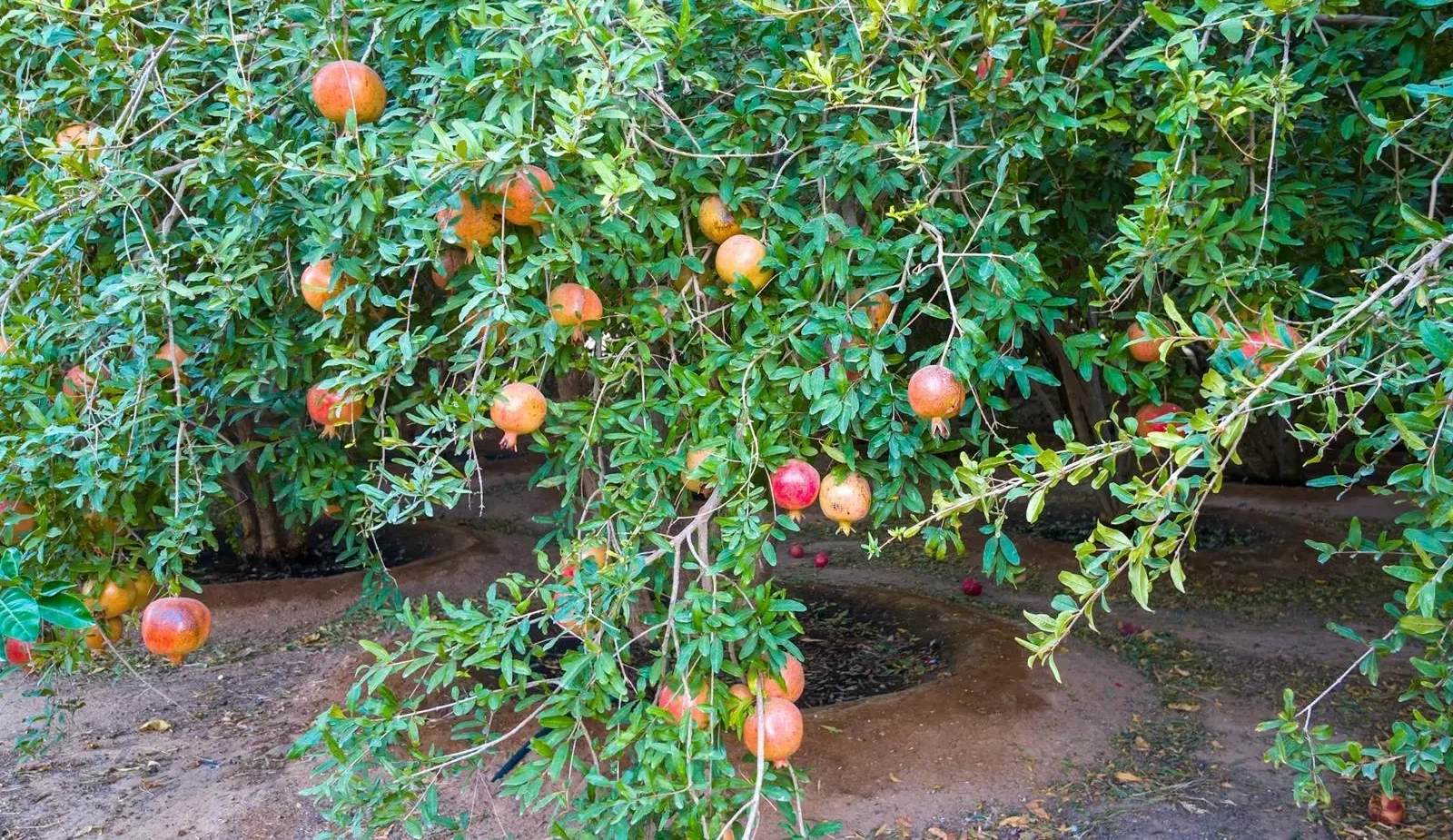
Annual production surpasses 12,000 tons from more than 300,000 trees spread across 150 farms in Buraidah and other governorates and centers, highlighting the crop’s growing presence in the region and its contribution to a more diverse agricultural sector.
What Makes Qassim’s Pomegranate Harvest Unique?
Pomegranate cultivation extends across Qassim, from Buraidah to the governorates of Al-Bukayriyah, Ar-Rass, Al-Mithnab, Uyun Al-Jiwa, and Riyadh Al-Khabra.
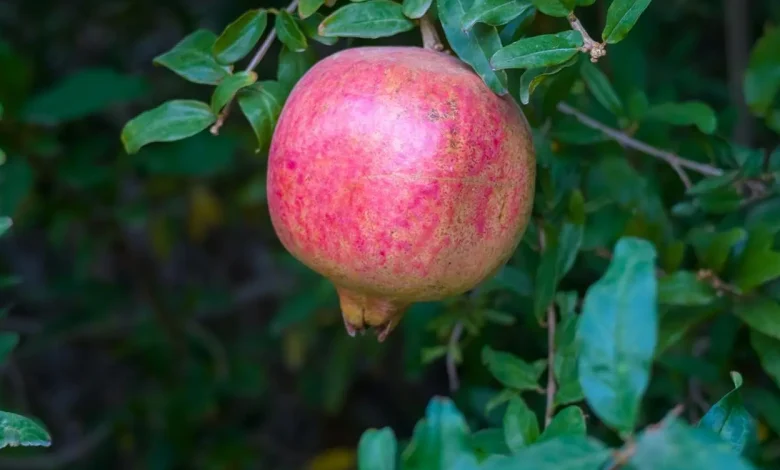
Remarkably, this geographical spread is accompanied by a variety of fruit types, with Taifi, Hijazi, and American pomegranates among the most prominent.
Their differences in flavor, physical characteristics, and ripening periods add diversity to the region’s production and shape the seasonal availability of the fruit.
More significantly, the significance of pomegranate cultivation extends beyond the harvest itself, reflecting a broader approach to diversifying agricultural production in Qassim.
The Qassim branch of the Ministry of Environment, Water and Agriculture said broadening the range of seasonal crops can increase output and give local products a stronger presence in the market.
What Happens After the Harvest?
Production quality depends on several interconnected factors, including sapling selection, water management, soil conditions, and pest control.
For Farmer Mohammed Al-Hassan, pomegranate saplings are generally planted in February and need consistent care, with regulated irrigation and fertilization helping improve yields and fruit quality.
The growing cycle culminates in a harvest that kicks off in October and lasts around one to one-and-a-half months.
Al-Hassan noted that lower temperatures during ripening can enhance flavor, highlighting how seasonal conditions interact with cultivation practices to influence the final product.
However, maintaining the quality of the harvest requires attention beyond cultivation. Al-Hassan underscored the importance of pruning and regular tree care, as well as sorting and grading the fruit by size and quality before it reaches the market.
These steps can enhance the pomegranates’ commercial value, while their use in juices, salads, and pomegranate molasses offers farmers and producers several ways to utilize the crop. Pruning residues are also recycled and reused on farms.
As the harvest progresses, pomegranates from Qassim’s farms are making their way into retail outlets and local markets.
The cultivation of different varieties, each with its own ripening period, helps extend the harvest season and maintain a steady supply of locally grown fruit.
What Keeps This Agricultural Legacy Alive?
For generations, the pomegranate has been woven into the agricultural heritage of Saudi Arabia, holding a special place in local traditions while supporting the livelihoods of farmers and their families.
Its cultivation reflects a long-term commitment, with farmers tending their trees through different stages of life and passing their knowledge from one generation to the next.
The methods used to grow and market the fruit have changed considerably over time. Where camels once carried harvests to neighboring markets, modern agricultural practices and transportation systems now connect farms with wider commercial networks, reflecting the evolution of the sector while preserving its agricultural roots.
Pomegranates Link Farming With Seasonal Tourism
Pomegranates also stand out for their nutritional value, containing antioxidants, vitamins C and K, fiber, and iron.
Beyond the fruit’s familiar taste and nutritional value, its seeds and peel have long attracted attention for their different uses. Pomegranate seeds contain micronutrients, phytosterols, essential fatty acids, and fiber, while the peel has a place in traditional Middle Eastern folk remedies. It has historically been powdered for use on burns and infected wounds, and boiled to prepare a broth traditionally taken to soothe sore throats and ease indigestion.
Their combination of nutrients has contributed to the fruit’s reputation as a nutritious addition to a balanced diet.
Economically, the harvest season supports farmers and their families through seasonal income, while related markets and festivals organized by the Ministry of Environment, Water, and Agriculture provide platforms for promoting local produce and attracting visitors.
Such activities connect agricultural production with local commerce and seasonal tourism.
Related Topics:
Asir Welcomes Autumn with Pomegranate Harvest Season
Farmers Ramp up Preparations ahead of Al-Baha Pomegranate Festival
80,000 pomegranate trees produce 3 million kilograms annually in Tabuk