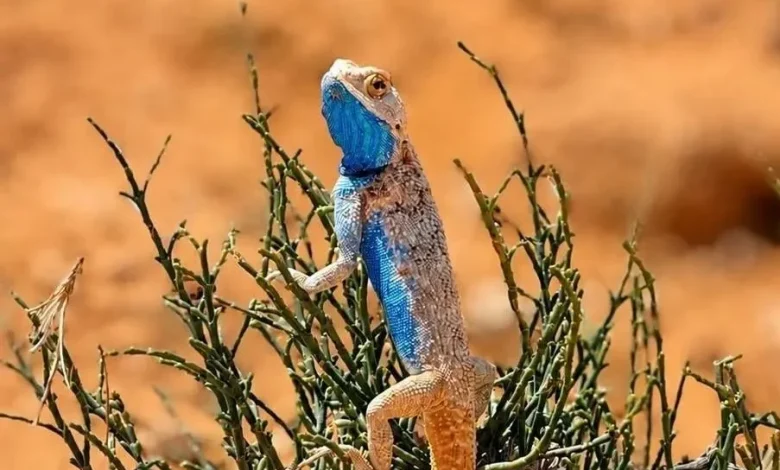
From sweeping dunes to expansive valleys, Saudi Arabia’s landscapes provide a remarkable setting for nature to thrive.
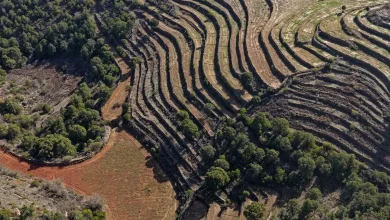
Imam Turki bin Abdullah Royal Nature Reserve captures this diversity across 91,500 square kilometers, featuring plains, plateaus, dunes, and valleys that together form a rich ecological landscape where biodiversity can flourish.
The Wild’s Patient Strategist
Within this diverse landscape, an extraordinary array of habitats offers home to desert wildlife, including the chameleon.
Its outstanding adaptations provide a compelling example of nature’s ability to respond to its surroundings, enabling it to secure prey, and navigate the changing environmental conditions.
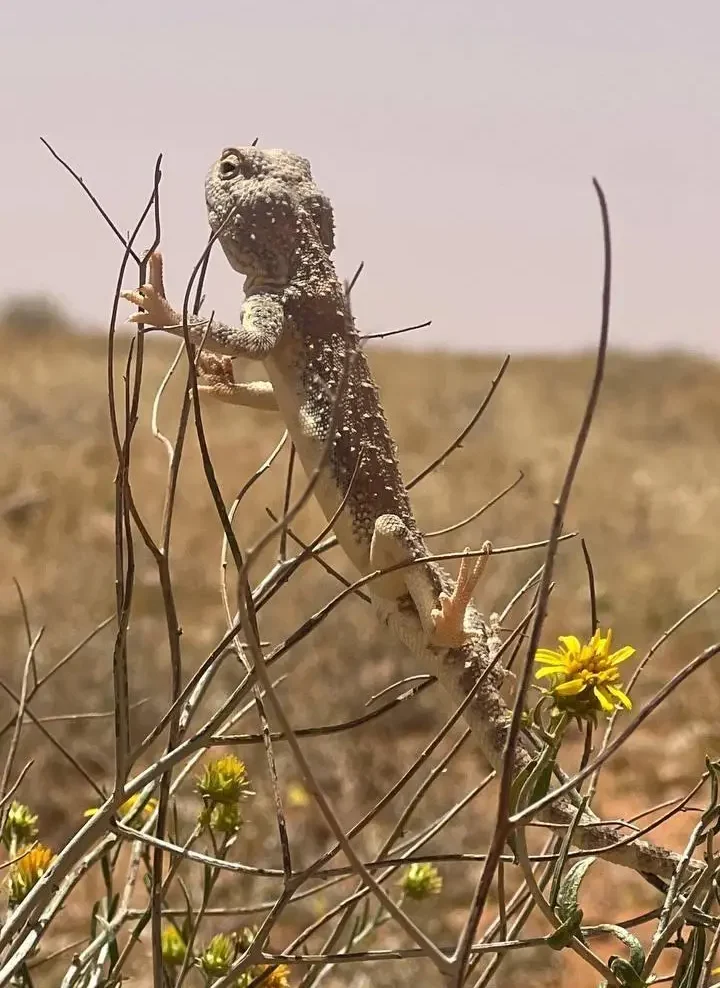
Remarkably, nature has equipped the chameleon with a seamless combination of awareness and precision. Its independently moving eyes enable it to survey a broad field of view, while its long, fast-moving tongue serves as an effective tool for catching insects.
Instead of chasing its prey, the chameleon adopts a patient approach, remaining motionless, waiting for the right opportunity, and then launching its long tongue forward with impressive speed.
Colors of Survival
Perhaps one of the chameleon’s most striking features is its ability to change the color of its skin in response to factors such as temperature, physiological state, and communication with members of its species.

Standing out as more than a mechanism for blending into its surroundings, this ability perfectly mirrors the sophisticated ways the chameleon adapts and responds to the world around it.
A Living Ecosystem
The reserve’s vegetation and rock formations provide more than natural scenery for the chameleon. Rather, they form an essential part of the environment in which it lives.
Moving naturally through these surroundings, the species stands as a testament to the close relationship between wildlife and habitat, reflecting the diversity and interconnectedness of the reserve’s ecosystems.
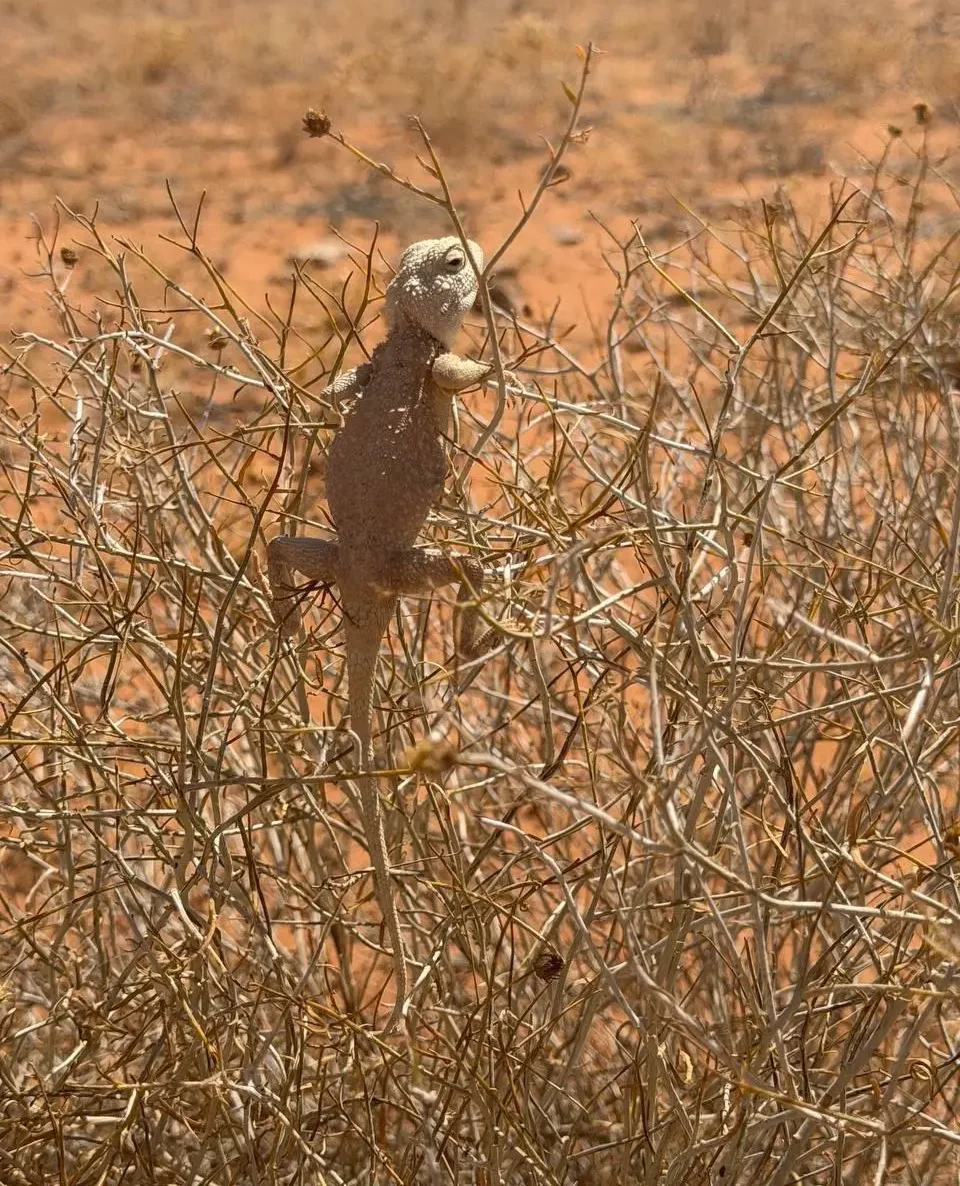
More vividly, the chameleon’s presence within its natural habitat signals a broader ecological story unfolding across the reserve.
In this sense, its environmental value lies not only in protecting diverse species, but also in preserving the delicate connections among plants, soil, water, and living organisms that sustain the health and stability of the ecosystem.
A Commitment to Conservation
The Imam Turki bin Abdullah Royal Nature Reserve Development Authority is steadily advancing ecosystem protection, vegetation expansion, habitat conservation, and wildlife sustainability in line with the Kingdom’s environmental objectives and Saudi Vision 2030.
Related Topics:
Say Hello to Umm Quwaik: Saudi Arabia’s Silent Desert Guardian
Meet Neom’s Newest Wild Resident: The Striped Hyena Cub
Saudi Environment Week 2026 Showcases Diverse Landscapes and Wildlife