The big picture: In 2025, Saudi Arabia achieved a historic leap in its ongoing clean energy transition. Official statistical data confirms that operational renewable energy capacity surged by 88 percent compared to 2024. Consequently, total operational clean energy capacity reached 12,313 megawatts by the end of the year.
This impressive growth shows rapid execution across national energy infrastructure initiatives. Furthermore, the General Authority for Statistics (GASTAT) released these figures through its national “Saudi Number” statistical platform. This initiative highlights key statistical indicators across economic, social, and developmental sectors. Furthermore, foreign investment flows demonstrate strong global confidence in Saudi green infrastructure. Consequently, international banks actively finance Saudi solar and wind consortia.
Accelerating the Vision 2030 Energy Transformation
Why it matters: Saudi Arabia actively transforms its domestic energy ecosystem under Saudi Vision 2030. The Kingdom systematically replaces liquid fuels with natural gas and solar or wind resources. Therefore, government planners expect renewable sources to generate 50 percent of domestic electricity by 2030.
This strategic pivot drives economic diversification beyond traditional oil revenues. Additionally, the Ministry of Energy manages competitive tendering through the Saudi Power Procurement Company. These clean energy tenders continuously attract top international developers, technology leaders, and global capital into the domestic market.
As a result, green energy now forms a foundational pillar of national industrial policy. The Kingdom aggressively expands local supply chains for clean energy technology. Consequently, domestic factories now produce solar panels, wind turbine components, and smart electrical grid systems locally.
Major Operational Projects and Future Expansion
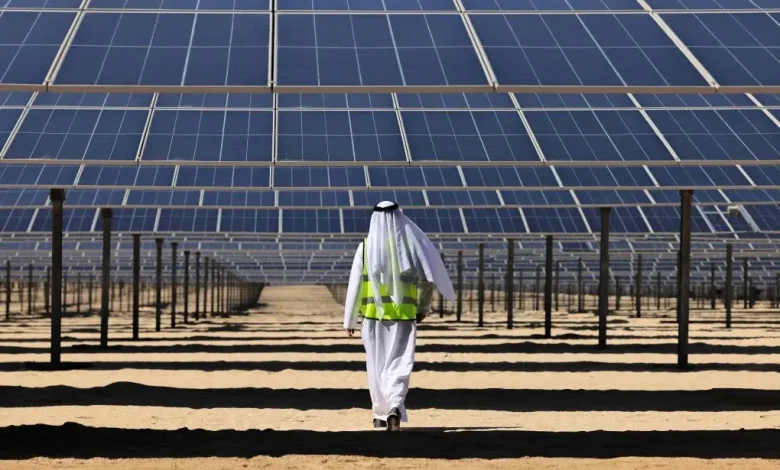
Saudi Arabia already operates world-class renewable power installations in several regions. For instance, the 300-megawatt Sakaka solar plant initiated commercial utility-scale solar power in Al Jouf. Meanwhile, the 400-megawatt Dumat Al Jandal wind farm delivers commercial wind energy across northern areas.
Furthermore, newer megaprojects expand this operational network significantly. The Sudair solar facility generates 1.5 gigawatts of electricity, while the Al Shuaiba complex adds substantial solar power. Simultaneously, engineering teams build the massive NEOM green hydrogen facility in Oxagon. This mega-facility will export clean ammonia to international industrial markets.
Between the lines: The Public Investment Fund acts as the primary financial engine driving these developments. Through strategic partnerships, the fund accelerates gigawatt-scale solar and wind deployment across diverse provinces. Consequently, Saudi Arabia builds an integrated green economy that creates high-skilled jobs for young Saudi citizens.
Additionally, utility giant ACWA Power leads developer efforts alongside state entities. The company consistently reduces power production costs through technological innovation. As a result, Saudi solar projects regularly set world-record low prices per kilowatt-hour.
By the numbers:
- 12,313 megawatts: Total operational renewable energy capacity in Saudi Arabia at the end of 2025.
- 88%: The annual growth rate of operational clean energy capacity between 2024 and 2025.
- 15 projects: Total active operational renewable energy installations operating across the Kingdom by late 2025.
- SAR 36.11 billion ($9.6 billion): Total cumulative investment volume supporting these 15 operational green energy projects.
- SAR 16.27bn ($4.34bn): investment tied to the five projects commissioned in 2025 alone.
- 5,762 MW: combined capacity of those five new solar projects.
- 50%: Target share of renewable energy in the domestic electricity generation mix by 2030.
- 130 gigawatts: Total renewable energy capacity target planned for deployment across Saudi Arabia by 2030.
- 1 million: housing units now supplied by renewable electricity
Toward a Sustainable Future
The bigger picture: Saudi Arabia still has ground to cover. Renewables made up only about 12% of the Kingdom’s total electricity output in 2025, well short of the 50% target the government has set for 2030 under the National Renewable Energy Program (NREP). Reaching that goal requires an estimated 100 to 130 gigawatts of installed capacity, and officials plan to hit it mainly through solar and wind, backed by high-efficiency gas plants for the remainder.
What’s next: Saudi Arabia solidifies its role as a regional climate leader while maintaining global energy security. By expanding solar and wind capacity, the Kingdom saves valuable oil reserves for higher-value petrochemical export products. Additionally, renewable power cuts national carbon emissions substantially.
Consequently, these developments move the Kingdom closer to its 2060 net-zero emissions target. The Ministry of Energy will tender multi-gigawatt clean projects every year. Meanwhile, power grid operators modernize distribution networks to integrate future mega-projects efficiently. Ultimately, these aggressive moves secure Saudi Arabia’s position as a dominant global clean energy powerhouse.