
Relations between Saudi Arabia and Pakistan have reached new depths. Beyond their defense cooperation under the Strategic Mutual Defense Agreement and the Makkah Joint Defense Agreement, both countries have placed greater emphasis on boosting collaboration in agriculture and food security sectors.
This shared interest was expressed during a recent visit to Islamabad by Saudi Minister of Environment, Water and Agriculture Abdulrahman Alfadley, who explored avenues for strengthening agribusiness ties and expanding investment opportunities between the two countries.
Expanding Agriculture Ties
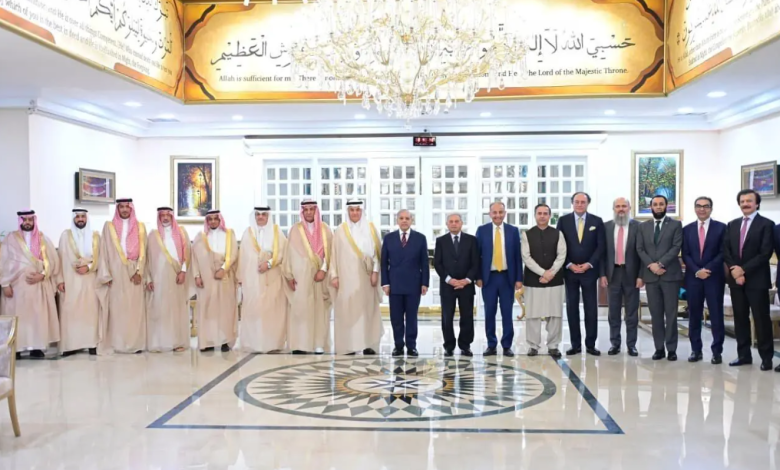
Driving the News: Leading a high-level delegation, Saudi Arabia’s Minister of Environment, Water and Agriculture Abdulrahman Alfadley met with Pakistani Prime Minister Shehbaz Sharif to discuss ways to bolster bilateral cooperation in agriculture and food security, as well as avenues for expanding investment in these sectors, reported the Saudi Press Agency (SPA).
The Big Picture: Saudi Arabia and Pakistan agreed to strengthen collaboration in agriculture and food security, expand investment opportunities, enhance irrigation and water management systems, and boost bilateral trade and economic partnership. According to Sharif’s Office, the Pakistani Prime Minister hailed the “constructive engagement” between both sides, particularly Pakistani agricultural exports to the Kingdom.
What to Watch: The two sides exchanged views on enhancing agricultural productivity in Pakistan, through the use of technology, research, and development. In light of this, a Pakistani delegation will visit Riyadh to finalize the frameworks discussed in Islamabad.
Strategic Food Partnership
Between the Lines: Alfadley participated in talks with the Pakistani Ministers of National Food Security and Research and Commerce, as well as representatives of provincial governments. Their discussions focused on the Saudi-Pakistani Strategic Plan for Agriculture and Food.
Furthermore, the Saudi Minister took part in the Saudi-Pakistani Agri-Business Forum, alongside Pakistan’s Finance and Commerce Ministers and private sector representatives. The forum discussed ways to strengthen investment partnerships across the agriculture and food sectors.
H.E. Engineer Abdulrahman bin Abdulmohsen Al-Fadley, Minister of Environment, Water and Agriculture of the Kingdom of Saudi Arabia, called on Prime Minister Muhammad Shehbaz Sharif at the Prime Minister’s House, Islamabad, today.
While welcoming the Saudi dignitary, the Prime… pic.twitter.com/Ad6CZgbq8f
— Prime Minister's Office (@PakPMO) August 28, 2026
Why It Matters: Pakistan has a vast agriculture potential, thanks to its fertile lands, diverse climate zones, and large labor base. However, it lacks efficient water management systems, storage infrastructure, and technical capabilities, affecting its productivity. Saudi Arabia can help in bolstering Pakistan’s agriculture sector by providing the needed capital and technical know-how to modernize the ecosystem and enhance supply chain resilience.
Pakistani Food Exports to the Kingdom:
- Rice
- Mutton and beef meat
- Spices
- Fresh fruits
- Vegetables
- Processed food
- Seafood
Agriculture Synergy
State of Play: Saudi Arabia provides great support for Pakistan to improve its agriculture sector. One example of this support is the “Green Pakistan” initiative, for which the Kingdom provided a grant in April 2026 to address environmental challenges, reduce water waste, and strengthen food security.
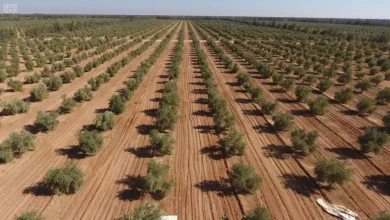
The initiative spans 500 hectares, involving 10 center pivot irrigation systems, in addition to fertilization units, generators, and power engines. It also provides training programs for beneficiaries in Punjab Province and Bahawalnagar.
The Saudi Grant Covers:
- Enhancing water-use efficiency
- Expanding irrigated land
- Increasing production quantity and quality
- Diversifying crops
- Providing technical support and training
Zoom In: In line with Vision 2030, Saudi Arabia views a modern agriculture sector as a core pillar of sustainable development and economic growth. Under this vision, the Kingdom prioritizes investment in agriculture and food sectors through adopting innovation and advanced technological practices in agriculture, as well as providing flexible financing solutions, to increase productivity and build resilience in agricultural and food systems.
The Road to Food Security
The Context: By placing great emphasis on modernizing the agriculture sector, Saudi Arabia has made great strides towards achieving food self-sufficiency, surpassing 100% in several plant and animal food products as shown in the 2024 Food Security Statistics issued by the General Authority for Statistics (GASTAT).
Saudi Self-Sufficiency Metrics:
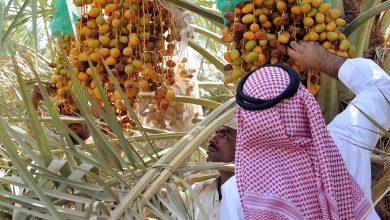
- Dates: 121%
- Dairy products: 131%
- Table eggs: 103%
- Shrimp: 149%
- Poultry: 72%
- Red meat: 62%
- Fish: 52%
The Key Drivers
The Catalyst: Saudi Arabia’s push to achieve food security is spearheaded by the Saudi Agricultural and Livestock Investment Company (SALIC). Moreover, the Saudi-Pak Industrial and Agricultural Investment Company Limited (SAPICO) drives joint investments between the two countries.
SALIC
Established in 2009, SALIC is a PIF-owned company handling 16 strategic commodities across 11 investment portfolios, with over SAR 32 billion in assets under management. Its main objective is ensuring essential food commodities remain accessible, affordable, and available, supporting national and global food security goals.
SALIC by the Numbers:
- SAR 32+ billion: Total value of assets managed by the company.
- 80%: Ownership stake in Olam Agri, a major global agribusiness hub.
- 30+: Countries across Europe, the Americas, Asia, and Oceania where SALIC has active investments and partnerships.
- 50 million+ tons: Volume of strategic food commodities handled and supplied globally every year.
- 200,000+ hectares: Managed farmland across key global agricultural regions to secure crop production.
SAPICO
Sponsored by the governments of Saudi Arabia and Pakistan since 1981, the Saudi-Pak Industrial and Agricultural Investment Company Limited (SAPICO) was established to promote investments in industrial and agriculture-based projects in Pakistan.
SAPICO by the Numbers:
- SAR 135+ million: The initial authorized capital set at the creation of the institution.
- SAR 91+ million: The total paid-up capital of the company.
- SAR 709+ million: Total assets managed by SAPICO.
The Bottom Line: Agriculture and food security form a key pillar of the Saudi-Pakistani strategic partnership. The Saudi Minister of Environment, Water and Agriculture’s visit to Pakistan underscores a shared commitment to further boosting cooperation in these sectors.