Drones, Diplomacy & Food Security: The Expanding Scope of Saudi-Ukrainian Relations
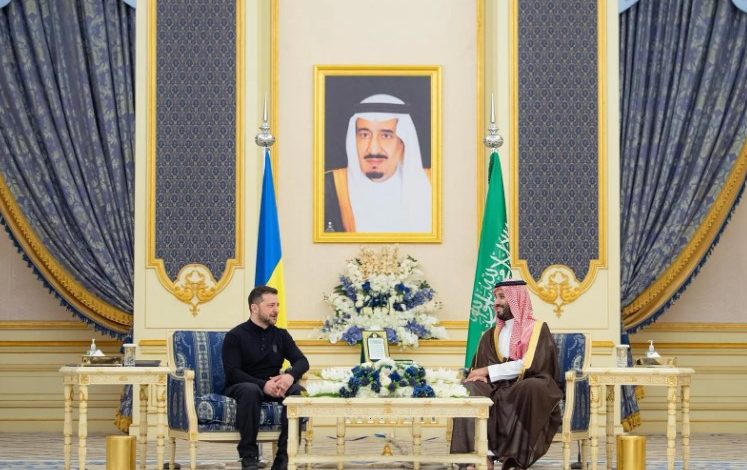
Ukrainian President Volodymyr Zelensky welcomed the landmark defense agreement between Saudi Arabia, Türkiye, and Pakistan during high-level talks with Crown Prince Mohammed bin Salman.
The endorsement highlights a rapidly evolving relationship between Riyadh and Kyiv. Ties between the two nations are expanding across defense technology, economic cooperation, and food security, anchored by Saudi Arabia’s proactive diplomatic leadership and effective mediation efforts on the world stage.
The Anchor of Regional Peace
The Big Picture: Saudi Crown Prince Mohammed bin Salman and Zelensky discussed the latest regional and international developments in a phone call on Monday, August 10, reported the Saudi Press Agency (SPA). The Ukrainian leader also hailed the Makkah Joint Defense Agreement, hoping that it would contribute to achieving regional security and stability.
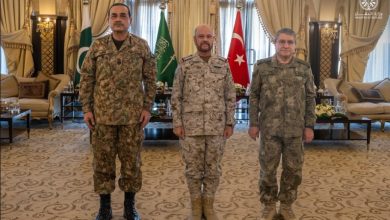
Backstory: Saudi Arabia, Türkiye, and Pakistan signed the landmark Makkah Joint Defense Agreement, establishing a long-term framework for defense partnership and collective deterrence.
Drone Technology Transfers
Flashback: In March 2026, during Zelensky’s visit to Jeddah, Saudi Arabia and Ukraine signed a memorandum of understanding (MoU) on defense procurement arrangements, laying the foundation for future contracts, technological cooperation, and investment, with a particular focus on counter-drone technology and air defense capabilities.

State of Play: During his call with the Crown Prince, Zelensky said they discussed the next steps in the Saudi-Ukrainian Drone Deal, aimed at exchanging technical know-how and operational experience in countering drones.
Why It Matters: Since the outbreak of the US-Iran conflict in late February, Iran and its proxy groups have targeted civilian infrastructure and energy facilities across the region with drones and ballistic missiles. Ukraine, engaged in a more than four year war with Russia, has developed a battlefield expertise in countering Iranian-made drones. Kyiv has stepped in to transfer this expertise to the Gulf states.
The Impact: These security arrangements with Ukraine align with Saudi Arabia’s defense localization goals. Under Vision 2030, the Kingdom aims to localize 50% of its military spending. To this end, Riyadh has fostered partnerships to shift from a buyer of foreign weapons to an independent, self-reliant developer of advanced defense technologies.
The Neutral Broker
Between the Lines: Since the eruption of the war between Russia and Ukraine in February 2022, Saudi Arabia has maintained strict neutrality, advocating for dialogue and peaceful resolution to the conflict. The Kingdom has led multiple diplomatic initiatives to reach a negotiated solution to the crisis.
- Prisoner Exchanges: Saudi Arabia facilitated several prisoner exchanges. In September 2022, Saudi mediation efforts led to a major prisoner swap between Russia and Ukraine, including the release of 10 foreigners captured in Ukraine. This paved the way for a larger deal that saw the exchange of 215 Ukrainian captives for 55 Russian soldiers and pro-Kremlin politician Viktor Medvedchuk.
- Peace Talks: The Kingdom hosted several rounds of high-level talks in Riyadh and Jeddah in February and March 2025, including separate meetings involving US, Ukrainian, and Russian delegations, to discuss partial ceasefires, security of shipping in the Black Sea, and protection of energy infrastructure.
- Jeddah Initiative: Saudi Arabia hosted multinational peace talks in Jeddah in August 2023, hosting 40 nations to discuss Ukraine’s proposed 10-point Peace Formula. However, Russia did not participate.
Areas of Cooperation
Food Security
Driving the News: The Saudi and Ukrainian leaders discussed ways to boost bilateral coordination and collaboration on food security – one of three areas of cooperation that Riyadh and Kyiv place emphasis on.
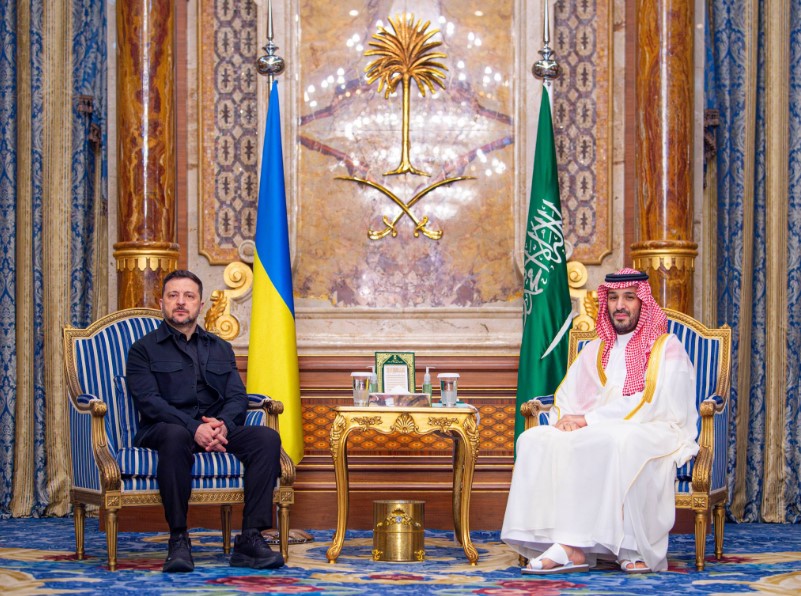
What to Know: Saudi Arabia puts food security and agriculture at the heart of its national objectives. In light of this, Ukraine has emerged as a key partner to advance the Kingdom’s national food security strategy.
- Major Land Investments: Through SALIC (owned by the PIF), Saudi Arabia acquired Continental Farmers Group and Mriya Agro Holding, building a 200,000-hectare land bank across Ukraine.
- Direct Supply Lines: Investments yield essential crops such as wheat, barley, and oilseeds, enabling direct bulk shipments, including a 60,000-tonne wheat import, to supply the Saudi market.
- Institutional Backing: Supported by the Saudi Green Initiative and Vision 2030, a joint agricultural working group helps streamline trade, attract local farming investments, and use Saudi ports as a regional hub for Gulf and North African markets.
Economy
The Anchor: Riyadh and Kyiv enjoy robust economic ties, driven by the Saudi-Ukrainian Joint Business Council, reactivated in March 2025.
By the Numbers:
According to data released by Ukraine’s embassy in Saudi Arabia, trade between the two countries reached $530.8 million.
- $333.2 million: Ukrainian exports to Saudi Arabia, led by sunflower/seed oils ($118 million), poultry ($96.6 million), and agricultural grains ($37.9 million across barley and wheat).
- $197.7 million: Saudi exports to Ukraine, dominated by mineral fuels ($71 million), propylene polymers ($54.5 million), and ethylene polymers ($51.5 million).
The Way Forward
What to Watch: Under the reactivated Saudi-Ukrainian Joint Business Council, Riyadh and Kyiv are targeting joint ventures across energy, infrastructure, and green technology exchange.
The Bottom Line: Saudi-Ukrainian ties reflect a modern diplomatic model based on practical self-interest and technical collaboration, as well as a commitment to international stability. As the Kingdom expands its global footprint, its multi-faceted relationship with Kyiv serves as a blueprint for balancing strategic defense needs with humanitarian leadership.