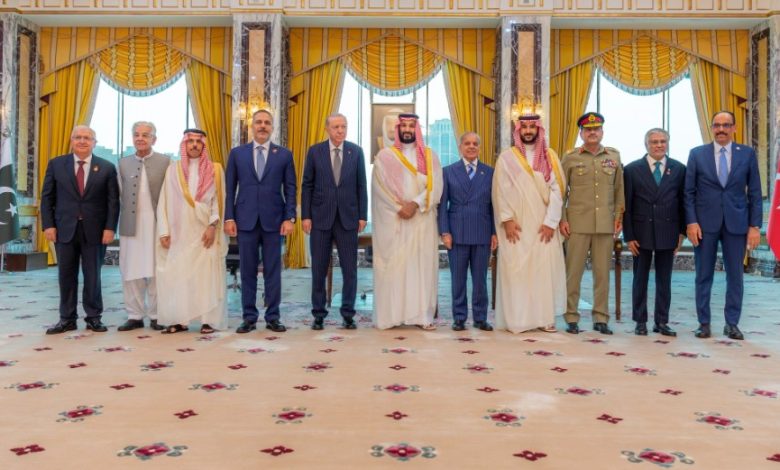
On Friday, August 7, 2026, the Middle East witnessed a historic turning point that has redefined collective deterrence. Saudi Arabia, Türkiye, and Pakistan signed the Makkah Joint Defense Agreement – a trilateral pact establishing that an attack on one signatory is an attack on all three.
By uniting Saudi economic power and regional influence, Turkish technological innovation, and Pakistani military capabilities, the agreement builds a new defense architecture to anchor long-term regional stability.
A Watershed Moment in Makkah
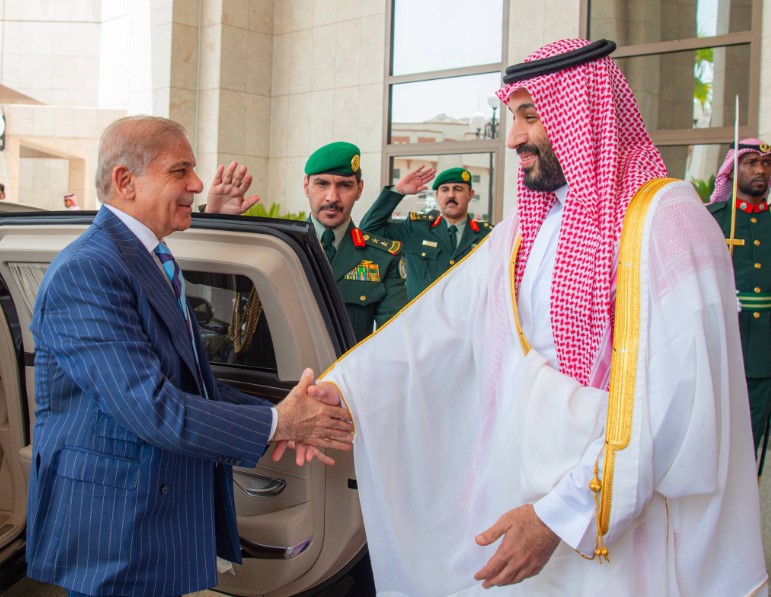
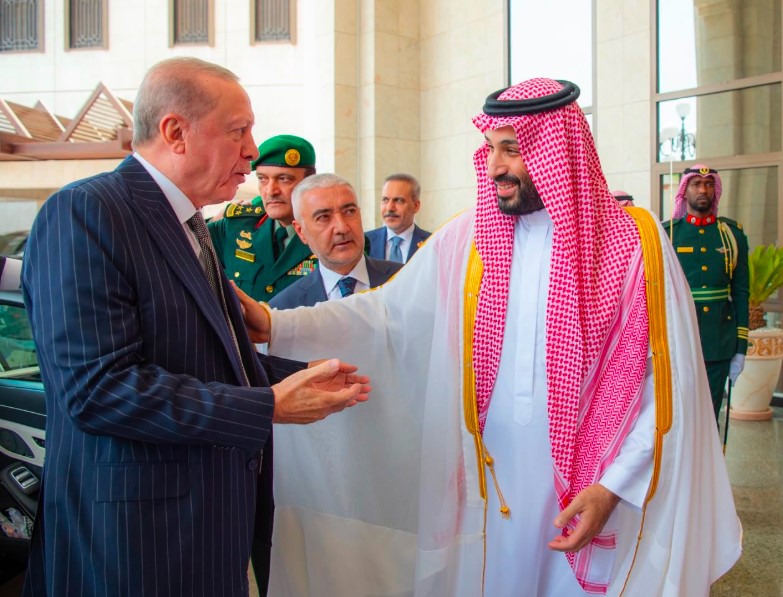
Driving the News: Following a trilateral summit in Makkah, Saudi Crown Prince and Prime Minister Mohammed bin Salman, Turkish President Recep Tayyip Erdogan, and Pakistani Prime Minister Mohammed Shehbaz Sharif signed the Makkah Joint Defense Agreement.
The Big Picture: The agreement transforms bilateral defense and security ties into a unified, self-reliant defense architecture grounded in collective deterrence.
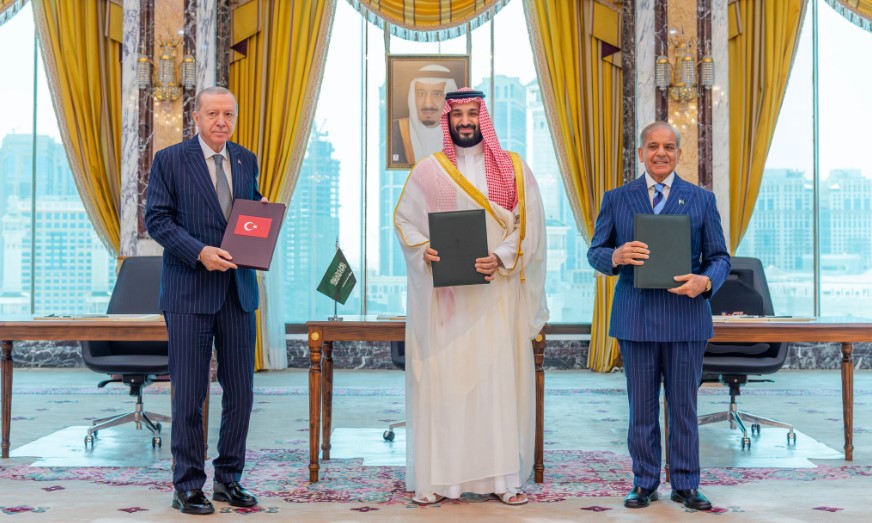
In His Words: “The Makkah Joint Defense Agreement between Saudi Arabia, Pakistan, and Türkiye establishes a framework for a long-term defense partnership, enhancing deterrence, coordination, and integration between our countries, and contributing to regional and global security and stability.” – Prince Khalid bin Salman, Saudi Arabia’s Defense Minister.
Three Pillars of Power
Zoom In: The agreement unites the strengths of all the three nations under a collective security umbrella, creating an unprecedented shield against external threats across West Asia.
Saudi Arabia
The Kingdom serves as the diplomatic and economic anchor of this new trilateral defense partnership. As host of the two holiest cities in Islam – Makkah and Madinah – Saudi Arabia enjoys a highly respected status among Muslim nations, solidifying its position as a regional leader.
Driven by Vision 2030, Saudi Arabia has become one of the fastest-growing economies among the G20. This economic weight has boosted its push to modernize its defense industrial base.
Furthermore, Riyadh has been a pivotal regional stabilizer, advocating for security, stability and peace across the Middle East and beyond. It has spearheaded diplomatic efforts to de-escalate military tensions and resolve crises in Palestine, Syria, Lebanon, Yemen, and Sudan.
Türkiye
As NATO’s second-largest military, Türkiye boasts a rapidly growing defense industry, particularly in drones, naval shipbuilding, electronic warfare, and armored systems, positioning it as the industrial and technological engine of this trilateral partnership. Moreover, Ankara has played a key mediation role in the Gaza peace agreement.
Pakistan
Pakistan is the only nuclear-armed Muslim nation, boasting a highly professional military, advanced missile capabilities, and a vast experience in counterterrorism. Islamabad has also been the primary mediator in the ongoing US-Iran conflict, hosting ceasefire negotiations and facilitating a ceasefire agreement that paused the war.
Deterrence Integration
Why It Matters: The Makkah Joint Defense Agreement is aimed at strengthening collective deterrence against any act of aggression, stipulating that “any armed attack against any one of the three states shall be regarded as an attack against them all,” according to a joint statement by the Saudi Foreign Ministry. It also provides for enhancing all aspects of defense cooperation among the three states.
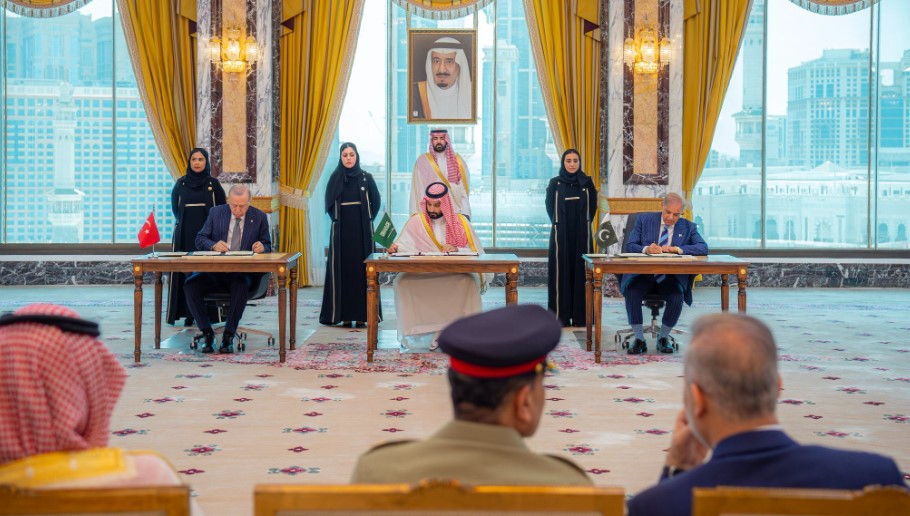
State of Play: According to the Saudi Foreign Ministry, the agreement aims to bolster cooperation among the three countries to establish regional security and stability.
- Enhancing Defense Capabilities: Enables the three nations to advance joint defense capabilities, strategic deterrence, and operational readiness, while working to integrate and expand military assets.
- Solidifying Security Alliances: Underscores the brotherly ties between the three countries to jointly confront emerging security challenges and military threats.
- Promoting Regional Stability: Reflects a shared commitment to strengthening collective security, driving regional and global peace, and building a secure, prosperous future.
While the agreement’s official joint statement did not provide details about commitments or obligations, it is expected to include:
- Joint military exercises
- Advanced training programs
- Defense technology transfers
- Intelligence sharing
Worth a Mention: Saudi Deputy Minister for Public Diplomacy Rayed Krimly stressed the defensive nature of the partnership, emphasizing that the Makkah Agreement is focused on building sustainable capabilities and does not represent an effort to build a military axis or sectarian bloc. It is also not linked to any nuclear ambitions or arms race.
Growing Cooperation
Between the Lines: Over recent years, Saudi Arabia has steadily elevated its security collaboration and defense partnership with both Türkiye and Pakistan.
- Maritime Security: Türkiye and Pakistan have joined the Saudi-led Multinational Maritime Defense Coalition to protect shipping in critical waterways including the Bab al-Mandab Strait, the Red Sea, and the Gulf of Aden.
- Counterterrorism: Türkiye and Pakistan are members of Islamic Military Counter-Terrorism Coalition (IMCTC) – a 43-nation alliance launched by Saudi Arabia in 2015 to coordinate and solidify efforts of Muslim countries in countering terrorism.
- Defense Partnership: Riyadh and Islamabad signed a Strategic Mutual Defense Agreement (SMDA), in September 2025. Meanwhile, Saudi Arabia and Türkiye have rapidly deepened defense-industrial ties, shifting from procurement to co-development. Following a multi-billion-dollar 2023 deal to locally produce Baykar’s Akıncı UCAVs, the two nations signed a 2026 MoU to jointly manufacture Gökbey helicopters in the Kingdom, while actively negotiating Saudi investment and full partnership in Türkiye’s KAAN stealth fighter program.
- Diplomatic Alignment: Riyadh, Ankara, and Islamabad, alongside Cairo, are members of the Regional Four (R-4) group – a quadrilateral consultative framework focused on boosting joint coordination and unifying positions in the face of the rapidly evolving developments and dangerous military escalation in the Middle East.
Vision 2030 Anchor
The Context: The Makkah Joint Defense Agreement directly supports Saudi military modernization efforts by leveraging Turkish technical know-how and Pakistani manufacturing experience to build Saudi Arabia’s local defense industry.
The Goal: In line with the objectives of Vision 2030, the Kingdom aims to localize more than 50% of its military spending by the end of the decade. The General Authority for Military Industries (GAMI), alongside Saudi Arabian Military Industries (SAMI), the Kingdom’s commercial defense champion, spearhead these efforts. By the end of 2024, the localization rate of military spending reached around 25%, surging from 4% in 2018.
The Regional Stabilizer
The Big Picture: The Makkah Joint Defense Agreement establishes Saudi Arabia as a diplomatic anchor and primary architect of regional security, transitioning the Middle East towards a self-reliant security model.
What to Watch: Turkish President Erdogan said that the agreement is open to all brotherly countries that aim for the peace, prosperity, and stability of the region.
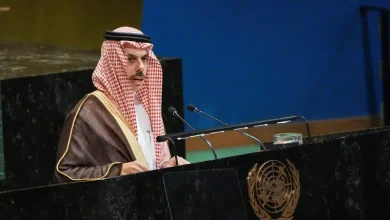
What They’re Saying: “This agreement marks a major milestone in defense cooperation among our three countries, serving as the culmination of a shared intent to unify efforts in confronting threats that impact regional security.” – Prince Faisal bin Farhan, Saudi Foreign Minister.
“May this historic pact remain a shield of peace for generations to come.” – Shehbaz Sharif, Pakistani Prime Minister.
The Bottom Line: The Makkah Agreement proves that Riyadh is no longer just navigating regional security dynamics – it is actively shaping them, based on self-reliance, strategic partnerships, and shared strength.