The Regional Four: A New Alliance in the Making (1-2)
How Saudi Arabia, Egypt, Pakistan and Türkiye Could Change the Middle East's Balance of Power
The escalating conflict between the US, Israel and Iran has pushed the Middle East to a critical turning point where isolation is no longer an option. In such a volatile landscape, regional powers are actively seeking new alignments to hedge against the fallout.
Yet, a rising bloc bringing together Saudi Arabia, Egypt, Pakistan and Türkiye – collectively known as the Regional Four (R-4) group – would do more than just manage the crisis; it could fundamentally rewrite the balance of power across the entire region.
Recognizing this potential, Egyptian President Abdel Fattah Al-Sisi has called for transforming this consultative mechanism into an “effective institutional framework” capable of reaching comprehensive solutions to regional crises.
But what can this ambitious quartet actually deliver? Leaders MENA Magazine turned to leading regional experts and analysts to weigh the capabilities of the R-4 and its potential to reshape geopolitical dynamics.
The Rise of the R-4
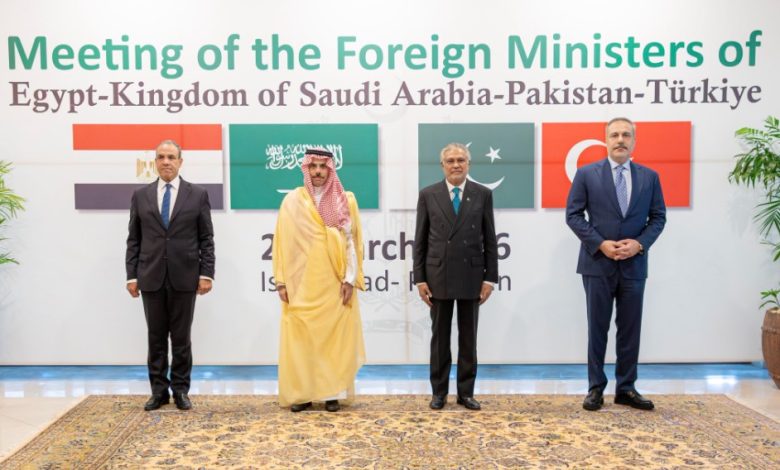
Amid the escalating conflict, key regional powers recognized the need for closer coordination and consultation to navigate the crisis. Saudi Arabia convened the first meeting of the R-4 on March 18, 2026, in Riyadh.
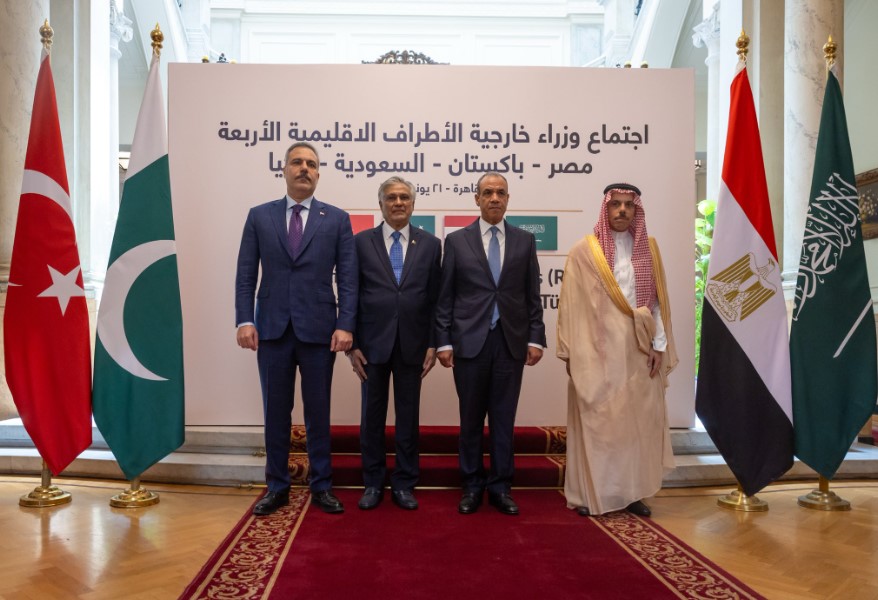
The quartet held its second meeting in Islamabad on March 29, then in Antalya on April 17. Its fourth meeting took place in Cairo on June 21.
During their meetings, the foreign ministers of the four countries discussed the most pressing regional issues, most notably the US-Iran war, the Israeli military escalation in Lebanon, and the Palestinian cause.
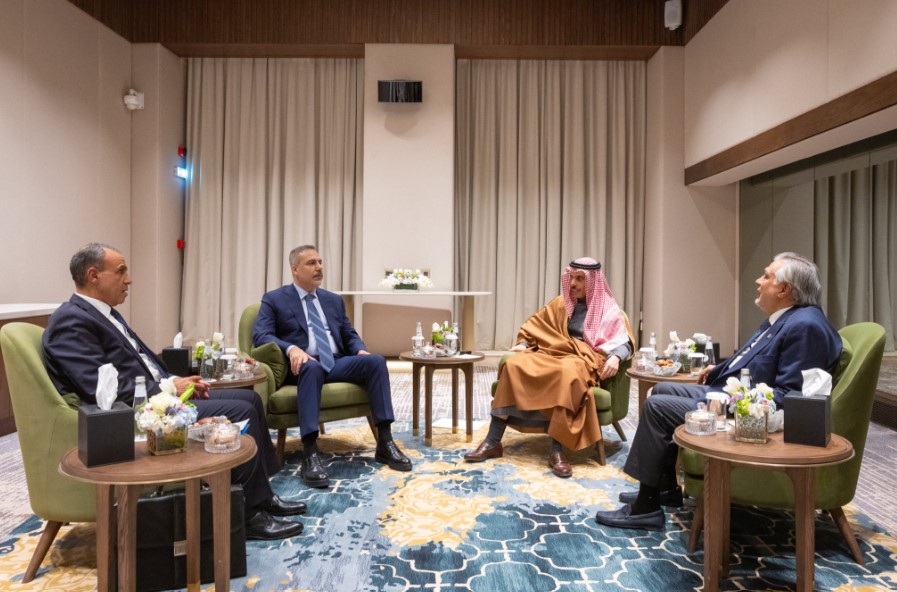
The four countries agreed on boosting joint coordination and unifying positions in the face of the rapidly evolving developments and dangerous military escalation in the Middle East. They also underscored the importance of enhancing diplomatic efforts to address crises and promote regional security and stability.
Unlocking Collective Capabilities
While currently functioning as a consultative mechanism, the R-4 holds massive potential. Evolving into a formal alliance would unlock the unique, complementary strengths of each member state. Analysts outlined the distinctive capabilities of each country.
Saudi Arabia is a political and economic heavyweight, with expansive diplomatic clout and vast financial and investment capabilities. The Kingdom boasts modern, advanced armed forces and a geographical location that provides a strategic depth to the Arab Gulf States. It also stands as the cornerstone of global energy security.
Egypt possesses advanced armed forces that stand as the largest in the Arab world in terms of size and operational experience, bolstered by a young, massive workforce. It holds sovereign control over the Suez Canal, a vital global maritime artery, and serves as a vital strategic depth for the Arab states, further complemented by its influential diplomatic ties across the Middle East and Africa.
Türkiye is a prominent NATO member with the largest standing military in Europe. It has built a sophisticated defense industrial base, particularly in advanced drone technology. It also boasts a strategic location fronting the Black Sea and the Mediterranean.
Pakistan has a highly professional military with extensive, long-term experience in counter-terrorism and advanced nuclear and missile capabilities. It has successfully built a defense industrial base and is part of the Greater Middle East.
The Pillars of Collective Power
The true weight of the R-4 emerges when these individual attributes are consolidated into a collective force. According to Ahmed Adel Abdel-Aal, a military affairs analyst and doctoral researcher in strategic sciences at the Military Academy for Postgraduate and Strategic Studies, the bloc possesses distinct, qualitative capabilities that can be measured across four critical pillars:
- Demographic Power: Together, the four nations boast a combined population of approximately 502 million people. With youths making up an average of 60% of this demographic, the bloc commands a massive, dynamic workforce and a staggering consumer market.
- Economic Clout: With a combined GDP of nearly $3.9 trillion, the R-4 has the economic gravity to act as a central financial powerhouse in the Middle East. Strategically, this positions the bloc as the definitive economic nexus connecting the markets of Asia, Europe, and the rising economies of Africa.
- Intra-Bloc Trade: While current intra-alliance trade stands at roughly $36 billion – with the lion’s share flowing between Egypt, Saudi Arabia, and Türkiye – there is massive room for growth. This internal trade accounts for 14% of Egypt’s global commerce, followed by 7.9% for Saudi Arabia, 7.7% for Pakistan, and 2.6% for Türkiye.
- Military Might: On the battlefield, the group represents an unmatched concentration of regional force. The alliance effectively unites the second-largest standing army in NATO (Türkiye), the largest military in the Arab world (Egypt), the most technologically modern armed forces in the Gulf (Saudi Arabia), and one of the most combat-experienced, nuclear-armed powers in Western Asia (Pakistan).
The Convergence Point
Analysts emphasize that the true power of the R-4 lies in its internal synergy – where the unique, compounding strengths of each member state compensate for the gaps of the others.
Faisal Alhamad, a Saudi military and strategic expert, noted that the nexus between the R-4 countries lies in the possession of large and advanced armed forces, critical strategic location, defense industrial bases, and influential regional and international relations.
“Integration can be achieved by having each country compensate for the gaps and limitations of the others. This collective synergy makes them highly capable of striking a critical balance in regional security,” Alhamad said.
For Abdel-Aal, the prospects for deep integration among the R-4 are most promising across four key sectors:
-
Defense Industries:
The four nations already possess the foundational infrastructure required to scale up joint military industrial integration. Furthermore, their respective armed forces offer ready, massive domestic markets capable of absorbing a wide range of each other’s defense products.
-
Tourism Exchange:
Excluding outbound labor, the combined population of these countries generates an average of 24 million leisure travelers annually. This massive tourism pool represents a powerful economic lever that can be harnessed to deepen cross-border ties through targeted visa and travel frameworks.
-
Trade Expansion:
Egypt currently serves as the primary commercial link, maintaining the highest volume of external trade with the other three members. Thanks to its central geographic location bridging Saudi Arabia and Türkiye, Cairo is uniquely positioned to accelerate trade expansion across the entire bloc.
-
Military Cooperation and Alignment:
- Against the backdrop of escalating regional tensions – where both Iran and Israel are engaged in multi-front confrontations –defense cooperation among the R-4 could forge a powerful “quadrilateral axis of regional equilibrium.” Crucially, this aligned front would serve as an effective deterrent against any asymmetric threats posed by Iran or Israel to the sovereignty of the four member states.
R-4 and the Balance of Power
Weighing in on President Al-Sisi’s call for institutionalizing the quartet, analysts assessed how this alliance could change the regional state of play.
“Institutionalizing the R-4 framework will establish it as a major regional center of gravity and a key driver of security and stability,” Faisal Alhamad noted.
This would enable the quartet to enhance the capacity for coordinating political, military, and economic positions, while supporting regional stability through the creation of a robust deterrence and cooperation framework.
Furthermore, it would strengthen collective engagement in addressing regional crises and establish a solid foundation for knowledge-sharing, research, and development within the defense industries sector.
However, Alhamad emphasized two key aspects that would define the future of the R-4: the alignment of interests and demonstrated political will.
Highlighting the regional balance of power, Ahmed Adel Abdel-Aal argued that if an effective institutional cooperation framework among the four nations successfully materialized, it would likely impose an immediate check on both Israel and Iran, neutralizing any current or planned actions against the R-4 or their interests.
“This is a direct result of the unique capabilities of the group, leveraging both their domestic power and their vast, multifaceted networks of global alliances,” Abdel-Aal said.
A Defensive Shield
Israel has voiced concern over the emerging strategic alignment of regional powers, framing it as an anti-Israel “Sunni axis” or “Islamic NATO.”
According to analysts, a formal alliance involving Saudi Arabia, Egypt, Pakistan and Türkiye could act as a bulwark against external threats.
“For Israel, the presence of Egypt to the south, Türkiye to the north, and the strategic depth of Saudi Arabia and Pakistan to the east – combined with their substantial and modern military power – compels Israel to think twice before threatening any of them,” Abdel-Aal said.
He added that Egypt would highly likely leverage the collective power of this quartet to counter Israeli expansion in the Horn of Africa, confronting Israel’s ambitions to broaden its ties with this region’s nations, particularly in light of the recent moves by the breakaway region of Somaliland.
“As for Iran, being flanked by Pakistan to the east, Saudi Arabia to the west, Türkiye to the north, and Egypt providing strategic depth further west, alongside its demographic overlaps with both Türkiye and Pakistan, makes provoking the hostility of this bloc an incredibly costly challenge for Iran,” Abdel-Aal noted.