Strait of Hormuz Becomes Flashpoint as US, Iran Talk ‘Under Fire’: Col. Abbas Dahouk
The big picture: The United States and Iran are using armed confrontation to drive back-channel diplomacy in the Middle East. Consequently, both nations are pursuing a dangerous strategy of military brinkmanship to secure geopolitical leverage.
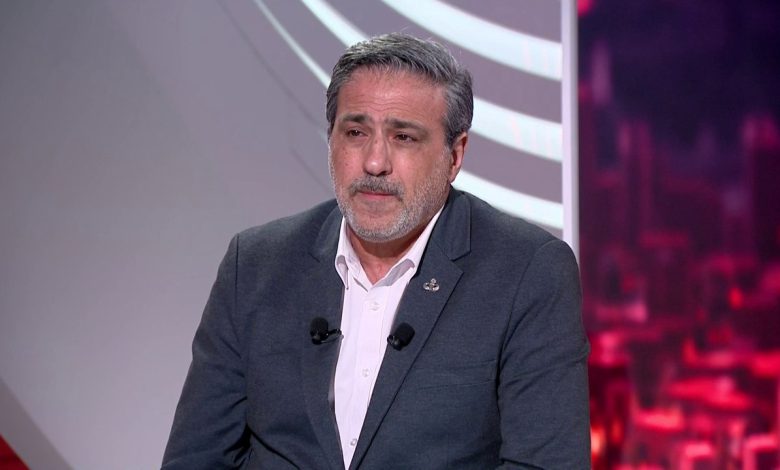
According to Colonel (Ret.) Abbas Dahouk, a former US State Department military advisor, “the United States and Iran are negotiating under fire.” Dahouk shared these insights during an exclusive video interview with Asharq News. He explained that “military methods are completing the negotiations” between Washington and Tehran.
Specifically, Washington is actively leveraging its superior regional presence to pressure the Iranian regime.
“The United States has military power and military influence in the region and possesses stronger muscles, so it continues its strikes,” Dahouk noted. Furthermore, this campaign represents a broader effort to contain Iranian maritime threats. “This marks the fourth attempt to undermine Iranian capabilities around the strait, and operations might expand to target economic facilities,” Dahouk warned.
مستشار عسكري سابق لوزارة الخارجية الأميركية عباس داهوك: الولايات المتحدة وإيران تتفاوضان تحت النار
للمزيد زوروا https://t.co/tk5IBjauaM pic.twitter.com/85b3nfUXCx— NOW الشرق (@AsharqNOW) July 13, 2026
Strait of Hormuz Escalation
Recent diplomatic initiatives, including the Islamabad talks, briefly offered economic relief to Tehran. Initially, Washington eased its naval blockade, allowing vital oil revenues to revive the fragile Iranian economy. However, Tehran has suddenly shifted its strategy back toward direct confrontation.
“Iran now prefers the military path, and observing this Iranian control over the strait is striking,” Dahouk observed. While Tehran cannot match American conventional power, it can still disrupt global energy markets.
“Iran also maintains continuous military capabilities, but they are not enough to win the conflict,” Dahouk stated. Instead, Tehran uses its assets for localized disruption. “These capabilities may suffice to harass the strait, intimidate all commercial ships, and prevent them from crossing,” he added.
Therefore, both adversaries are using targeted violence to shape the eventual peace talks. “The two nations are attempting to negotiate under fire to end this conflict and reach the negotiating table,” Dahouk remarked.
Tehran’s Growing Isolation
Beyond the maritime theater, Iran faces severe geopolitical setbacks as its regional proxies lose ground. Consequently, the traditional regional balance of power is shifting away from Tehran.
- Lebanon: “Hezbollah faces isolation, and the Lebanese government is now advancing and negotiating with Israel,” Dahouk explained.
- Iraq: “The new Iraqi Prime Minister will visit the United States soon, completely far from Iranian intentions,” he added.
“Therefore, there is regional suffocation and political suffocation for Iran now,” Dahouk concluded. “Only the Strait of Hormuz remains for Tehran, and we will soon witness further critical developments.”