The Gulf Cooperation Council (GCC) and the European Union (EU) have expressed a unified stance on safeguarding the security of maritime corridors and the freedom of navigation.
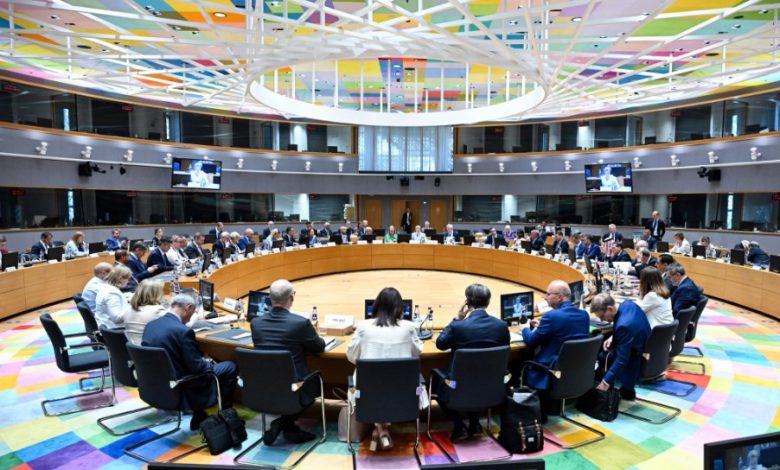
At the conclusion of the Third GCC-EU High-Level Forum in Brussels, Gulf and European partners condemned hostile actions in the Strait of Hormuz, sending a powerful message to destabilizing regional actors that the international community will not tolerate the economic blackmail of global trade routes.
A High-Stakes Summit
The Third GCC-EU High-Level Forum on Regional Security and Cooperation took place on July 13, 2026 in Brussels, focusing on discussing regional solidarity, freedom of navigation in the Strait of Hormuz, and joint responses to escalations following recent Iranian attacks on Gulf States.
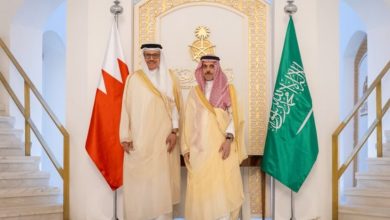
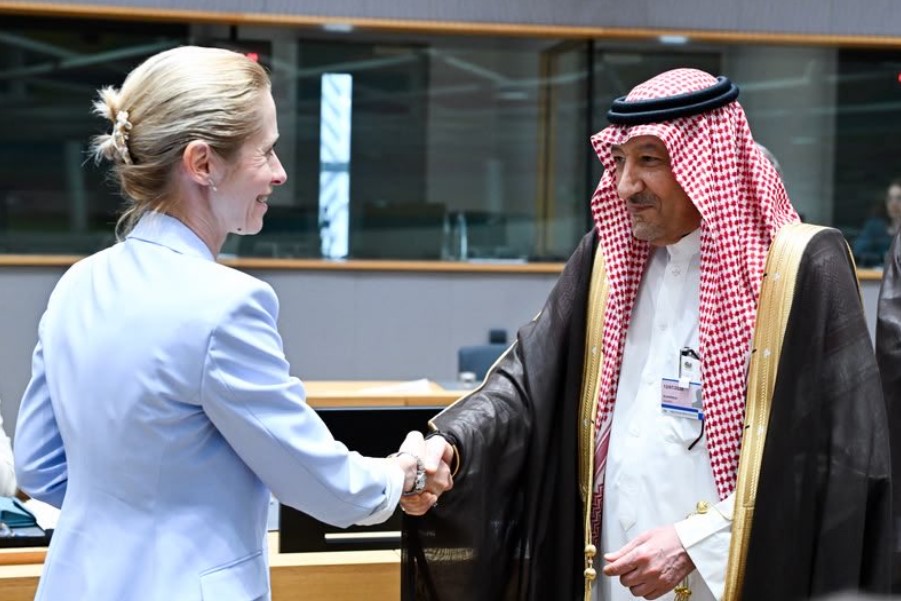
EU foreign policy chief Kaja Kallas chaired the forum, alongside Bahrain’s Foreign Minister and President of the GCC Ministerial Council Abdullatif bin Rashid Al Zayani. Saudi Arabia was represented by Deputy Foreign Minister Walid Al-Khuraiji.
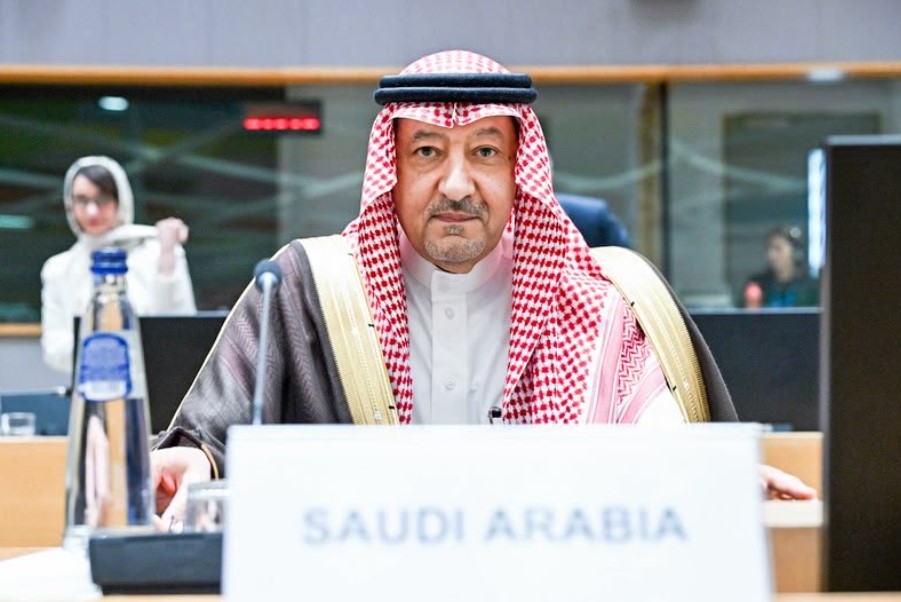
The Big Picture: The summit focused on discussing ways to bolster security and strategic cooperation between the GCC and the EU, in addition to reviewing ongoing efforts to promote international peace and security.
Strategic Alignment on Hormuz
The summit underscored a joint stance unifying the GCC and the EU regarding the latest developments in the region and the Strait of Hormuz.
State of Play: In a joint statement, the GCC and the EU emphasized that the Strait of Hormuz is a waterway used for international navigation, reaffirming that freedom of navigation, including the right of passage through the Strait, is guaranteed under international law, as reflected in the UN Convention on the Law of the Sea.
The statement also voiced strong condemnation of the “unjustifiable” Iranian attacks against commercial vessels passing through the Strait of Hormuz, as well as against the sovereign territory of regional states, including Bahrain, Kuwait, the UAE, Qatar, Oman, and Jordan.
Importantly, the GCC and the EU rejected as unlawful any assertion of sovereignty or control over the Strait of Hormuz by any State, opposing any regime of permits, transit tolls, or service fees imposed upon international shipping.
Unified Stance
The statement called upon Iran to “cease immediately and unconditionally all attacks and all interference with maritime navigation; to keep the Strait of Hormuz open, sustainably and without condition, toll, or fee; and to comply fully with international law and with Security Council Resolution 2817.”
Backstory: The Strait of Hormuz is a strategic waterway linking the Arabian Gulf with the Gulf of Oman and the Arabian Sea, through which around a fifth of daily global oil and LNG supplies pass.
Since the eruption of the US-Iran war in late February 2026, Iran has partially closed the Strait, illegally blocking transit without its permission. This has disrupted the flow of goods, essential commodities and energy and aid supplies.
Despite a preliminary deal between the US and Iran on June 18 that reopens the Strait, sporadic clashes erupted around the waterway, with Tehran claiming the right to total control over the critical maritime corridor.
Commitment to Freedom of Navigation
The statement urged states to work within and support international and regional institutions responsible for maritime governance, safety, and security, particularly the International Maritime Organization.
It also noted that the GCC and EU member states will continue close coordination “to uphold freedom of navigation, to support the protection of international shipping and seafarers, and to advance a just and durable peace and security in the region,” in line with international law and the UN Charter.
The statement concluded with a call for restraint, reiterating the GCC and EU’s unwavering commitment to dialogue and diplomacy as means to resolve the crisis and to uphold freedom of navigation in the Strait of Hormuz.
Between The Lines: As a member of the IMO Council, Saudi Arabia has urged for strengthening international cooperation to ensure the smooth movement of maritime transport and the sustainability of supply chains.
It has also supported resolutions by the IMO Council’s Extraordinary Session, which condemn attacks that threaten the security of global trade and stress that the Strait of Hormuz is an international waterway where the right of passage is guaranteed under international law.
EU Operational Readiness
The EU has played a vital role in safeguarding maritime security and the freedom of navigation through international waterways. This has been evident in EUNAVFOR ASPIDES – an EU military operation launched in 2024 in response to Houthi attacks against commercial shipping in the Red Sea, Gulf of Aden, and the Indian Ocean.
What’s New: France and the UK have launched a defensive multinational naval effort to safeguard navigation through the Strait of Hormuz, with several EU states showing interest in joining the mission following the US-Iran deal.
GCC-EU Integration
The strategic partnership between the GCC countries and the EU dates back to nearly four decades ago. In light of the recent regional escalation, GCC Secretary-General Jasim Albudaiwi stressed the need for further reinforcing these relations to jointly respond to the emerging threats.
He called for a shift from basic security coordination to “true integration,” emphasizing that such a partnership must work to directly protect citizens and make both European and Gulf economies far more resilient to global shocks.
The Context: Speaking at the Third GCC-EU High-Level Forum on Regional Security and Cooperation, Albudaiwi highlighted six pillars for strengthening the GCC-EU ties:
- Coordinated political and diplomatic action.
- Cooperation in regional security.
- Connectivity by accelerating work on trade corridors and alternative routes.
- Energy cooperation.
- Drawing lessons from the current crisis.
- People-to-people communication while accelerating the visa-free mobility track.