US President Donald Trump said Washington will keep negotiating with Tehran even as he declared that last month’s ceasefire is over, following a week that saw Gulf tankers attacked and Iranian strikes hit US bases across the region.
Why it matters: The exchange marks the most serious threat yet to the memorandum of understanding that paused a war now in its fifth month. A fresh flare-up in the Strait of Hormuz, through which a fifth of the world’s oil once flowed daily, has already pushed crude prices to their sharpest weekly gain in two months and left Gulf shipping lanes rattled.
Three Qatari and Saudi commercial tankers came under fire this week, prompting US strikes on Iranian sites and Iranian retaliation against American installations in Gulf states. Friday brought a lull as regional mediators worked to pull the two sides back from the brink.
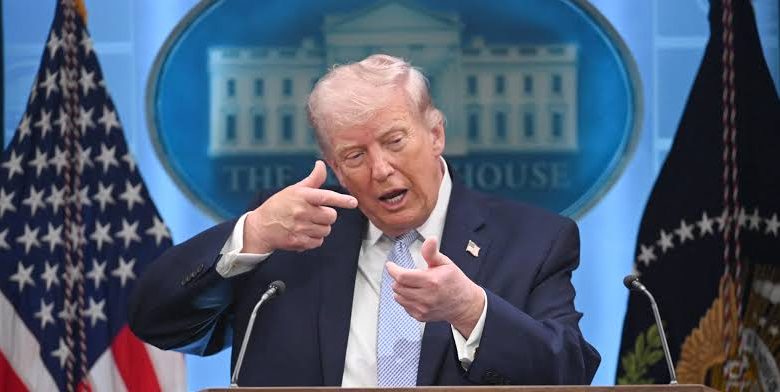
“The Islamic Republic of Iran has asked us to continue ‘talks.’ We have agreed to do so, but the United States has stated to them, in no uncertain terms, that the Cease Fire is OVER!” Trump wrote on Truth Social.
Iran’s government pushed back on that account, saying that it had not requested talks but had instead agreed to receive a Qatari mediator, according to state television. Qatari negotiators met Iranian officials on Friday to ease tensions and discuss safe passage through the strait, a person familiar with the matter told Reuters.
The Assassination Claim
Trump also said he had ordered the US military to stand ready to strike Iran “at levels they’ve never seen” if Tehran attempts to kill him, citing a list of 1,000 missiles “locked and loaded.”
The warning follows reports that Israel shared intelligence with Washington describing a new Iranian plot against the president, according to The Wall Street Journal and other outlets. Some US officials have cautioned that Israel’s report may partly reflect an effort to shape Trump’s approach toward Tehran, even as intelligence agencies continue tracking related threats.
Crowds at the funeral of Iran’s slain Supreme Leader, Ayatollah Ali Khamenei, who was killed in an airstrike on the war’s first day, carried banners threatening Trump’s life this week, further hardening the standoff.
By the numbers:
- 28 February: When the US-Israeli campaign against Iran began.
- 17 killed, 115 wounded: Casualties from US strikes on six Iranian cities this week, per Iran’s Health Ministry.
- One-fifth: Share of global oil supply that once transited the Strait of Hormuz before the war.
- Mid-August: The informal target date US and Iranian officials are reportedly working toward for a broader nuclear agreement.
The big picture: Washington is now demanding that Iran publicly commit to halting attacks on shipping and guarantee toll-free passage through the strait, senior US officials said Friday. Iranian Foreign Minister Abbas Araqchi traveled to Oman on Saturday to discuss safe passage arrangements, Tasnim news agency reported.
A new round of US-Iran talks is expected as soon as next week, possibly in Switzerland, according to a source familiar with the planning. Meanwhile, Tehran has warned that any US breach of its commitments will draw “reciprocal action,” a foreign ministry spokesperson said via state media.
US officials, despite the harsh rhetoric, describe recent private conversations between the two sides as constructive.
Bottom line: Diplomacy and confrontation are running on parallel tracks. Trump is simultaneously threatening devastating retaliation and keeping the negotiating channel open, a balancing act that regional mediators, oil markets, and Gulf shipping firms are all watching closely as the fifth month of war grinds on.