Saudi FM Attends R-4 Meeting as Al-Sisi Pushes to Formalize Regional Quartet
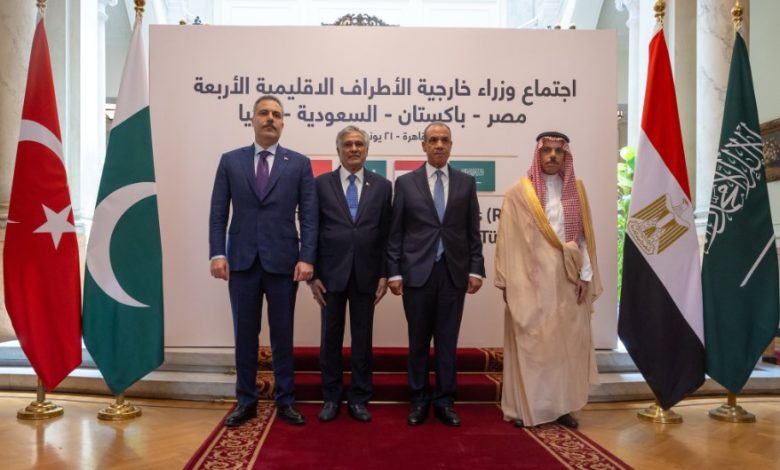
Cairo hosted the fourth consultative meeting of the Regional Four (R-4) Foreign Ministers, with the participation of the foreign ministers of Saudi Arabia, Egypt, Türkiye and Pakistan, to exchange views on the latest developments following the recently signed US-Iran deal.
The foreign ministers of the four countries later met with Egyptian President Abdel Fattah Al-Sisi, who praised their efforts and highlighted the importance of transforming this consultative mechanism into an “effective institutional framework.”
R-4 Meeting
Saudi Arabia’s Foreign Minister Prince Faisal bin Farhan on Sunday took part in the fourth R-4 meeting in Cairo, alongside Egypt’s Foreign Minister Badr Abdelatty, Türkiye’s Foreign Minister Hakan Fidan and Pakistan’s Foreign Minister Ishaq Dar.
According to a statement by the Saudi Foreign Ministry, the meeting discussed the latest regional developments and de-escalation efforts, with a focus on Pakistani mediation in the US-Iran memorandum of understanding (MoU).
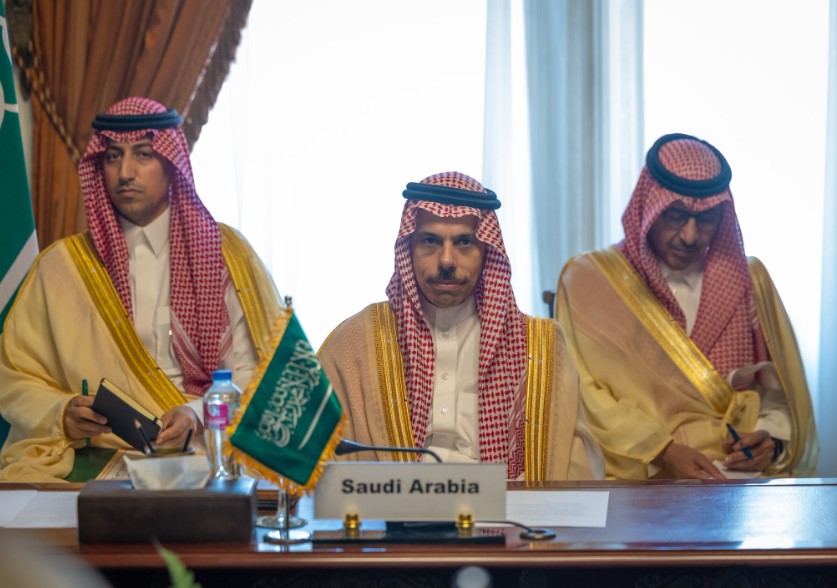
Discussions also addressed Israel’s military escalation against Lebanon, underscoring the need for ongoing efforts, closer coordination and consultation, and continued diplomacy to contain the crisis and restore regional peace and stability.
Saudi Arabia hosted the first meeting of the R-4 Group on March 18, following the outbreak of the US-Israeli war with Iran and blatant Iranian aggression against countries in the region.
The group met again on March 29 in Islamabad and April 17 in Antalya. Their meetings focused on boosting joint coordination and unifying positions in the face of the rapidly evolving developments and dangerous military escalation in the Middle East.
The four countries underscored the importance of enhancing diplomatic efforts to address the crisis and promote regional security and stability.
US-Iran MoU
The four ministers welcomed the US-Iran MoU as a “constructive step towards de-escalation” and towards ending a conflict that threatened regional security and stability, energy markets, international maritime routes, global supply chains, and international trade.
In a joint statement following the meeting, the R-4 ministers praised the mediation efforts of Pakistan and Qatar, which culminated in the signing of the deal.
In light of this, they stressed “the importance of achieving a swift and successful conclusion to the subsequent phase of negotiations which aims to reach a lasting, verifiable, and mutually acceptable solution to the remaining issues.”
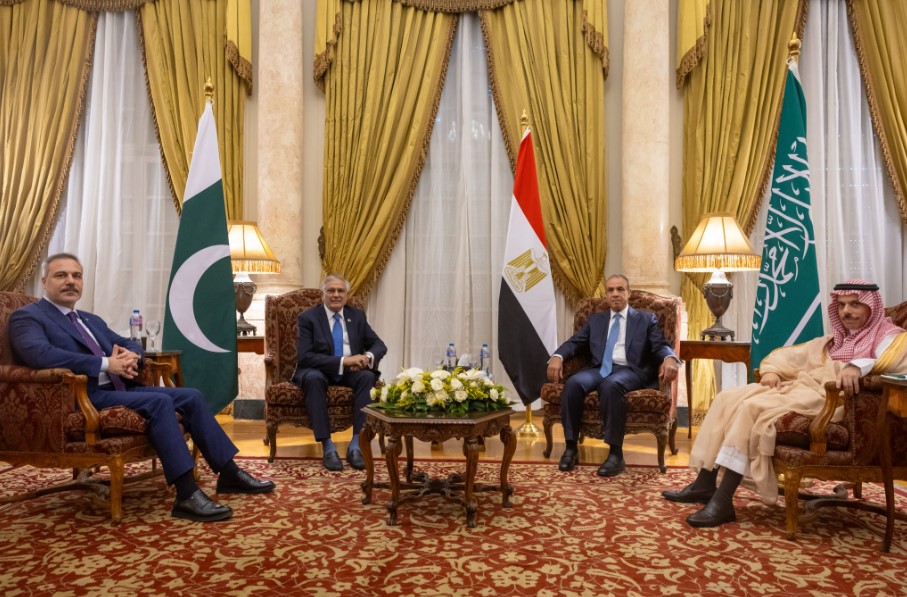
Furthermore, the ministers emphasized that these efforts must address regional concerns, particularly the security and stability of the Gulf States and the Levant region, to foster collective defense and long-term stability.
The Palestinian Cause
The R-4 ministers reaffirmed the centrality of the Palestinian cause for achieving a just, comprehensive, and lasting peace in the region. Consequently, their meeting focused on discussing the humanitarian and political situation in the Gaza Strip, the West Bank, and East Jerusalem under occupation.
They stressed their support for the legitimate rights of the Palestinian people, including their right to self-determination and the establishment of an independent Palestinian State on the 1967 border, with East Jerusalem as its capital. They emphasized that this remains vital for achieving a just, lasting, and comprehensive regional peace under relevant UN Security Council resolutions.
R-4 Evolving Role
The foreign ministers of the quadrilateral group were later received by Egyptian President Al-Sisi, according to the Egyptian Presidency.
Al-Sisi noted that the recent regional developments have highlighted the pivotal role of Saudi Arabia, Egypt, Türkiye and Pakistan as “key pillars of regional security and stability.”
In light of this, he said that this underscores the need for “developing this consultative mechanism into an effective institutional framework capable of formulating comprehensive and sustainable solutions to the region’s crises.”
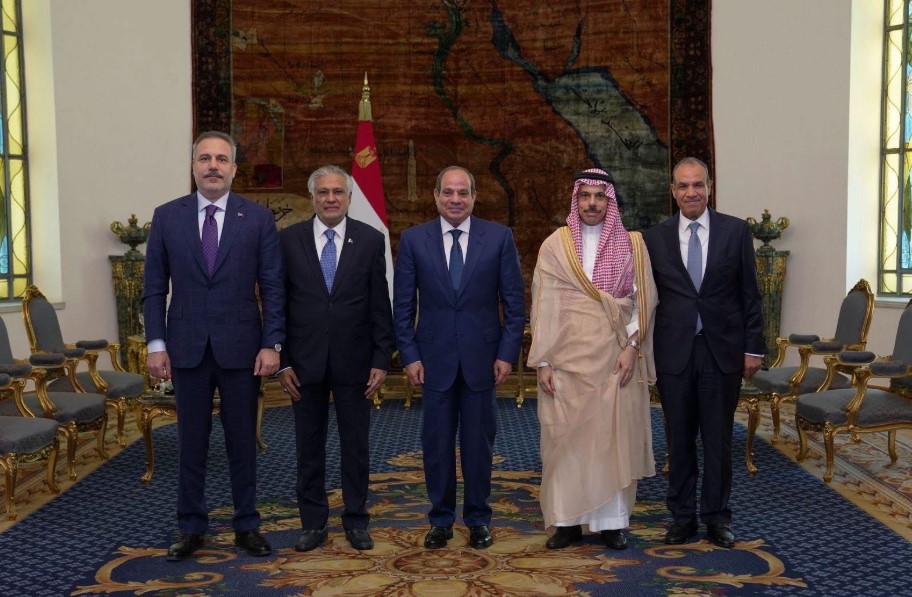
Moreover, the Egyptian President hailed the extensive coordination among the four countries, reiterating Egypt’s commitment to working with Saudi Arabia, Pakistan, Türkiye, and all Arab and regional states to support the implementation of the US-Iran MoU and to ensure the success of the negotiations between both sides.
He also emphasized the need to reach a just and comprehensive solution to the Palestinian cause, as a fundamental prerequisite for achieving lasting and comprehensive stability in the region.