The US and Iran concluded their first round of negotiations in Switzerland early Monday with an agreement to establish a “de-confliction cell” to manage the conflict in Lebanon.
Despite a tense start, the parties made progress toward the creation of a mechanism for further technical talks, setting a roadmap aimed at reaching a final deal within 60 days.
Lake Lucerne Summit
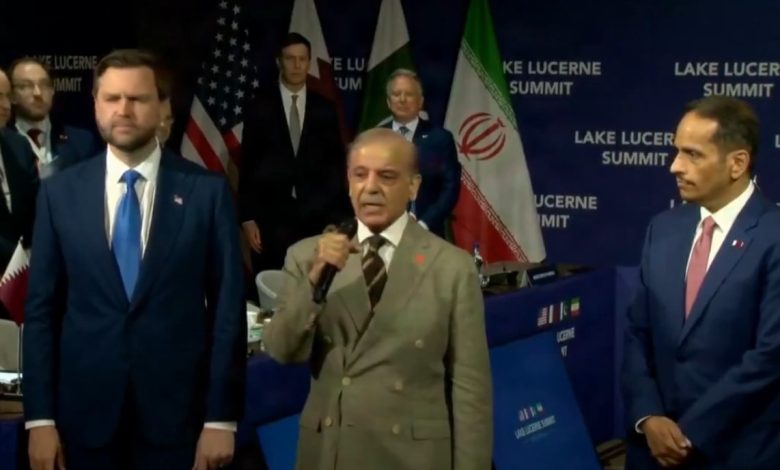
Mediators Pakistan and Qatar announced the conclusion of the first session of the Lake Lucerne Summit in a “positive and constructive atmosphere.” Representatives from the US and Iran took part in the talks following the signing of the Islamabad memorandum of understanding (MoU) last week.
In a joint statement, Pakistan and Qatar said that the parties agreed to establish a High Level Committee to oversee the mediation.
Negotiators reporting to the committee will lead working groups focused on nuclear, sanctions, and other issues to “ensure the effective implementation of the MoU, and on other matters.”
The High Level Committee agreed to set a roadmap to reach a final deal within 60 days.
Hormuz & Lebanon
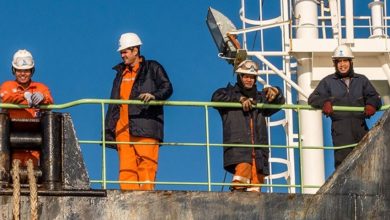
The committee established a line of communication to “avoid incidents and miscommunication with the aim of safe passage for commercial vessels through the Strait of Hormuz,” according to the statement.
Furthermore, the parties agreed to a mechanism to end the fighting in Lebanon. This includes the creation of a “de-confliction cell” involving the US, Iran and the Lebanese government, and facilitated by Pakistan and Qatar, to “ensure the adherence to the termination of military operations in Lebanon as per the MoU.”
The mediators noted that technical talks will continue throughout the week at the Swiss Bürgenstock resort.
While the MoU clearly states that military operations should end on all fronts, including in Lebanon, and that Iran should reopen the Strait of Hormuz, renewed fighting between Israel and Hezbollah threatened the Switzerland talks, with Iran’s Revolutionary Guards announcing the closure of the critical waterway to traffic.
Reciprocal Threats
As negotiators met in Switzerland on Sunday, remarks by US President Donald Trump threatened to derail the talks. In a social media post, Trump warned that he could strike Iran again if it does not rein in Hezbollah.
“Iran must immediately stop their highly paid PROXIES in Lebanon from causing trouble, If they don’t, we’ll hit Iran very hard again, just like we did last week, only harder!!!” he wrote on Truth Social.
Trump made similar statements to Fox News, threatening to resume bombing Iran and to “take over” the Strait of Hormuz if a deal is not reached.
His comments sparked an Iranian response, with Tasnim News Agency reporting that the Iranian delegation left the room where the talks were taking place and traded messages through Pakistani and Qatari mediators.
Moreover, Iran’s top negotiator and Parliament Speaker Mohammed Bagher Qalibaf warned the Americans to “be careful” about their statements. “Our armed forces are prepared to respond to them in a different manner. They may keep talking, it is we who act,” he posted on X.
Major Progress
In Switzerland, US Vice President JD Vance, who led the American delegation alongside Steve Witkoff and Jared Kushner, said that Trump asked them to “turn over a new leaf to transform our relationship with the people of Iran.”
“What today really represents is the beginning of a technical negotiation… [that’s] going to allow us to sit together, as teams, for the first time really in history, to figure out what matters most to the respective parties, to settle those issues and get to a better tomorrow,” Vance told reporters.
According to Tasnim, citing an Iranian source, Iran insisted that negotiations on the nuclear issue should start after the delivery of other parts of the MoU, including the release of frozen assets and US waivers authorizing Iranian oil exports.
However, a US diplomat told Reuters that the Iranians discussed “the Strait (of Hormuz), Lebanon, nuclear issues, and details of implementing the MoU, among other topics.”
After the conclusion of the talks, Iranian Foreign Minister Abbas Araghchi thanked Pakistan and Qatar for their mediation efforts that have “delivered major progress to end Lebanon War.”
“Oil and petrochem exports are waived, blockade lifted, some frozen assets released, and major reconstruction & development plan launched for Iran,” he posted on X, adding that the Lebanon de-confliction cell marks the first real test.