Pakistani Interior Minister Mohsin Naqvi has arrived in Tehran as Islamabad intensifies mediation efforts to break a stalemate in peace talks between the US and Iran.
This diplomatic push follows a recent visit to China by US President Donald Trump, who said he was losing patience with Iran, while Iranian Foreign Minister Abbas Araghchi voiced Tehran’s mistrust of Washington.
Pakistani Peace Push
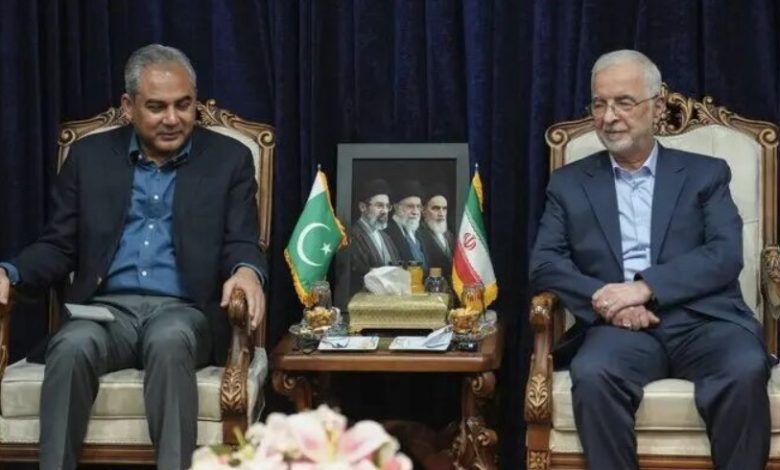
According to Iranian media, Pakistani Interior Minister Mohsin Naqvi landed in Tehran on Saturday on an official two-day visit, as part of Islamabad‘s efforts to facilitate dialogue and advance regional peace.
Naqvi held a meeting with his Iranian counterpart Eskandar Mo’meni, during which they reviewed bilateral relations and discussed the prospects for resuming peace talks, reported Tasnim news agency.
The Interior Minister’s arrival marks his second trip to Tehran in a month, having previously accompanied Pakistan’s Army Chief, Field Marshal Asim Munir, during a high-stakes diplomatic mission in mid-April.
Acting as the primary mediator, Pakistan hosted high-stakes talks between US and Iranian delegations last month and remains actively engaged in bridging the gaps between Washington and Tehran.
Framework for a Deal
The Pakistani Minister’s visit to Iran aims to reach a specific agreement framework, reported Al-Arabiya, citing Pakistani sources.
Washington is awaiting responses to specific points it put forward, the sources said, noting that progress has been made regarding the Strait of Hormuz.
The sources added that an interim agreement remains the only viable option for the US and Iran.
On Thursday, Pakistan said it remains engaged in diplomatic efforts to de-escalate tensions in the Middle East, without providing details.
“The peace process is intact, it’s holding on. We remain engaged. We remain hopeful,” Pakistani Foreign Ministry spokesperson Tahir Andrabi told reporters in Islamabad.
US-Iran Stalemate
A ceasefire took effect between the US and Iran on April 8, which paused the fighting that broke out in late February following a joint US-Israeli attack on Iran and laid the groundwork for peace negotiations.
However, talks have failed to achieve a breakthrough as Washington and Tehran remain in a deadlock over a number of issues, including the Strait of Hormuz and Iran’s nuclear program.
Trump rejected Iran’s response to the latest US proposal as “totally unacceptable.” The Iranian counter-proposal called for an end to fighting on all fronts, including in Lebanon; full sovereignty over the Strait of Hormuz; ending US naval blockade; and a guarantee that Iran will not come under attack again.
It also demanded compensation for war damages, the release of frozen Iranian assets, the lifting of sanctions and ending a US ban on Iranian oil sales. However, it made no mention of the nuclear issue, according to Iranian media.
Trump Losing Patience
Trump said that his patience with Iran was running out, urging Tehran to reach a deal. “I am not going to be much more patient. They should make a deal,” he said in an interview with Fox News on Thursday night.
The US President also said that retrieving Iranian enriched uranium was not of practical necessity, but for “public relations” purposes.
“I don’t think it’s necessary except from a public relations standpoint. I just feel better if I got it, actually. But it’s, I think, it’s more for public relations than it is for anything else,” Trump noted.
Iran is believed to have more than 440 kilograms of 60% enriched uranium – a technical hairsbreadth from weapons-grade purity. The US insists that Iran should transfer its stockpile to a third country and halt domestic enrichment – demands that Tehran rejects.
No Trust in US
Iran’s top diplomat Araghchi signaled Tehran’s lack of trust in the US. Speaking to reporters in New Delhi on Friday, he said that “contradictory messages” from Washington have “made us reluctant about the real intentions of Americans.”
“We are in doubt about their seriousness,” Araghchi stated, adding that negotiations would advance if the US was ready for a “fair and balanced deal.”
The Iranian Foreign Minister noted that the Pakistani-mediated peace process had not failed but was in “difficulty,” saying that “Iran is trying to keep the latest ceasefire to give diplomacy a chance but is also prepared to go back to fighting.”