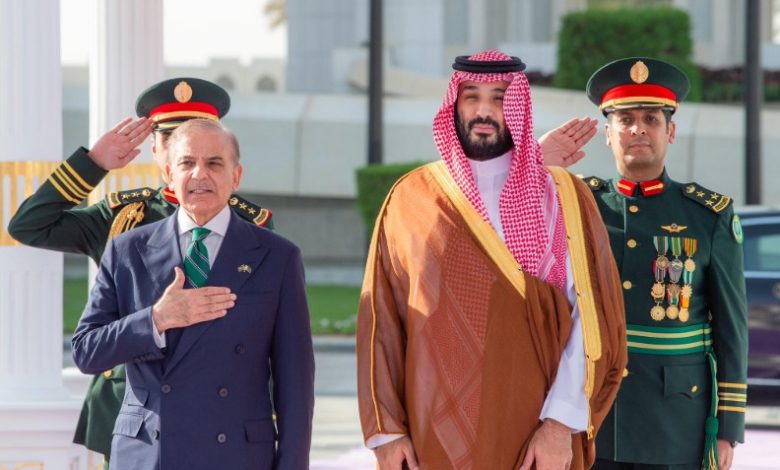
For decades, Saudi Arabia and Pakistan have enjoyed robust relations, deeply rooted in economic and cultural bonds. These ties have steadily expanded over the years to encompass political, security, and defense cooperation.
Amid a rapidly changing Middle East, this Saudi-Pakistani partnership has evolved into a vital strategic alliance navigating complex regional challenges to safeguard long-term stability.
The R-4 Framework
State of Play: Riyadh and Islamabad have intensified their political coordination and diplomatic efforts to de-escalate the situation in the Middle East and prevent the US-Iran conflict from spiraling out of control.
Both countries emphasized that any regional de-escalation frameworks must safeguard the security and sovereignty of the Arab Gulf States.
These efforts have crystalized in the Regional Four (R-4) Group – a diplomatic framework involving Saudi Arabia, Pakistan, Egypt and Türkiye launched on March 18, 2026 in Riyadh to coordinate positions and advance de-escalation efforts to resolve regional crises.
Commitment to Regional Stability
Through a series of meetings, the Foreign Ministers of the four countries underscored the importance of enhancing diplomatic efforts to address the US-Iran conflict and promote regional security and stability.
They also emphasized that these efforts must address regional concerns, particularly the security and stability of the Gulf States and the Levant region, to foster collective defense and long-term stability.

Furthermore, the ministers reaffirmed the centrality of the Palestinian cause for achieving a just, comprehensive, and lasting peace in the region.
How We Got Here: A joint US-Israeli attack on Iran in late February 2026 triggered an Iranian response and put the Middle East on the brink. Gulf States came under direct Iranian missile and drone strikes targeting civilian infrastructure, including commercial ports, airports, desalination plants, and energy facilities, despite maintaining strict neutrality in the conflict.
Key regional players rushed to contain the escalation and pressed both sides to convene at the negotiating table. Pakistan has emerged as the primary mediator in the negotiations between the US and Iran, which culminated in the signing of the Islamabad Memorandum of Understanding (MoU) on June 18.
This preliminary deal ended hostilities, reopened the Strait of Hormuz, and launched a 60-day negotiation period to discuss disputed issues and secure a comprehensive agreement.
Mutual Defense at the Core
The Saudi-Pakistani partnership was further solidified by a Strategic Mutual Defense Agreement (SMDA), signed on September 17, 2025 in Riyadh during a state visit by Pakistan’s Prime Minister Mohammed Shehbaz Sharif.
The Pivot: The mutual defense pact enhances cooperation between Riyadh and Islamabad and strengthens joint deterrence against any potential aggression. It clearly states that “any aggression against either country shall be considered an aggression against both.”
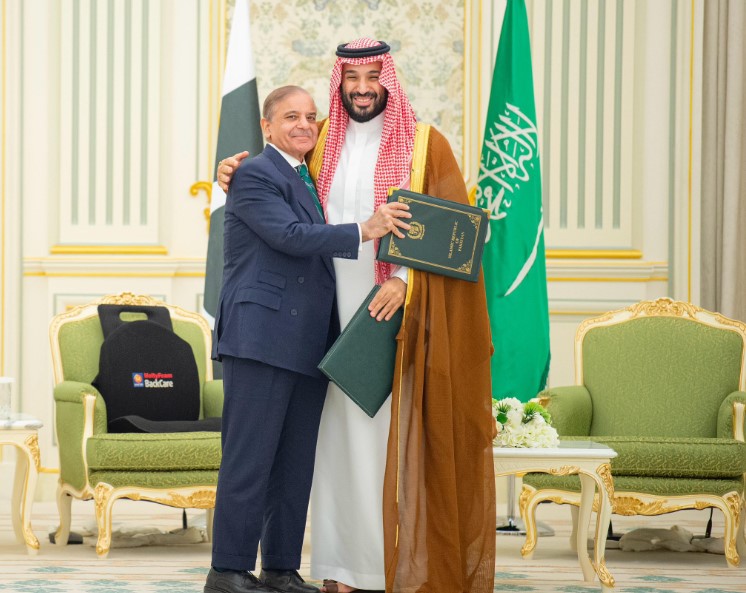
Furthermore, Pakistan’s nuclear deterrent will be available to Saudi Arabia under the agreement, as suggested by Pakistani Defense Minister Khawaja Mohammad Asif.
As part of the pact, a military force, including fighter and support aircraft from the Pakistani Air Force, arrived at the Kingdom’s King Abdulaziz Air Base in the Eastern Sector in mid-April 2026, according to a statement by the Saudi Defense Ministry, carried by the Saudi Press Agency (SPA).
According to a Reuters report in May, Pakistan deployed 8,000 troops, a squadron of 16 fighter jets and an air defense system to Saudi Arabia.
Security Integration
Security cooperation is a key aspect of Saudi-Pakistani ties. The two countries have taken their security coordination to a new level during a recent visit by Pakistan’s Interior Minister to the Kingdom.
What’s New: Pakistani Interior Minister Mohsin Naqvi met with his Saudi counterpart Prince Abdulaziz bin Saud bin Naif in Riyadh on July 1, 2026 and explored ways to strengthen security cooperation and coordination.

Following their meeting, the two ministers signed a memorandum of understanding (MoU) to boost scientific, training, and research cooperation between the Saudi and Pakistani interior ministries, thus supporting the exchange of expertise and capacity building in areas of mutual interest.
The Economic Engine
The Bottom Line: A robust economic synergy serves as the bedrock of the Saudi-Pakistani partnership, with Riyadh consistently anchoring Islamabad’s fiscal stability to preserve broader regional security.
These economic ties are driven by Pakistan’s Special Investment Facilitation Council (SIFC), a joint civilian-military framework designed to fast-track multi-billion dollar Saudi investments into high-priority sectors.
Under this framework, Saudi Arabia boosted its active portfolio to $2.8 billion across 34 MoUs and agreements between Saudi and Pakistani businesses.
Building on this momentum, a high-level delegation of Saudi investors and members of the Saudi-Pakistani Business Council – led by its Chairman, Prince Mansour bin Mohammed Al Saud – visited Pakistan in early June 2026.
The delegation held meetings with senior officials from the government and private sector to explore investment opportunities across key sectors, including energy, agriculture, infrastructure, logistics, technology, and privatization.