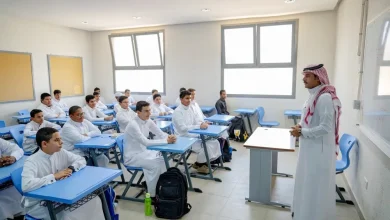


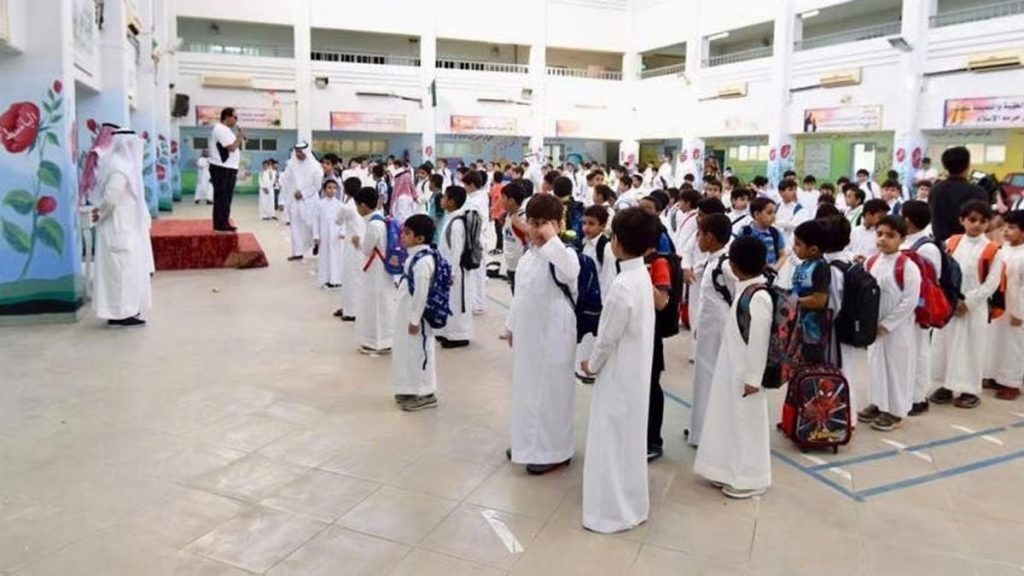
Saudi Arabia’s Ministry of Education has finalized all preparations for the launch of the new academic year, set to begin Sunday, 23 August, 2026. Consequently, millions of Saudi students will return to classrooms nationwide tomorrow morning. Ministry officials actively monitored school readiness across all provinces to guarantee a seamless transition after summer vacation. Furthermore, Minister of Education Yousef Al-Benyan oversees this broad effort to elevate instructional standards across all administrative regions.
The big picture: Saudi Arabia is advancing its national educational ecosystem at an unprecedented speed. Strategic reforms under Crown Prince Mohammed bin Salman’s Vision 2030 drive this comprehensive transformation. Therefore, the ministry focuses heavily on high-quality instruction, modern curricula, and essential digital capabilities.
Transforming Classrooms Through Tech and Expansion
Why it matters: Education represents the cornerstone of Saudi Arabia’s long-term economic diversification goals. Thus, the government funds deep structural improvements to prepare a highly competitive workforce for emerging future industries.
Specifically, the ministry executed the fastest textbook distribution campaign in Saudi history. Logistics teams successfully delivered over 36 million textbooks to public schools before the summer break began.
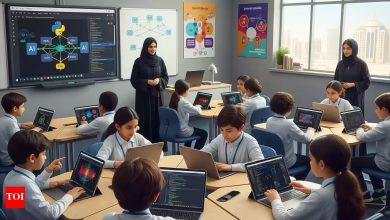
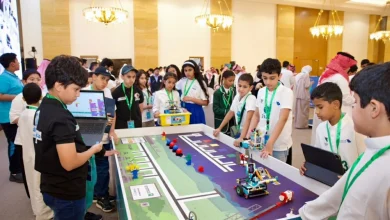
Furthermore, academic authorities modernized 22 core study subjects to match global standards. Educators also integrated 50 new learning units in artificial intelligence across multiple grade levels. Meanwhile, the ministry launched specialized public schools to nurture gifted Saudi students in key scientific disciplines.
Additionally, the government expanded private education opportunities across all regions. Officials provided 200 new school buildings to private sector partners. Consequently, this initiative adds roughly 160,000 student seats to boost overall sector capacity.
Moreover, the ministry upgraded digital services for all educational users. The unified “Education Portal” serves as the central digital hub for students, parents, and teachers. Furthermore, online platforms like Madrasati complement daily classroom instruction.
Education Fuels Vision 2030 Push
By the numbers: Saudi Arabia commits immense financial resources to develop human capital under Vision 2030.
- SAR 189 billion ($50.4 billion): The government allocated this sum to education in recent national budgets, representing 17% of total public expenditure.
- SAR 120 billion ($32 billion): The Human Capability Development Program targets this total direct investment in the education sector by 2030.
- SAR 1.2 billion ($320 million): The Kingdom invested this amount into educational technology, successfully creating over 10,000 smart classrooms.
- 36 million textbooks: Distribution teams delivered this record number of textbooks to local schools before summer break.
- 160,000 seats: Private school expansion added this capacity across 200 newly assigned educational buildings.
- 43% employment: Higher education graduate workforce placement surged to this rate in 2024, up from 13.3% in 2016.
Saudi Arabia wants its education system to rank among the world’s top 20 by 2030. Private investment sits at the center of that plan. Mordor Intelligence expects the Kingdom’s private K-12 market to grow from roughly about SAR 55 billion ($14.7 billion) in 2026 to nearly about SAR 93 billion ($24.8 billion) by 2031.
That growth explains this year’s 200 new private-sector buildings. The ministry also launched the Education Gateway, a unified digital portal for students, parents and teachers. The platform brings enrollment, grades and other services together in one place.
Empowering the Workforce of Tomorrow
Between the lines: Saudi Arabia views modern education not merely as a basic public service, but as a primary economic growth engine. Indeed, updated classroom learning aligns directly with rapidly evolving labor market requirements.
“The educational system seeks a new school year that represents an important milestone in developing curricula and leading the educational process,” an official ministry statement confirmed.
Chairman of the Human Capability Development Program Yousef Al-Benyan noted that the Kingdom actively redefines teachers as learning facilitators. Consequently, specialized training programs prepare educators for future technological shifts.
Furthermore, international educational metrics show clear national progress. Today, 66% of Saudi scholarship students attend top 50 universities globally. Moreover, overall vocational and technical training enrollment now reaches 30.54% of students nationwide.
For Saudi families, Sunday’s return to school signals more than the end of summer. It marks another step in a national effort to prepare a young generation to contribute confidently to the Kingdom’s future.
What’s next: Ministry officials will continue refining teaching practices throughout the upcoming academic term. Therefore, educators expect higher student achievement in STEM subjects, technical fields, and creative leadership.