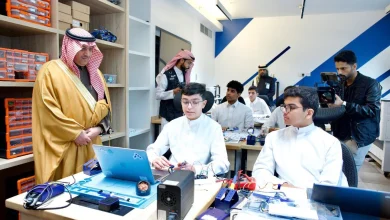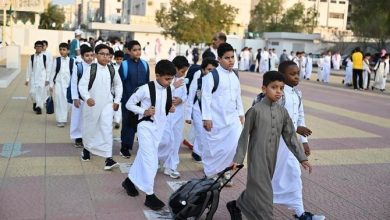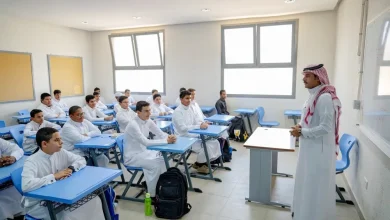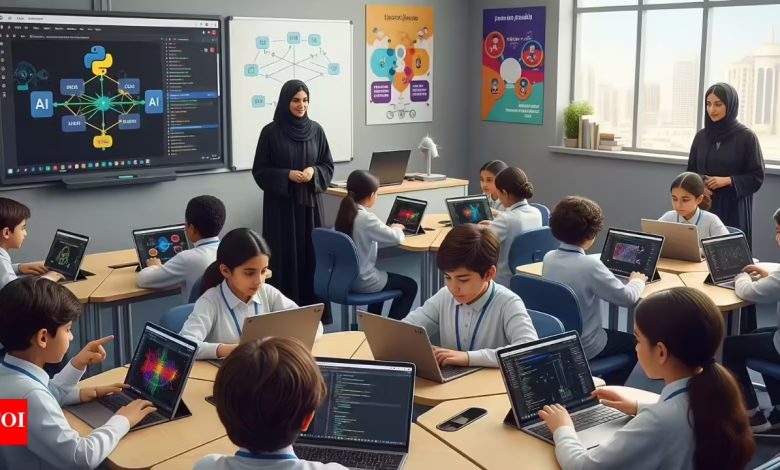
Saudi Arabia has achieved a qualitative leap in integrating Artificial Intelligence (AI) into general education within two years. The Kingdom made AI a mandatory curriculum component, trained tens of thousands of educators, and established a national assessment ecosystem to guarantee quality, and international bodies now cite the effort as a model worth copying.
Why it matters: The World Bank and other global organizations point to the Kingdom’s approach as evidence that Saudi Arabia could help set the standard for AI education worldwide, not just follow it. Officials built the effort on official data from the Education and Training Evaluation Commission, the Ministry of Education and the Human Capability Development Program (HCDP), one of the flagship initiatives under Vision 2030. The Kingdom is now a strong candidate to lead this global transformation, setting regional and international benchmarks for responsible AI innovation in education.
Strategic Framework and Student Empowerment
The transformation aligns with HCDP’s four pillars:
- Identity Anchored: Strengthening national values and Arabic language.
- Foundation Built: Developing educational capacities and future skills.
- Readiness Enhanced: Aligning education outputs with labor market needs.
- Leadership Renewed: Fostering innovation and entrepreneurship.
Education Minister Yousef Al-Benyan outlined the results at the Kingdom’s 24th government press conference in August 2025. He said the ministry had achieved more than 19 strategic targets, spanning curriculum development, teacher training, AI integration and expanded technical education.
The rollout builds on a broader national push. The National Curriculum Center, working alongside the Ministry of Education, the Ministry of Communications and Information Technology and the Saudi Data and AI Authority (SDAIA), launched the curriculum nationwide starting in the 2025–26 academic year, eventually reaching roughly six million students across every grade level.
Empowering Educators and Ensuring Quality
Saudi Arabia equips its educators to lead this digital transition effectively:
- Teacher upskilling: The Kingdom trained over 13,000 teachers in AI applications last year, while more than 470,000 educators utilized the national professional development platform.
- Practical tools: The Ministry of Education provided instructors with practical tools, including the “Moeen” platform for lesson planning and testing, a smart assistant within “Madrasati,” and a generative AI guide developed with “SDAIA” and the National e-Learning Center.
- Data-driven assessment: The Education and Training Evaluation Commission partnered with the Ministry of Education to transition national evaluation toward evidence-based data, utilizing the “NAFES” national assessment program to monitor yearly student performance in mathematics, science, and reading.
The results already show up on the global stage. Saudi students won first place at the World AI Youth Championship two years running, most recently in 2025. Qassim University took top honors at the 2026 WSIS Prizes in Geneva for its AI-powered learning platform, Qspark.
Consequently, at the university level, 79% of Saudi universities now offer technology and AI courses, while more than 30 have made an AI course mandatory for all students regardless of major, per the program’s 2025 annual report.
Moreover, partnerships with six international universities have also supported 80 digital startups and 60 university-based ventures, connecting them with more than 84 investment opportunities.