
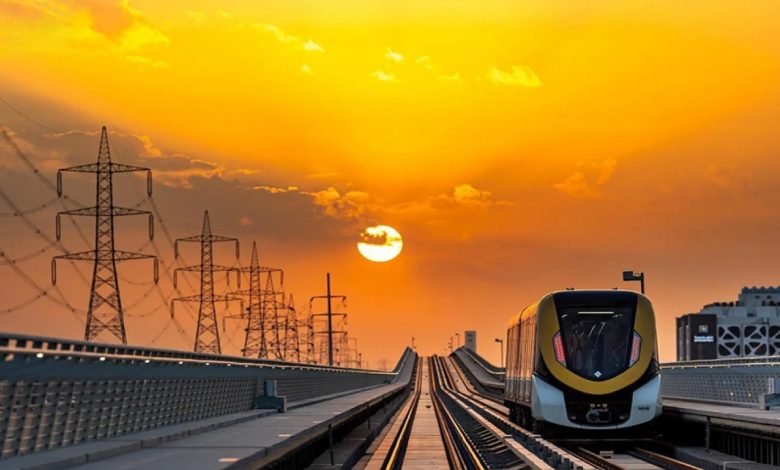
Driving the news: Riyadh Metro has joined the world’s top four transport projects. The honour came at the 2026 World Smart City Awards in Barcelona.
The Royal Commission for Riyadh City (RCRC) oversees the project. Riyadh Metro reached the final four of the Mobility Award, and the contest drew 533 entries from 68 countries. The ceremony took place on 4 November, during the Smart City Expo World Congress.
Why it matters: The result shows that Riyadh’s transport model now meets global benchmarks. It also proves that Saudi Arabia’s heavy spending on rail, roads and logistics is earning international recognition.
Riyadh Metro Reaches the Global Mobility Shortlist
The Saudi Press Agency (SPA) said the ranking reflects the project’s scale and advanced technology. The metro stands among the largest and most modern public transport schemes worldwide. Moreover, it anchors a sustainable, eco-friendly urban transport system. The network cuts carbon emissions, improves traffic flow and keeps pace with the capital’s fast population growth.
King Salman inaugurated the metro on 27 November, 2024, and passenger service began on 1 December. Since then, ridership has climbed fast. RCRC Chief Executive Ibrahim Al Sultan said the metro has carried more than 300 million passengers. Average ridership rose 25% between January and September 2026 compared with a year earlier.
Riyadh collected further honours in Barcelona. The Real Estate Balance Program (Tawazoun) won the Infrastructure & Building Award. In addition, the Riyadh Infrastructure Projects Center reached the finals of the Governance & Economy Award with its “Infrastructure in One Source” initiative.
The congress ran under the theme “Urban Solutions, Tangible Impact.” More than 600 international speakers joined the program. They discussed digital transformation, mobility, energy, housing and infrastructure.
Data, AI and Digital Twins Shape the Capital
Zoom in: RCRC used its pavilion to show how data drives city planning. It presented the Riyadh City Data Platform, digital twin applications and artificial intelligence tools. Furthermore, it highlighted the capital’s public transport network, its traffic management systems and the Green Riyadh program.
Dr. Maher Shirah, Director General of the Smart Cities General Department at RCRC, linked these tools to daily life. He told Asharq Al-Awsat that a smart city’s value lies in its effect on residents’ lives. Housing, access to opportunities, efficient services and trust in urban management matter most, he added.
Shirah also explained that data helps authorities compare neighbourhoods and match housing supply with future demand. Consequently, officials can direct land, infrastructure and housing decisions with greater precision.
By the Numbers:
- 533 entries from 68 countries: the field at the 2026 World Smart City Awards.
- 176 km, six lines, 85 stations: the size of Riyadh Metro’s driverless network.
- SAR 84.4 billion ($22.5 billion): the estimated cost of the metro.
- 300 million+: passengers carried since launch, with 83% of riders using the network daily.
- SAR 5.5 billion ($1.47 billion): the 94-train expansion, which lifts the fleet from 183 to 277 trains and capacity by 60% from 2028.
- SAR 100 billion ($26.7 billion): the estimated value of the 1,500-km Landbridge railway.
- SAR 200 billion+ ($53.3 billion): logistics investment since the national strategy launched, according to the transport minister.
- SAR 10 billion+ ($2.67 billion): the investment in 18 new logistics zones.
- 6% to 10%: the targeted rise in the sector’s share of GDP.
- SAR 562.5 billion ($150 billion): Total national capital allocation dedicated to upgrading transport and logistics infrastructure under Vision 2030.
- 6 million: the network’s daily design capacity, sized for a city heading toward 15 million residents.
Saudi Arabia Bets Big on Rail and Roads
The big picture: Riyadh Metro forms just one piece of a national overhaul. Crown Prince Mohammed bin Salman launched the National Transport and Logistics Strategy in 2021. The plan covers 92 initiatives and 378 projects. It aims to lift the sector’s share of GDP from 6% to 10%.
Spending has followed. Transport and Logistics Minister Saleh Al-Jasser said the Kingdom has invested more than SAR 200 billion ($53.3 billion) in logistics since the strategy began. Meanwhile, Saudi Arabia is developing 18 new logistics zones worth more than SAR 10 billion ($2.67 billion).
Rail takes center stage. The Landbridge project spans more than 1,500 km of new and upgraded track at roughly SAR 100 billion ($26.7 billion). Saudi Arabia Railways has outlined plans for a Riyadh–Jeddah railway by 2034. Officials also target a 30% rail share of national transport. Likewise, Jeddah has restarted its metro program with a January 2026 tender for Blue Line design services.
Back in Riyadh, the commission is advancing a road program as well. The 700-km plan covers more than 330 intersections, over 300 bridges and 80 tunnels. RCRC is also upgrading signals at 720 intersections, and Green Riyadh has planted more than 4.5 million trees.
More Trains, Longer Lines
What’s next: Riyadh Metro will grow quickly. RCRC awarded contracts to Siemens and Alstom for 94 new trains worth SAR 5.5 billion ($1.47 billion). Deliveries begin in phases in 2028. Capacity will rise 60% across the network. The Red Line will see the biggest jump, at 142%.
Meanwhile, the Red Line will extend from King Saud University to Diriyah, adding five stations. These upgrades arrive as the capital prepares to host Expo 2030 and the 2034 FIFA World Cup.
Bottom line: Barcelona’s spotlight validates years of planning. For Gulf readers and international investors alike, Riyadh now offers a working template for smart, sustainable urban mobility.