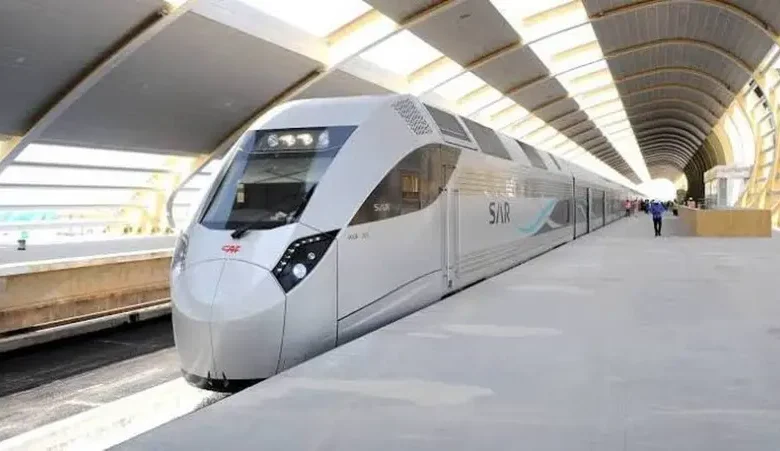
Driving the new: Saudi Arabia’s trains carried more than 40.9 million passengers in the third quarter of 2026, according to the Transport General Authority (TGA)’s quarterly indicator. Moreover, the total marks a clear rise over the same quarter last year. The third-quarter figure also beat the 38 million journeys recorded in the previous quarter. The Kingdom’s rail revolution, in short, keeps gathering speed.
Why it matters: The figures prove that Saudi Arabia’s massive investment in public transport is paying off. Rail has become a daily habit for millions of residents, pilgrims and visitors. As a result, the Kingdom moves closer to its Vision 2030 goal of a connected, less car-dependent society. The metro and bus networks together represent an investment exceeding SAR 90 billion (about $24 billion).
Freight tells the same story. Trains moved 3.9 million tons of minerals and goods in the quarter, alongside 46,300 containers. That cargo volume rose from 3.7 million tons in the second quarter. Therefore, rail now supports both commuters and the logistics sector that underpins economic diversification.
Riyadh Metro Takes the Lead
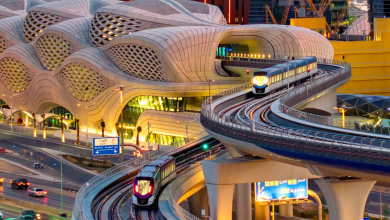
Urban services dominated passenger traffic with 38.3 million riders. The Riyadh Metro led the way with 30.4 million passengers, roughly three-quarters of all rail journeys in the Kingdom. Meanwhile, the automated people mover at Jeddah’s King Abdulaziz International Airport served 7 million travelers. In addition, the Princess Nourah bint Abdulrahman University train carried about 911,200 riders.
The metro’s popularity reflects its scale. The network spans 176 kilometers, runs six driverless lines and serves 85 stations. It also holds the Guinness World Record as the world’s longest fully automated metro. Building it cost SAR 84.4 billion (about $22.5 billion). Demand keeps climbing, with a record 17.48 million riders recorded in a single month, November 2025. Designed capacity reaches 3.6 million riders a day. Fares start at just SAR 4 (about $1.07).
“The Riyadh Metro will transform travel in Saudi Arabia by offering a more sustainable and efficient mode of transportation for millions of people,” said Darren Mort, president of infrastructure at Bechtel, one of the firms behind the project.
By the numbers: Q3 2026 performance, according to the TGA:
- 9 million: total rail passengers.
- 3 million: urban rail riders.
- 4 million: Riyadh Metro passengers.
- 7 million: King Abdulaziz International Airport train riders.
- 911,200: Princess Nourah University train passengers.
- 5 million: intercity rail passengers.
- 9 million-plus: Haramain High-Speed Railway riders.
- 393,900: SAR East Network passengers.
- 258,600: SAR North Network passengers.
- 9 million tons: minerals and goods moved.
- 46,300: containers shipped
Investment Expands Capacity and Connectivity
Intercity services carried 2.5 million passengers in total. The Haramain High-Speed Railway, linking Makkah and Madinah through Jeddah, King Abdulaziz International Airport and King Abdullah Economic City, accounted for more than 1.9 million. That figure climbed from 1.6 million in the second quarter, Saudi Press Agency reports show. The line, which runs at up to 300 km/h, carries Umrah pilgrims and visitors between the two holy cities in about two hours.
Saudi Arabia Railways’ East Network, connecting Riyadh, Abqaiq, Al-Hofuf and Dammam, served about 393,900 passengers. Its North Network, running from Riyadh through Al-Majmaah, Qassim, Hail, Al-Jouf and Al-Qurayyat, carried 258,600. The northern line stretches 1,242 kilometers and cost SAR 20 billion (about $5.3 billion).
These results flow from the National Transport and Logistics Strategy, which Crown Prince Mohammed bin Salman launched in 2021. The strategy carries an estimated price tag of $267 billion (about SAR 1 trillion) through 2030. Furthermore, it aims to turn the Kingdom into a global logistics hub linking three continents. Plans include 59 logistics zones by 2030 and a rail network stretching beyond 8,000 kilometers.
Transport Minister Saleh Al-Jasser said private local and international investment in the sector has exceeded SAR 280 billion (about $74.7 billion). Plans also include the Saudi Land Bridge, a $7 billion (SAR 26.3 billion) east-west rail corridor between Jeddah, Riyadh and Dammam.
“The Riyadh Public Transport Project, which spans metro and bus networks, is the culmination of concerted efforts made by King Salman,” Crown Prince Mohammed bin Salman said at the metro’s inauguration in November 2024.
The bottom line: Momentum is real. Trains carried more than 45 million passengers in the first quarter and more than 83 million in the first half of 2026, up at least 16 percent year on year. Meanwhile, public buses across the Kingdom logged more than 26 million trips in the second quarter alone. Officials now discuss a seventh metro line, with a reported $21 billion (SAR 78.8 billion) investment on the table. Ultimately, every quarterly record strengthens Saudi Arabia’s case as a rising global logistics power. The trains, quite literally, are already moving.