The US State Department has approved a nearly $2 billion weapon sale to Saudi Arabia to boost the Kingdom’s capabilities to deter current and future threats.
This latest acquisition of precision-guided defensive technology is part of Riyadh’s broader strategy to achieve defense autonomy – a key objective under Saudi Vision 2030. From the US to South Korea and Türkiye, the Kingdom is leveraging international partnerships to shift from a buyer of foreign weapons to an independent, self-reliant developer of advanced defense technologies.
Advanced Deterrent
The US approved the $1.96 billion sale of Advanced Precision Kill Weapon Systems (APKWS-II) and related equipment to Saudi Arabia on July 15, 2026. It said that the main contractor will be BAE Systems.
The Package: According to a statement by the US State Department, the package includes up to 10,000 APKWS-II air-to-air guidance sections and up to 10,000 APKWS-II air-to-ground guidance sections.
Additionally, it includes other non-major defense equipment items such as LAU-131 A/A launchers; Mk-152 high explosive warheads; MK66 rocket motors; training equipment; and other related elements of logistics and program support.
The Goal: The US State Department said that this proposed sale “will support the foreign policy and national security objectives of the US by improving the security of a Major non-NATO Ally that is a force for political stability and economic progress in the Gulf Region.”
The Big Picture: This defense boost arrives at a highly critical moment. Following the outbreak of the US-Israeli war with Iran on February 28, Gulf States came under direct Iranian missile and drone strikes targeting civilian infrastructure, including commercial ports, airports, desalination plants, and energy facilities. Saudi air defenses have successfully repelled all Iranian threats.
Defensive Sustainability
According to the US Navy and BAE Systems, the APKWS II is designed as low cost, affordable precision munitions that can destroy targets with high accuracy and minimal collateral damage in close combat.
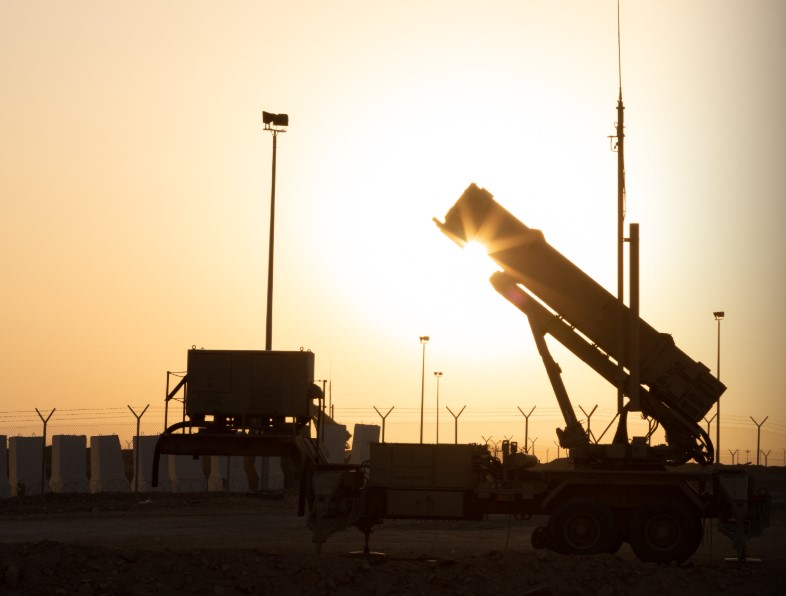
Why It Matters: Amid the recent military escalation in the Middle East, the threat of cheap drone attacks has become very high, making reliance on conventional defense batteries, such as a $4 million Patriot missile or a $150,000 Hellfire, financially unsustainable.
State of Play: Saudi and US forces have been co-developing effective and cost-efficient solutions for detecting, tracking and eliminating modern aerial drone threats.
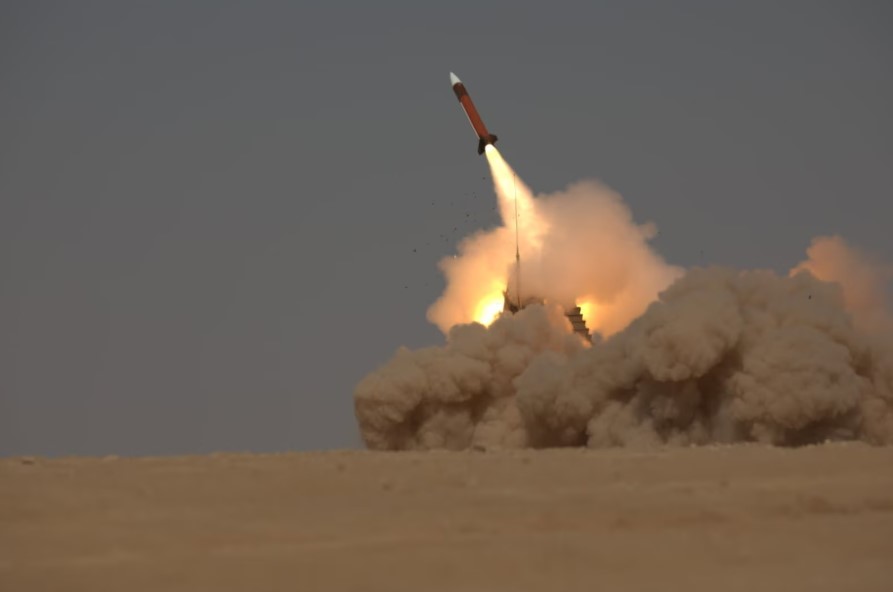
The joint Saudi-US Red Sands Integrated Experimentation Center, located in the Shamal-2 Range in northeastern Saudi Arabia, was established to address this issue in particular. It serves as a critical testing ground for layered, low-cost interceptors – ranging from guided rockets to automated gun systems and electronic warfare.
Vision 2030 & Defense Localization
A core objective of Saudi Vision 2030 is to localize over 50% of military spending by 2030. To this end, the Kingdom seeks to reduce imports of defense equipment to ensure national security and defense sovereignty. By the end of 2024, the localization rate of military spending reached around 25%, surging from 4% in 2018.
The General Authority for Military Industries (GAMI), alongside Saudi Military Industries (SAMI), the Kingdom’s commercial defense champion, is spearheading Saudi Arabia’s defense industrial localization efforts.
The Catalyst: Saudi Arabia’s GAMI organizes the World Defense Show (WDS), a biennial platform that brings together defense industry and security stakeholders from around the world to showcase cutting-edge innovations across air, land, sea, space, and security domains. The WDS provides a great opportunity for strengthening defense cooperation and partnerships with other countries.
Moreover, GAMI and SAMI represent the Kingdom in various defense exhibitions and major events, highlighting Saudi Arabia’s latest innovations and available opportunities in the military and defense industries sector.
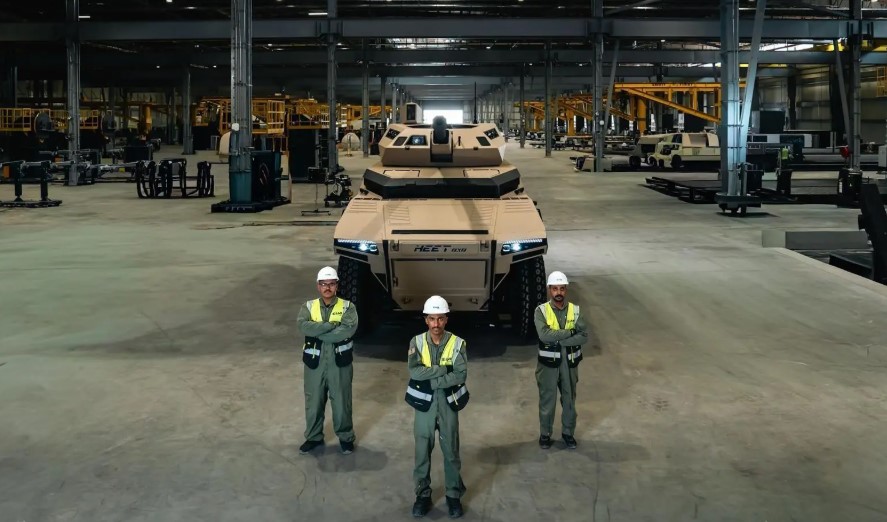
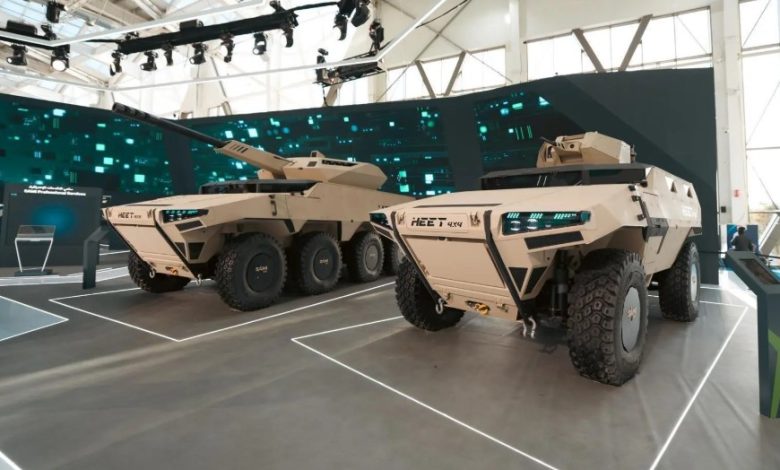
Bolstering this localization push, SAMI announced the launch of SAMI Land Co., SAMI Autonomous Co., the SAMI Land Industrial Complex, and the HEET indigenous vehicle program at the WDS in February 2026.
Diversifying Partners
Under Vision 2030, Saudi Arabia seeks to expand its defense partners to leverage the best technology transfers to boost its domestic industry.
The US
Washington remains Riyadh’s main defense partner. As part of a partnership with Lockheed Martin, the Royal Saudi Air Defense Forces officially inaugurated the first unit of the Terminal High Altitude Area Defense (THAAD) in July 2025 in Jeddah.
The agreement, signed in 2024, aims to localize THAAD components. It includes seven THAAD batteries (44 launchers), 360 interceptors, seven AN/TPY-2 radars, as well as 16 mobile fire control units. The first domestically manufactured components for the THAAD missile defense system launcher were completed in Jeddah in May 2025.
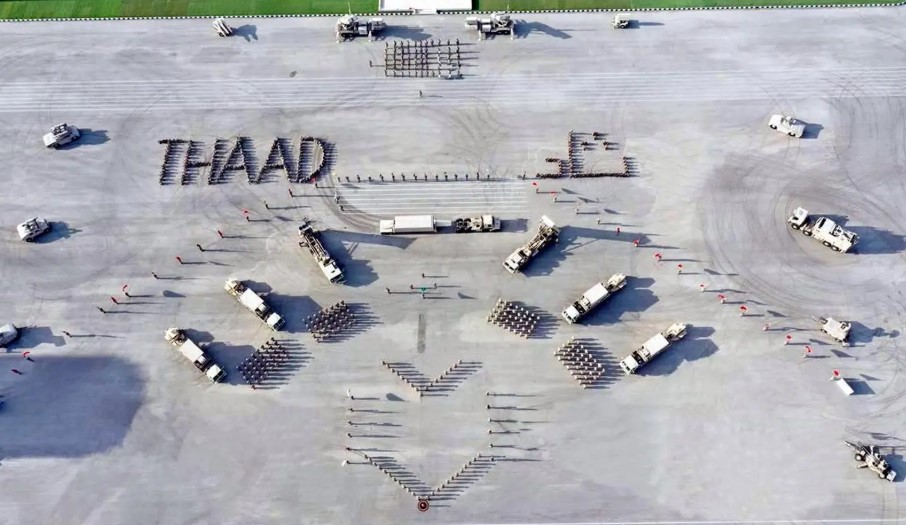
The SAMI-Lockheed Martin partnership originated in 2021 with a landmark 51% Saudi-owned joint venture signed during the International Defense Exhibition and Conference (IDEX) in Abu Dhabi.
Their alliance focuses heavily on the transfer of technology and localized knowledge to train a specialized Saudi workforce in defense systems, missile defense, and aerospace maintenance. Most recently, the partners launched a state-of-the-art software factory in Riyadh through SAMI Advanced Electronics Company (SAMI-AEC), providing an advanced national platform for local teams to prototype, test, and rapidly deploy critical digital command-and-control software.
South Korea
Saudi Arabia has strengthened its defense cooperation with South Korea, signing a memorandum of understanding (MoU) to enhance defense and industrial partnerships, during a visit by Saudi Crown Prince Mohammed bin Salman to the country in 2019. The agreement focused on military acquisitions, research, and technology.
Riyadh and Seoul have also bolstered their strategic defense partnership through the establishment of the Saudi-Korean Ministerial Committee for Defense Cooperation. They also signed an MoU on the sidelines of the WDS 2024 to form a joint committee for weapons research and development.
The partnership was further solidified with a $3.2 billion deal with South Korean defense firm LIG Nex1 to supply the Kingdom with 10 batteries of the mid-range surface-to-air missile defense system called Cheongung M-SAM II.
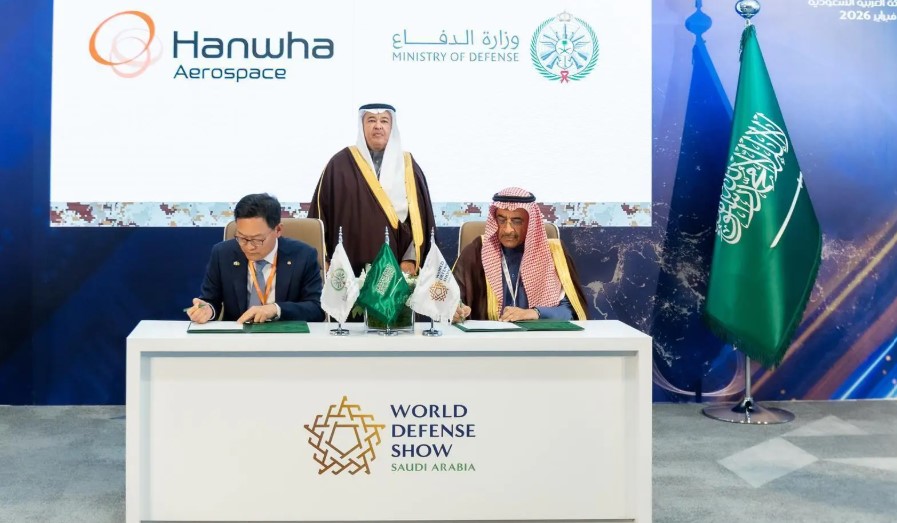
Moreover, the Saudi Defense Ministry signed a contract with South Korea’s Hanwha Aerospace during the WDS 2026 in Riyadh.
Türkiye
The Saudi Defense Ministry signed a multi-billion dollar export contract with Turkish drone giant Baykar in 2023. It also signed follow-up agreements to localize the manufacturing of the Akinci Unmanned Combat Aerial Vehicle (UCAV) and its parts inside the Kingdom.
In early 2026, Saudi Arabia and Türkiye finalized an MoU for the joint production of the Turkish indigenous Gökbey multirole helicopter. Discussions are also underway for Saudi Arabia’s joint investment and participation in Türkiye’s KAAN stealth fighter jet program, an initiative that Turkish President Recep Tayyip Erdoğan explicitly confirmed could be activated as a full partnership.
Pakistan
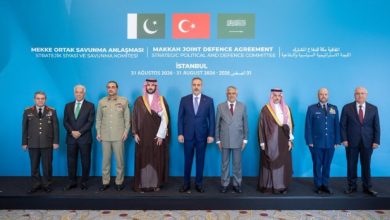
In September 2025, the Kingdom bolstered its defense ties with Pakistan by signing a Strategic Mutual Defense Agreement (SMDA), which enhances cooperation between Riyadh and Islamabad, in addition to strengthening joint deterrence against any potential aggression. It clearly states that “any aggression against either country shall be considered aggression against both.”