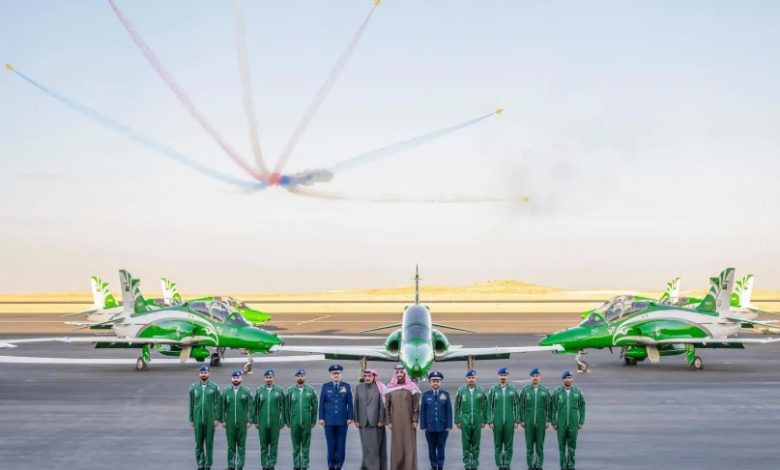
Saudi Arabia is hosting the World Defense Show 2026 (WDS 2026), showcasing massive transformations in the Kingdom’s defense sector.
In its third edition, the WDS brings together industry experts and stakeholders from around the world, providing a key platform to connect, showcase innovations, and share expertise.
WDS 2026: Platform for Global Industrial Collaboration
On Sunday, February 8, 2026, the Saudi Defense Minister, Prince Khalid bin Salman, inaugurated the third edition of the World Defense Show in Riyadh, with the attendance of senior officials from Saudi Arabia and other countries, as well as industry and security stakeholders.
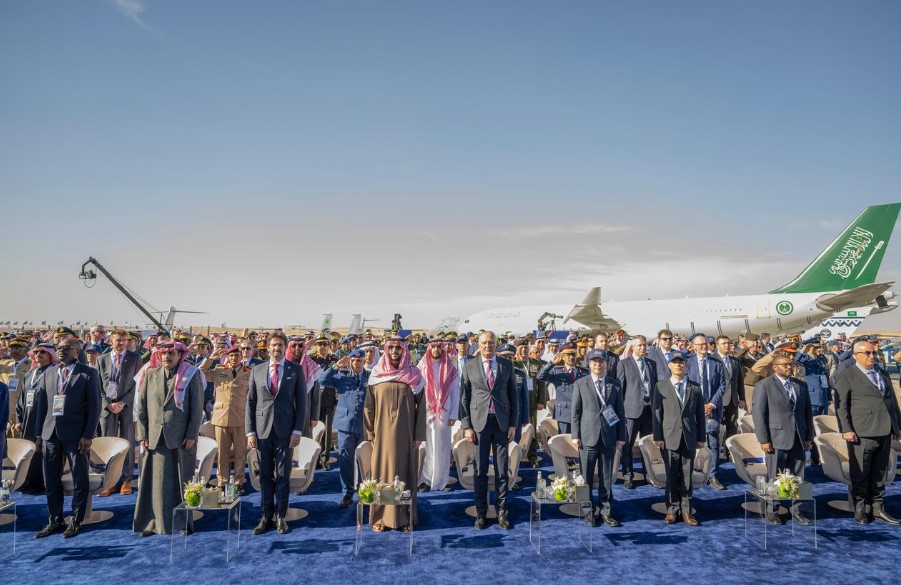
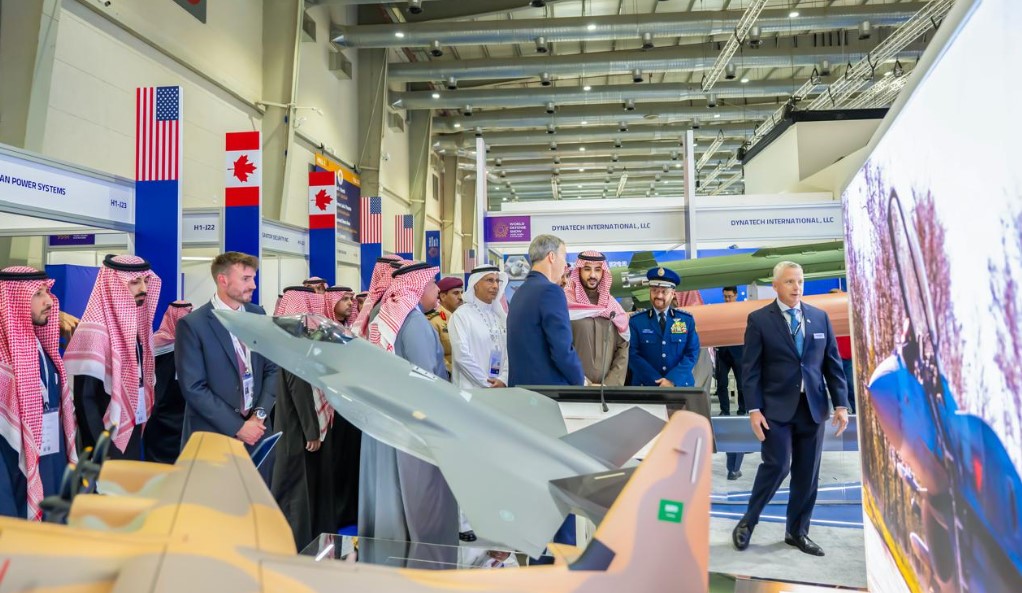
Organized by the General Authority for Military Industries (GAMI), the WDS 2026 sees the participation of 1486 exhibitors from 89 countries, alongside several government entities and leading national and international companies, according to the Saudi Press Agency (SPA).
Under the theme “The Future of Defense Integration,” the WDS 2026 showcases cutting-edge innovations across air, land, sea, space, and security domains.
In his speech, GAMI Governor Ahmad Al-Ohali highlighted how the WDS has made rapid strides toward becoming a strategic platform for major manufacturers, innovators, and investors.
This progress is the result of the unlimited support provided to the defense, security, and military industries by the Saudi leadership within the framework of Vision 2030, he noted.
Al-Ohali also explained that the objectives of the event include exchanging knowledge, advancing technology transfer, and exploring modern military technologies to enhance and develop the armed forces, ensuring they are capable of confronting potential threats.
Importantly, he said that the relevant authorities in the Kingdom have spared no effort to ensure the WDS 2026 meets its desired goals, reflecting the comprehensive development currently taking place across all sectors in Saudi Arabia.
Vision 2030 Goals: Steady Progress
Al-Ohali said that the event emphasizes the Kingdom’s commitment to creating a sustainable local military industries sector – underpinned by advanced supply chain management and integrated with all security and military entities.
Moreover, he highlighted progress made toward achieving the objectives of Saudi Vision 2030, which aims to localize more than 50% of military spending by 2030.
He said that the localization rate of military spending reached around 25% by the end of 2024, increasing from 4% in 2018. This shows a steady progress toward the target of exceeding 50% by 2030.
By the end of the third quarter of 2025, the number of licensed and authorized establishments reached approximately 344, in addition to 603 foundational licenses and permits covering military manufacturing, product supply, and the provision of military services, Al-Ohali noted.
He also reaffirmed GAMI’s efforts to ramp up the sector’s contribution to the GDP to around SAR 94 billion by 2030. This growth is expected to create a total of 40,000 direct jobs and 60,000 indirect jobs by 2030.
New Saudi Initiatives
In its opening day, the WDS 2026 showcased new innovations and projects that underscore Saudi Arabia’s rapid progress toward achieving strategic independence in the defense industries.
In light of this, the Saudi Arabian Military Industries (SAMI) Group unveiled new defense initiatives. The Saudi Defense Minister launched SAMI Land Company, SAMI Autonomous Company, SAMI Land Industrial Complex, and the HEET Program, in addition to SAMI Local Content Program (RUKN), the group’s flagship supply chain program.
Saudi Defense Innovations
Running until February 12, the WDS 2026 serves as a strategic platform for unveiling the next generation of defense breakthroughs and security solutions. In light of this, several Saudi government entities are displaying state-of-the-art innovations.

At the Saudi Interior Ministry’s pavilion, Public Security has debuted its advanced Lucid Gravity electric security vehicle. It leverages advanced AI and purpose-built security equipment to optimize field performance and accelerate mission-critical response times.
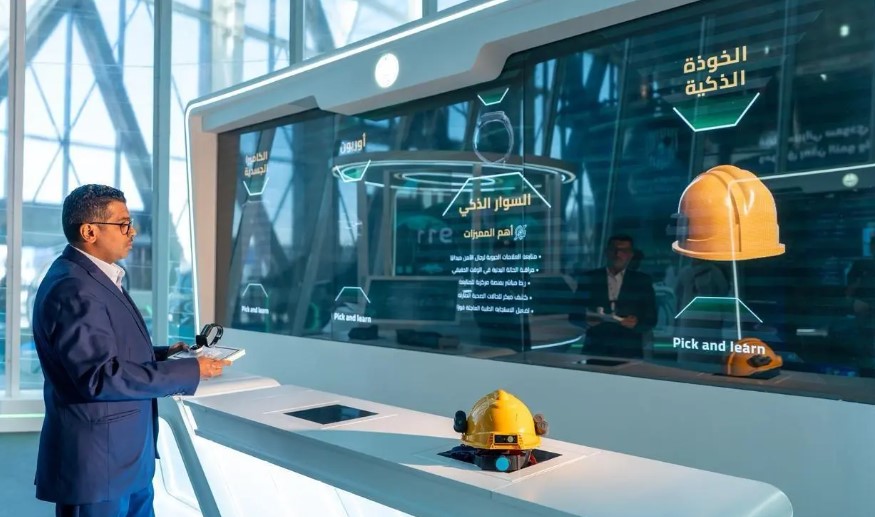
Moreover, the General Directorate of Civil Defense has unveiled its smart helmet. It functions as a mobile command node, utilizing advanced imaging and hazardous material sensors to provide real-time data to command centers.
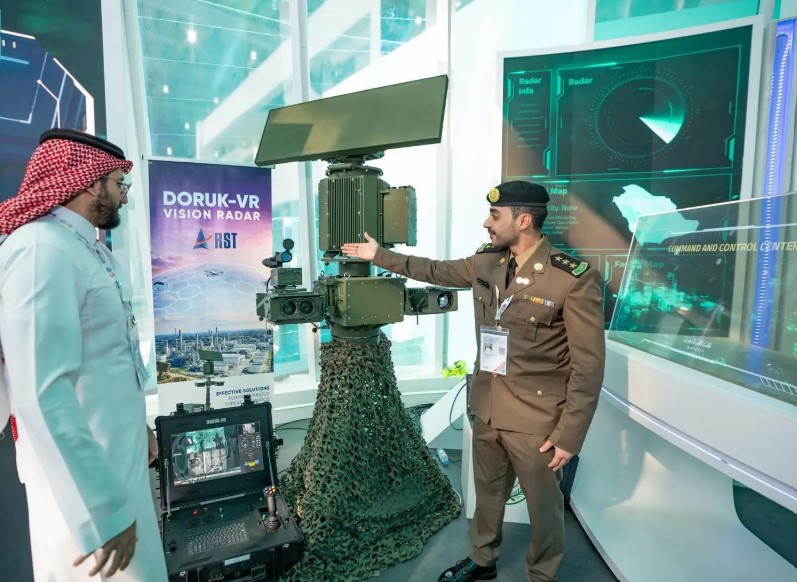
The General Directorate of Border Guard (GDBG) has displayed an integrated security system featuring radar and thermal cameras to detect drones and monitor, identify, and classify moving targets.
The National Center for Meteorology (NCM) has also showcased its latest advanced meteorological technologies and systems that serve both the military and civilian sectors.
Meanwhile, the National Cybersecurity Authority (NCA) has highlighted its strategic initiatives to bolster national cyber defenses and address evolving cyber threats.
Deepening Defense Cooperation
The first day of the event saw the signing of several agreements to strengthen cooperation between the Kingdom and other countries in the defense sector.
I was pleased to meet with Ministers of Defense and senior officials at @WDS_KSA. We reviewed topics related to the future of security and defense industry, and recognized the opportunities at the show. I also signed and witnessed the signing of several MoUs and agreements. pic.twitter.com/jeFBBREiLK
— Khalid bin Salman خالد بن سلمان (@kbsalsaud) February 8, 2026
The Saudi General Authority for Defense Development and the South Korean Agency for Defense Development signed a memorandum of agreement (MoU) to cooperate on advanced defense research and the innovation of military technologies and systems.
Furthermore, Prince Khalid signed MoUs with his counterparts from Slovakia, Malaysia, and Somalia to strengthen bilateral defense cooperation.