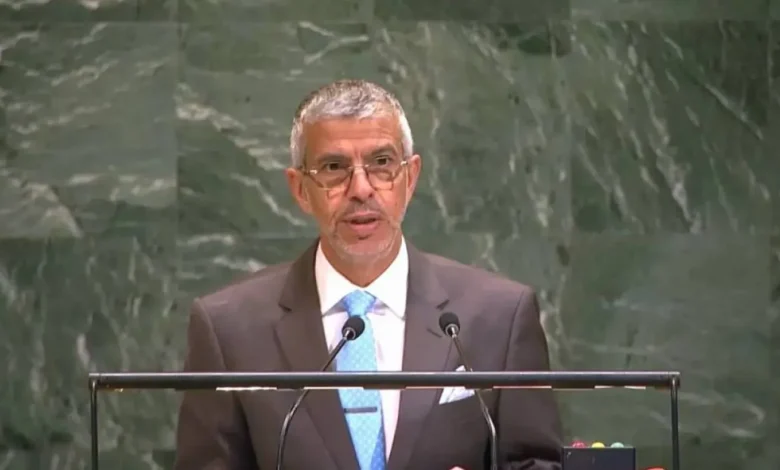
Saudi Arabia is pressing the UN to treat critical minerals as a pillar of every energy pathway, not just renewables. That was the message from Ambassador Dr. Abdulaziz Alwasil, the Kingdom’s Permanent Representative to the UN, at Tuesday’s high-level meeting on critical energy transition minerals in New York.
Why it matters: Demand for these minerals is surging as countries race to decarbonize, yet supply chains remain fragmented and unevenly distributed. Saudi Arabia wants a seat at the table shaping how that demand gets met.
What he said: Alwasil told delegates that Vision 2030 has made energy, mining, and industry strategic pillars of national growth. Consequently, he said, the Kingdom is prioritizing global energy security through stable supply flows, a circular carbon economy, and one of the world’s largest renewable energy programs.
He also argued that energy transitions need flexibility. Countries, he said, should draw on whichever mix of energy sources and technologies fits their own resources and development goals, rather than following a single prescribed path.
Mining Reforms Back the Message
To reinforce the point, Alwasil highlighted Saudi Arabia’s new mining investment law, which cut the tax rate on mining investments from 45% to 20%. He also noted the Kingdom’s ranking among the world’s top 20 countries for low legal and financial risk in mining, according to the 2023 Global Risks Report.
Alwasil’s central appeal, though, was broader; people shouldn’t view critical minerals narrowly as renewable-energy inputs. Instead, he called for recognizing them as strategic resources supporting hydrogen, carbon capture and storage, and other transition technologies alike.
Saudi officials have made similar arguments before. Energy Minister Prince Abdulaziz bin Salman previously warned that mineral demand could soon outpace supply, telling the Future Minerals Forum that meeting it “presents substantial challenges.”
The bottom line: Alwasil closed by linking international cooperation, investment, and innovation, particularly in developing nations, to building what he called a more resilient and sustainable global mineral system. The meeting itself forms part of the UN Secretary-General’s wider Panel on Critical Energy Transition Minerals, launched in 2024 to build trust across governments, industry, and communities.