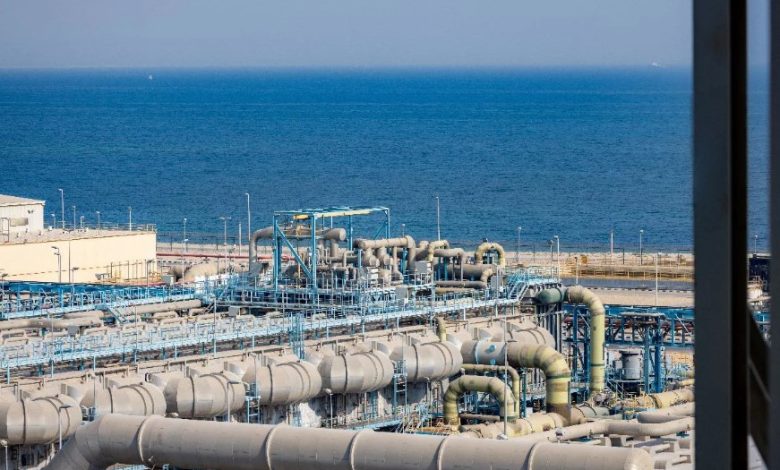
Defying its dry desert environment, Saudi Arabia has mastered water security, deploying innovative solutions and cutting-edge technologies to desalinate seawater at an unprecedented scale.
Water pumps life into the Kingdom’s surging population and trillion-dollar giga-projects. Consequently, water security is established as a strategic priority and cornerstone of Saudi Vision 2030.
Water Security: A Pillar of Vision 2030
Saudi Arabia has emphasized the importance of global water security, positioning its domestic success as a template for global action to advance the UN Sustainable Development Goals (SDGs).
Driving The News: The Kingdom’s Permanent Representative to the UN, Ambassador Abdulaziz Alwasil, stressed the importance of water security as a core national priority under Saudi Vision 2030, reported the Saudi Press Agency (SPA).
He highlighted the vital role of targeted investments in infrastructure, innovation, and proactive planning in strengthening the sustainability of water services.

What’s New: The UN launched the Global Water, Sanitation and Hygiene Resilience Index (GWSRI) in New York, in collaboration with the UNICEF and its partners.
Alwasil hailed the move and emphasized the significance of boosting the resilience of global water systems, in light of the challenges posed by climate change, water scarcity, and rising global crises. He also highlighted the need for the international cooperation and knowledge-sharing to support global water security and achieve the UN SDGs.
Innovative Strategies
The Saudi Water Authority (SWA) spearheads the Kingdom’s National Water Strategy, designed to strengthen water security, setting guidelines to ensure the protection, sustainability, and safe and potable water for future generations.
The SWA leads efforts to ensure sustainable water management, service quality enhancement, capacity building and economic growth, as well as the promotion of innovation, technology, and environmental protection.
It orchestrates a highly integrated network of specialized entities, including the National Water Company (NWC); the Saudi Water Partnership Company; the Water Academy; and the Saudi Saline Water Conversion Corporation (SWCC).
The Context: The National Water Strategy has developed a roadmap for the sustainable utilization of water resources and maximizing the benefit of using renewable and recyclable water resources. It also aims to provide a safe water supply and high-quality services that contribute to the Kingdom’s economic growth and GDP.
Deep Dive: Saudi Deputy Minister for Water at the Ministry of Environment, Water and Agriculture Abdulaziz Al-Shaibani showcased the Kingdom’s endeavors to enhance the sustainability of the water sector.
During the High-Level Political Forum on Sustainable Development at the UN Headquarters in New York, Al-Shaibani highlighted structural reforms in the water sector.
Saudi Arabia has modernized sanitation services and restructured institutional governance, optimizing efficiency across the entire supply chain while securing the long-term sustainability of the Kingdom’s water resources.
Global Water Push
Driving Innovation: Al-Shaibani noted that the Kingdom is actively driving international knowledge exchange and scaling sustainable technologies to combat global scarcity through the newly established Global Water Organization.
Moreover, Saudi Arabia launched the International Water Research Center, focusing heavily on cutting-edge scientific research, technological innovation, and capacity building.
What’s Next: Riyadh will host the 11th World Water Forum in 2027. The event serves as a critical diplomatic milestone to translate high-level global climate commitments into practical, actionable water security solutions.
A Desalination Superpower
Saudi Arabia has accelerated efforts to meet its daily water needs by desalinating seawater. The expansion of desalination projects has positioned the Kingdom as the world’s largest producer of desalinated water.
Technology Shift: The SWA is deploying advanced Reverse Osmosis (RO) technologies along the Red Sea and Arabian Gulf coastlines, driving production costs down to an unprecedented less than SAR 2 per cubic meter.
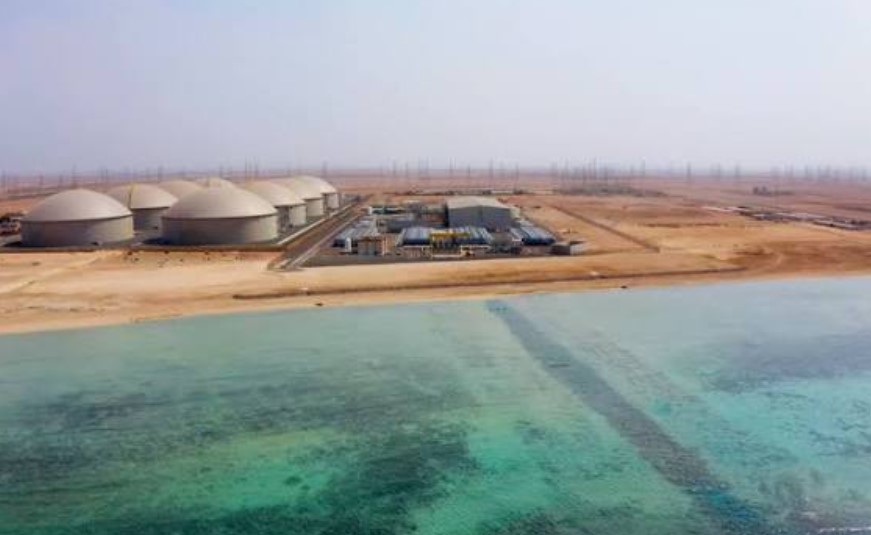
The Anchor: Rabigh Desalination Plant lies at the core of Saudi Arabia’s desalination push. It is a state-of-the-art facility that uses industrial-scale crystalline absorption cooling, which increases efficiency while reducing negative environmental impacts with zero salt return.
Key Milestones
Thanks to its National Water Strategy, Saudi Arabia has made record achievements in the water desalination sector.
By The Numbers:
- Saudi Arabia has a robust infrastructure anchored by 574 dams (with a total capacity of 6 billion cubic meters), 36 seawater desalination plants, and 160 advanced wastewater treatment facilities.
- Active assets include 8,835 drinking water wells, 407 monitoring wells, and 513 hydrological monitoring stations.
- Total daily desalinated water production capacity has jumped to 16 million cubic meters, covering a daily water distribution rate of 4 million cubic meters.
- The transmission network spans 11,000 km of desalinated water pipelines and 127,500 km of distribution networks, achieving an 88% population coverage rate for water networks and 60% for sanitation services.
- The Kingdom successfully reduced its annual reliance on non-renewable groundwater, slashing extraction from 21 billion cubic meters down to 11 billion cubic meters.
- The network increasingly integrates AI across its supply chain, deploying predictive analytics and digital twins to monitor transmission pipelines and eliminate operational leaks.
- 11 Guinness World Records in water desalination infrastructure and technologies.
Looking Ahead
Saudi Arabia is targeting 100% population coverage across all domestic water networks by 2030. It has also set its strategic goals for 2050:
- Boost national sanitation network coverage to an unprecedented 95%.
- Guarantee an uninterrupted, 24/7 water supply across the entire Kingdom.
- Achieve a circular water economy by recycling and reusing over 70% of treated wastewater.
- Secure approximately 21 million cubic meters of water per day for urban consumption by aggressively expanding desalination infrastructure across 14,253 population centers.