For generations, the Red Sea has provided a haven for marine life, and the Four Sisters Islands stand out among its most remarkable refuges.
A haven between reefs and shores
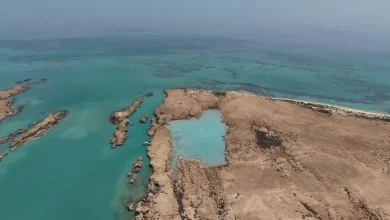
Nestled in Al-Lith Governorate, Marmar, Dohrab, Malathu, and Jadir have emerged as a vital habitat for endangered hawksbill turtles, supporting their feeding, breeding, and nesting cycles.
The surrounding ecosystem is remarkably diverse, featuring coral reefs, seagrass meadows, mangroves, and undisturbed sandy beaches.
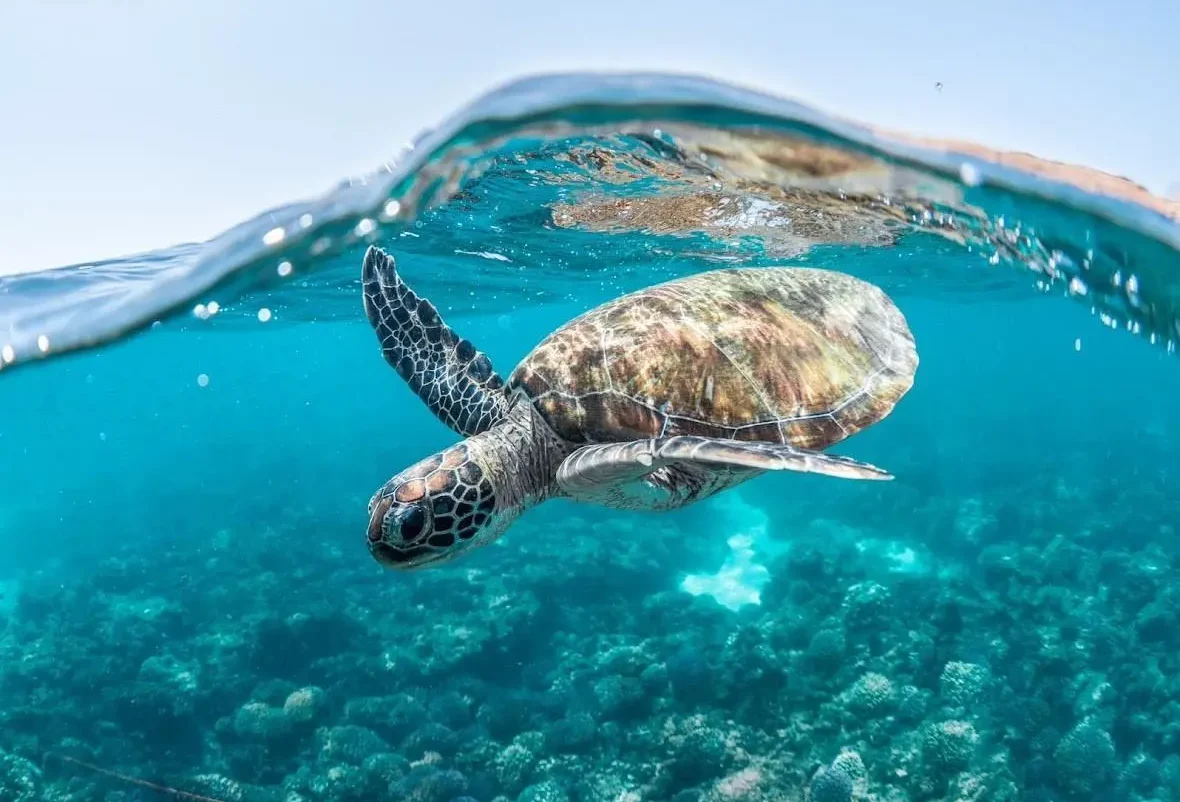
These habitats support the turtles throughout their life cycle, while the islands’ shores offer nesting grounds where adults lay their eggs and hatchlings prepare to set out toward the open waters of the Red Sea.
Saudi Arabia’s largest turtle nesting site
The Four Sisters Islands hold a distinction that sets them apart and places them at the forefront of sea turtle conservation in Saudi Arabia.
According to the General Organization for the Conservation of Coral Reefs and Turtles in the Red Sea (SHAMS), they host the largest recorded sea turtle nesting site in Saudi Red Sea waters, with over 2,500 nests documented.
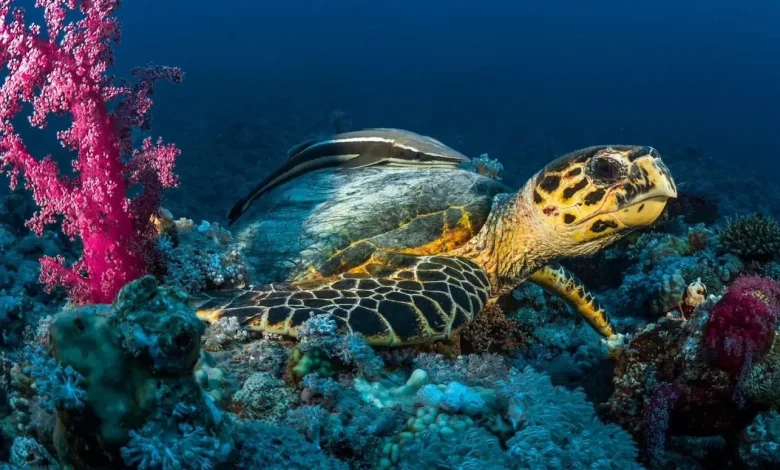
Known scientifically as Eretmochelys imbricata, the hawksbill represents the most prominent turtle species found across the islands. Its presence is unmistakably meaningful due to its inclusion on the International Union for Conservation of Nature’s Red List of Threatened Species.
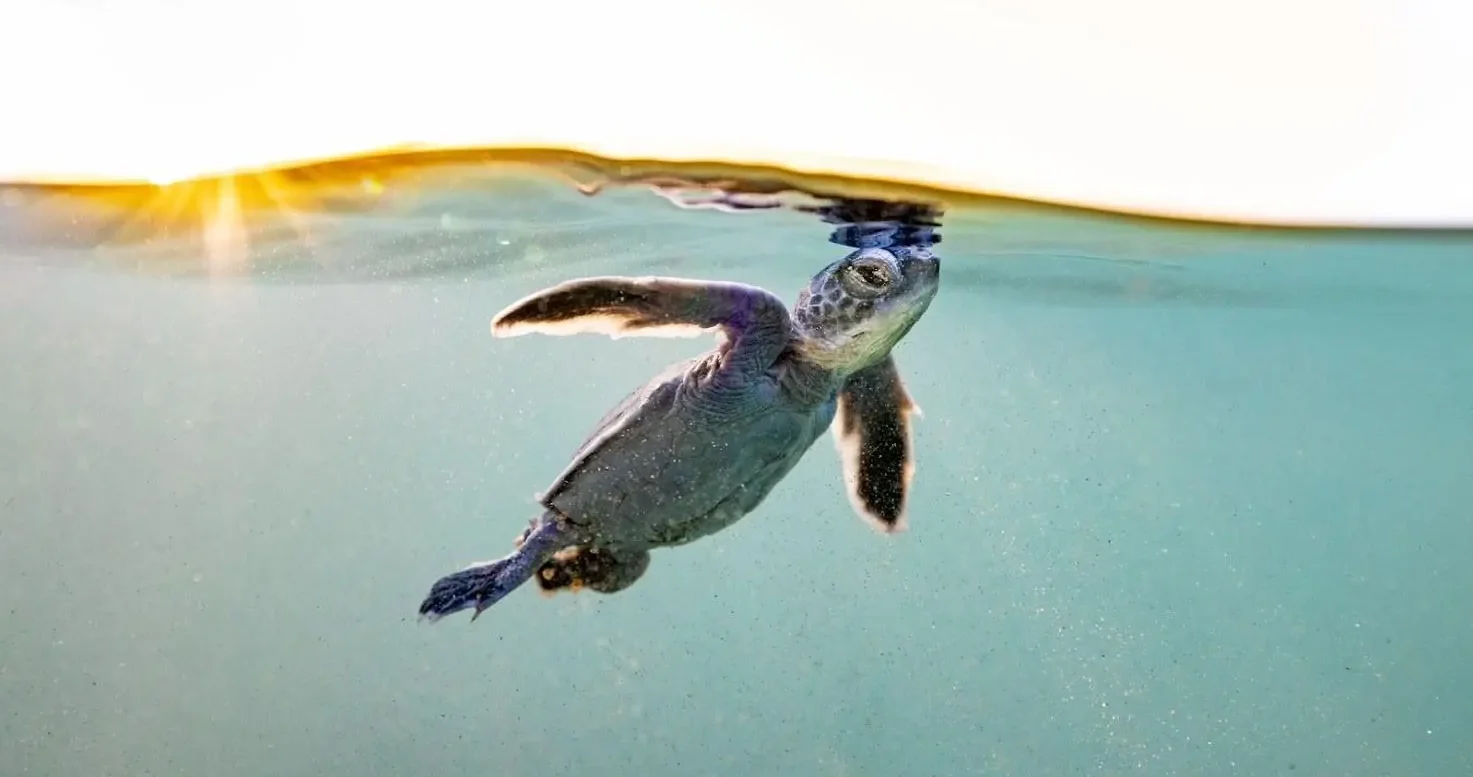
With its hawk-like beak and intricately patterned shell, the hawksbill turtle is remarkably distinctive.
More vividly, intricate overlapping shell scutes protect its body, while powerful front flippers enable it to navigate the waters of its marine habitat.
Advancing Saudi Arabia’s environmental ambitions
Such adaptations find their natural setting across the Red Sea’s diverse islands, where rich biodiversity and well-preserved habitats provide essential nesting grounds.
For SHAMS CEO, Dr. Khaled Isfahani, said that the Four Sisters Islands have been regarded as a species management area designed basically to safeguard the turtles’ nesting habitats.
The area has further boosted the Kingdom’s efforts to protect biodiversity and fulfill the environmental goals.

More boldly, SHAMS has been intensifying its efforts to foster sustainable tourism and entertainment experiences around this exceptional area.
Such efforts perfectly align with the Saudi Green Initiative and Vision 2030 to protect the Kingdom’s natural heritage and marine biodiversity.
Red Topics:
What Secrets Lie Beneath the Red Sea’s Surface?
Saudi Arabia’s Jazan Emerges as Red Sea Tourism Hotspot after Record-Breaking 2025
Meet Neom’s Newest Wild Resident: The Striped Hyena Cub