From Gaza to Hormuz: Saudi Arabia, France Chart a Blueprint for Regional Security
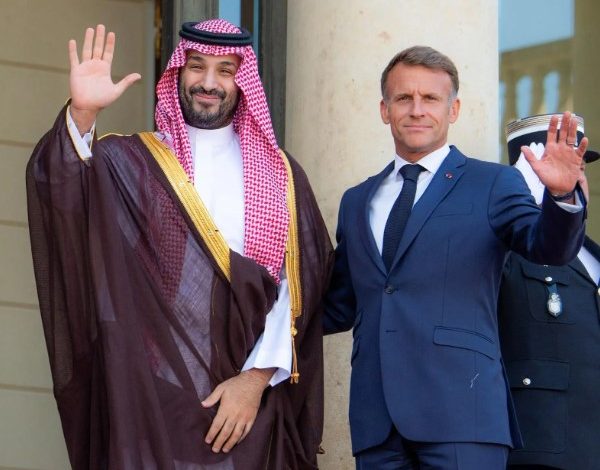
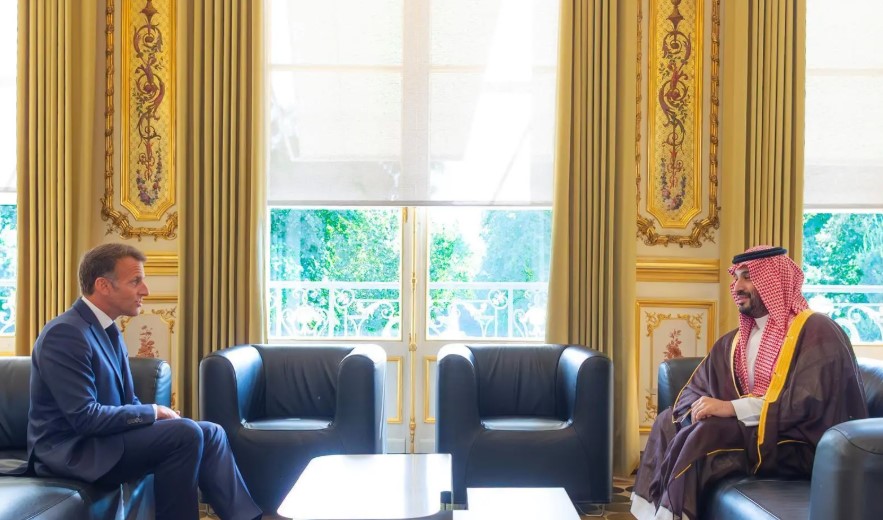
In a landmark meeting in the Elysee Palace, Saudi Crown Prince Mohammed bin Salman and French President Emmanuel Macron reaffirmed a strategic partnership spanning 100 years, laying out a joint vision for regional security and maritime safety.
From Iran to Gaza, Lebanon, and Sudan, Riyadh and Paris reiterated their commitment to safeguarding the sovereignty of states, protecting trade routes, and pursuing political solutions to resolve crises and promote stability.
A Century of Alliance
The Big Picture: In a grand reception at the Elysee Palace, President Macron received Crown Prince Mohammed bin Salman on Monday as part of the Saudi leader’s official state visit to France.
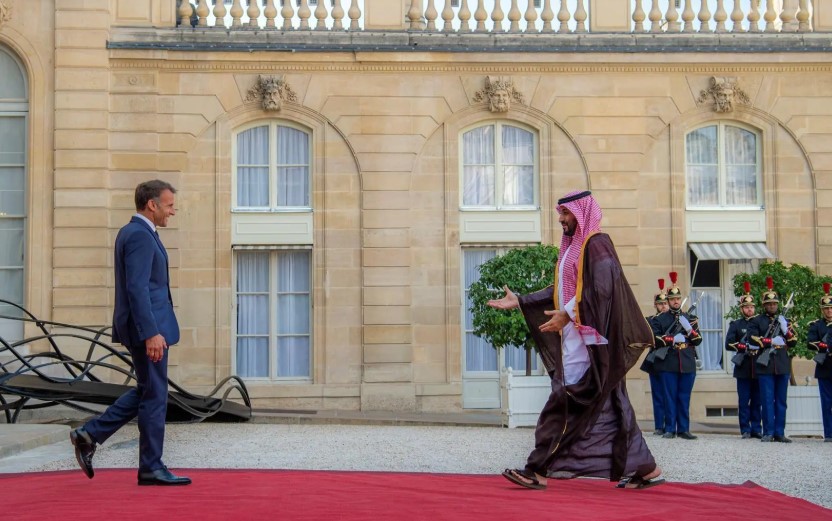
State of Play: The visit saw the formal launch of the Saudi-French Strategic Partnership Council, co-chaired by the Saudi Crown Prince and the French President, marking 100 years of diplomatic relations. On this occasion, the two leaders expressed their shared ambitions for strengthening the existing partnership between the two countries.
Diplomatic Alignment
Between the Lines: According to a joint statement, Crown Prince Mohammed bin Salman and President Macron underscored their shared vision for Middle East stability, anchored in the sovereignty of states, respect for international law, and the pursuit of political and diplomatic solutions to conflicts and security threats.
Strait of Hormuz
Saudi Arabia and France condemned attacks on shipping in the Strait of Hormuz and threats to waterway security. They demanded the restoration of navigation through the critical maritime route to pre-February 28, 2026 conditions, free of tolls or restriction on passage, in accordance with international law.
What to Know: France, alongside the UK, launched a multinational naval mission to secure shipping through the Strait of Hormuz once conditions permit.
Iran & Nuclear Program
Riyadh and Paris agreed on the importance of pursuing a negotiated solution to prevent further escalation and ensure regional security. Both sides also reaffirmed their commitment to a diplomatic solution ensuring the peaceful nature of Iran’s nuclear program, calling on Tehran to resume full cooperation with the International Atomic Energy Agency.
Gaza & The Two-State Solution
On Gaza, Saudi Arabia and France welcomed the Hamas disarmament agreement, urging its swift implementation. They stressed the need to create conditions for a sustainable ceasefire and ensure the urgent, safe, and unhindered delivery of humanitarian aid to civilians in Gaza.
Regarding the broader Palestinian issue, the two leaders emphasized their support for preserving the unity of the Palestinian territories and rejected attempts to undermine the Palestinian people’s right to establish their independent state along the 1967 borders.
Moreover, they called for an end to the Israeli settlement policy and settler violence that threaten the two-state solution and reiterated their commitments to the full implementation of the New York Declaration. They also reaffirmed their support for the Palestinian Authority’s reform agenda.
Zoom In: Saudi Arabia and France co-chaired the High-Level International Conference on the Peaceful Settlement of the Palestinian Question and Implementation of the Two-State Solution in July and September 2025 to mobilize international support for Palestinian Statehood and the rights of the Palestinian people.
The conference drove a wave of international recognitions of the State of Palestine by major Western nations, while cementing the New York Declaration as the primary international roadmap toward a sovereign Palestinian State.
Lebanon
The joint statement noted that Saudi Arabia and France agreed to intensify their efforts towards a final resolution of the conflict in Lebanon, which strengthens the Lebanese state and its institutions, while preserving the country’s sovereignty and territorial integrity. With regard to this, they commended the measures taken by Lebanese President Joseph Aoun and his government to rebuild state institutions and extend state authority.
Furthermore, they reiterated their support for the Lebanese Armed Forces and security forces, calling for the full implementation of UN Security Council Resolution 1701 and stressing the need for the complete disarmament of all non-state armed groups. They also stressed the need for Israel to withdraw from all Lebanese territory.
Backstory: In June 2026, the Saudi Crown Prince directed the resumption of Lebanese imports to the Kingdom, following a five-year ban, offering a vital trade pipeline for Lebanon’s struggling agricultural and commercial sectors.
Meanwhile, France has called for a “preparatory and technical” meeting for the chiefs of staff of 15 countries, possibly including the US, to support Lebanon’s army and internal security forces.
Yemen
Riyadh and Paris reaffirmed support for the Presidential Leadership Council and UN efforts to achieve an inclusive and comprehensive solution to the crisis in Yemen. They also condemned Houthi attacks on civilian infrastructure and vital facilities in Saudi Arabia, as well as attacks on ships, underscoring their determination to protect freedom of navigation.
In light of this, France reaffirmed its solidarity and full support for Saudi Arabia, rejecting any attacks against the Kingdom.
Go Deeper: On July 30, 2026, Saudi Arabia launched the Multinational Maritime Defense Coalition to protect shipping in the Bab al-Mandab Strait, the Red Sea, and the Gulf of Aden. Meanwhile, France is a member of the EUNAVFOR ASPIDES – an EU military operation launched in 2024 in response to Houthi attacks against commercial shipping in the Red Sea, Gulf of Aden, and the Indian Ocean.
Sudan
In their joint statement, Saudi Arabia and France stressed the need to intensify efforts to end the crisis and halt foreign interference in Sudan to ensure the country’s security and stability, preserve its sovereignty and independence, and safeguard its territorial integrity and the integrity of its institutions.
The Deep Dive: Saudi Arabia has been a steadfast supporter of Sudan’s security and stability. Both countries have recently launched the Saudi-Sudanese Coordination Council to strengthen bilateral ties and establish an institutional framework for cooperation.
Furthermore, the Kingdom has advocated for a Sudanese-Sudanese political solution based on respecting Sudan’s unity and territorial integrity and supporting the state institutions.
It has also made extensive efforts to resume political dialogue under the Jeddah Declaration, and the subsequent Agreement on a Short-Term Ceasefire, signed in May 2023 between the warring parties, in a bid to resolve the deepening humanitarian crisis and alleviate the suffering of the Sudanese people.
During a visit to Washington in November 2025, US President Donald Trump announced the US would work to end the conflict in Sudan, at the request of Saudi Crown Prince Mohammed bin Salman.
Syria
Saudi Arabia and France reaffirmed their commitment to Syria’s unity, stability, and economic recovery. They highlighted the unique geography of Syria which can reposition it as a bridge between Europe, the Gulf and Asia through alternative routes. They also welcomed the establishment of a Saudi-Syrian-French business council.
Flashback: Saudi Arabia has spearheaded an intensified diplomatic push to reintegrate Syria into the regional fold and lift economic sanctions on the country. Meanwhile, Macron recently visited Syria.