Saudi Arabia has lifted a five-year ban on Lebanese imports, opening up a vital trade pipeline for Lebanon’s struggling agricultural and commercial sectors.
Riyadh’s decision highlights a diplomatic thaw, granted in recognition of the Lebanese government’s recent progress in reasserting state authority and enhancing export security controls.
Exports Resumption
Saudi Arabia’s Crown Prince and Prime Minister Mohammed bin Salman on Wednesday directed the resumption of Lebanese exports to the Kingdom, after nearly a five-year hiatus.
The decision came upon a request from Lebanon’s President Joseph Aoun and Prime Minister Nawaf Salam, the Saudi Foreign Ministry said in a statement.
Saudi Foreign Minister Prince Faisal bin Farhan conveyed the directive to Salam in a phone call. The decision comes in light of “the positive steps taken by the Lebanese government toward rebuilding state institutions, the progress achieved by the specialized teams over the past year, and the cooperation demonstrated by the Lebanese side, including the fulfillment of the required commitments.”
Saudi Steadfast Support
During the call, Prince Faisal reiterated Saudi Arabia’s firm support for Lebanon’s stability, sovereignty over all its territory, and the well-being of its people. He also voiced confidence that Lebanon will take all necessary measures to ensure the country is not utilized as a staging ground to harm its neighbors.
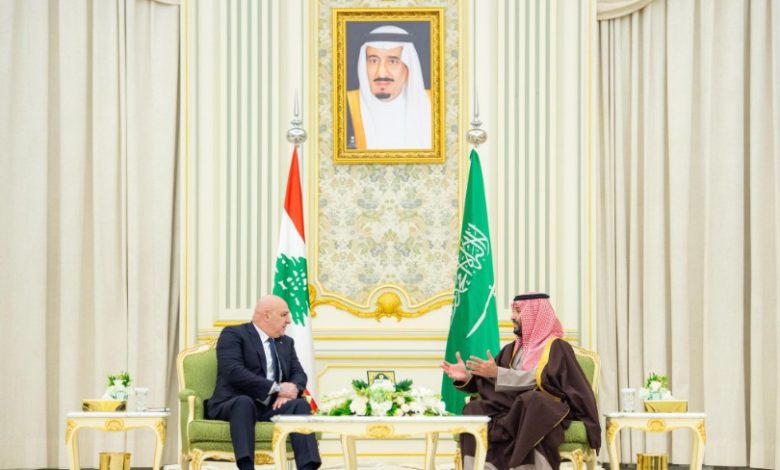
In his first official foreign visit since assuming office, Aoun visited Riyadh in March 2025 and met with Crown Prince Mohammed bin Salman.
During the visit, Aoun expressed Lebanon’s appreciation for Saudi Arabia’s role in supporting the country’s stability, safety, and the functioning of its constitutional institutions. He also said that the visit provided an opportunity to emphasize the depth of the Saudi-Lebanese relations and enhance bilateral cooperation.
Economic Relief
The Kingdom banned fruit and vegetable imports from Lebanon in 2021 over security concerns. During Aoun’s visit to Riyadh, both countries agreed on studying the obstacles impeding the resumption of exports from Lebanon to Saudi Arabia, underscoring the significance of Lebanon’s economic recovery and the implementation of reforms, in line with international standards and law.
The return of Saudi trade offers an economic lifeline to Lebanon’s struggling economy, which is further strained by the recent regional escalation.
In reaction to Saudi Arabia’s lifting of the import ban, Lebanon’s Agriculture Ministry welcomed the decision as a strategic move for the recovery of the agricultural sector.
According to the Ministry’s data, the Gulf Cooperation Council (GCC) countries constituted the main market for Lebanese agricultural exports before 2020, accounting for 45% of total exports worth $242 million.
Saudi Arabia received 13% of these exports, with around 60,000 tons of vegetables, fruits and their products delivered to the Kingdom, valued at $42 million. After the Saudi ban, Lebanon’s annual fruit and vegetable exports to the Gulf fell from 200,000 tons to just 77,000 tons, negatively affecting agricultural production, farmers’ income, and the sustainability of sectoral value chains.
Lebanese Gratitude
In response to Saudi Arabia’s move, Lebanon’s President Aoun expressed his profound gratitude and appreciation to Crown Prince Mohammed bin Salman.
In a statement, Aoun described the decision as a “sincere expression of the depth of Arab brotherhood that unites both countries” and a demonstration of Saudi Arabia’s unwavering support for Lebanon and its people during the recovery period.
Aoun noted that the move will significantly contribute to revitalizing Lebanon’s economy and supporting broad segments of Lebanese producers and exporters. He added that the Lebanese people view it as a pivotal step toward bolstering Saudi-Lebanese ties.
For his part, Lebanese Prime Minister Salam thanked the Saudi Crown Prince, saying that the decision “reflects the depth of the fraternal and historical relations that unite our two brotherly countries.”
“It also constitutes an important step that will support the Lebanese economy and open new horizons for Lebanese producers and exporters, thereby contributing to enhancing opportunities for growth and stability in Lebanon,” Salam added.