
How Gaza Disarmament Deal Plays into Saudi Arabia’s Two-State Solution Push
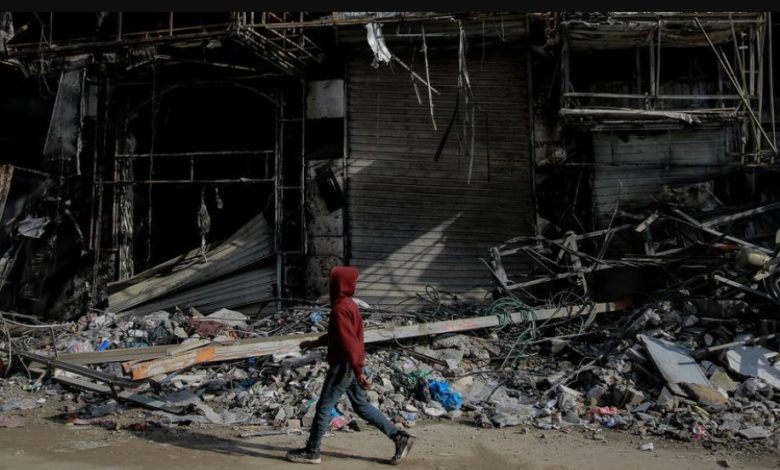
Saudi Arabia welcomed the recently announced agreement by US President Donald Trump on the decommissioning of arms in the Gaza Strip.
The disarmament of Hamas paves the way for phase two of the UN-endorsed Comprehensive Peace Plan for Gaza, signed in October 2025. The plan sets the stage for the deployment of an International Stabilization Force (ISF) and the full withdrawal of Israeli troops, serving as a key stepping stone toward a unified sovereign Palestinian State.
The Disarmament Breakthrough
The Big Picture: Trump on Friday announced a “historic agreement” for the complete disarmament of Hamas and other Palestinian armed groups in Gaza, following months of tough negotiations.
The Context: Saudi Arabia’s Foreign Ministry welcomed the announcement, appreciating the efforts of the US, Egypt, Qatar, Türkiye, and the Board of Peace (BoP) for their sustained efforts that yielded this breakthrough. Reaffirming its commitment to UN Security Council Resolution 2803, Riyadh also stressed that implementation must be timely, credible, and irreversible – prioritizing complete Israeli military withdrawal, ISF deployment, and unhindered humanitarian aid.
Why It Matters: Upon the completion of the disarmament process, Israeli forces will withdraw and the ISF will deploy alongside a newly trained Palestinian police force to maintain security and order in the Strip.
Unifying Palestinian Governance
Go Deeper: Saudi Arabia emphasized that the successful implementation of the Comprehensive Peace Plan hinges on the return of the Palestinian Authority (PA) to the Gaza Strip and the preservation of the unity of the Occupied Palestinian Territory.
Between the Lines: Riyadh views this disarmament agreement as leverage to launch a broader political process leading to the full implementation of the Peace Plan and the realization of the inalienable rights of the Palestinian people. The Kingdom’s core objective remains the establishment of an independent Palestinian State along the 1967 borders (which involves the West Bank, East Jerusalem and the Gaza Strip), with East Jerusalem as its capital. This solution will grant the Palestinians their right to self-determination while ensuring Israel’s security, enabling the peaceful co-existence between the State of Palestine and Israel on the basis of mutual recognition.
The Bottom Line: The Saudi Foreign Ministry’s statement also emphasized that a comprehensive political settlement is the only viable way for a just and lasting peace, laying the foundation for a future defined by security, stability, and shared prosperity for all the peoples of the region.
Transitional Governance Framework
State of Play: In November 2025, the UN Security Council (UNSC) adopted Resolution 2803, which approves the creation of the ISF, authorizes the formation of the Board of Peace (BoP), and adopts a stronger language on Palestinian self-determination.
Governance Structure: The BoP is tasked with overseeing the transitional period and reconstruction efforts in the Gaza Strip. Former UN envoy Nickolay Mladenov serves as the BoP High Representative for Gaza, functioning as the bridge to the National Committee for the Administration of Gaza (NCAG).
On the Ground: The NCAG – a Palestinian technocratic committee chaired by Ali Shaath – will run day-to-day civil ministries and oversee the new police force under international supervision.
The Roadmap
What’s Next: Following Trump’s announcement, the Board of Peace published a 15-point roadmap anchored in the principle of “One Authority, One Law, One Weapon.” It calls on Hamas, Israel, and the Palestinian factions to fully implement the Gaza peace agreement and end military operations, clearly stating that only the NCAG will “hold, store or control any weapon in the Strip.” All militia arms, heavy weapons, production facilities, and storage depots, as well as underground tunnels are slated for systematic decommissioning.
The Challenge: Hamas demanded Israel’s commitment to “stopping the killing and ending its attacks,” while the Palestinian Islamic Jihad Movement said it has “reservations” regarding the BoP’s statement in its current circulated form. Meanwhile, Israel’s Prime Minister Benjamin Netanyahu has not commented on Trump’s announcement.
Saudi Arabia’s Peace Vision
The Strategy: Saudi Arabia has spearheaded a sustained diplomatic push for advancing the two-state solution and the recognition of the Palestinian State. These efforts stem from a strong belief that regional conflicts need sustainable diplomatic solutions that address the underlying causes of crises.
In order to advance this vision, Riyadh has launched several initiatives to support the rights of the Palestinian people and make the two-state solution irreversible.
- September 2024: Launched the Global Alliance for the Implementation of the Two-State Solution, in partnership with Norway and the European Union (EU).
- July and September 2025: Co-chaired the High-Level International Conference for the Implementation of the Two-State Solution with France at the UN Headquarters, yielding the landmark New York Declaration.
The Impact: Saudi Arabia’s efforts drove a wave of international recognitions of the State of Palestine by major Western nations including France, the UK, Portugal, and Canada, while cementing the New York Declaration as the primary international roadmap toward a sovereign Palestinian State.