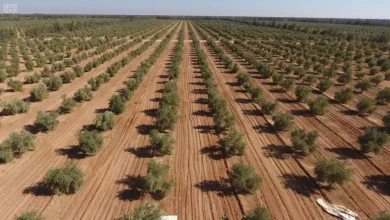
Saudi Arabia has achieved remarkable self-sufficiency levels across various food categories, according to the 2024 Food Security Statistics report released by the General Authority for Statistics (GASTAT). The Report revealed that the Kingdom now produces more than its local demand for several products. This milestone demonstrates the Kingdom’s unwavering strategic commitment to agricultural development.
Dairy and Dates Lead National Production
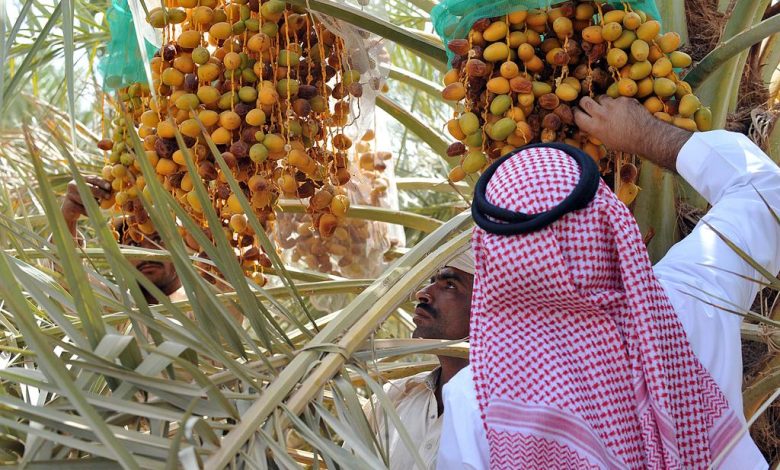
The latest data reveals that the Kingdom reached an impressive 131% self-sufficiency rate for its high-quality dairy products. Furthermore, date production soared to 121%, ensuring that Saudi Arabia remains a dominant global leader in this traditional sector. Table eggs also surpassed the total local requirement by reaching 103%, which demonstrates the efficiency of domestic poultry farms.
Local farmers successfully met domestic needs for okra and cucumbers, with both crops exceeding the 100% sufficiency threshold today. Additionally, the eggplant sector reached 105 while zucchini production perfectly balanced the market demand at 100% during 2024.
Consequently, the Ministry of Environment, Water, and Agriculture continues to implement modern techniques to boost the output of potatoes. While potatoes reached 93%, tomatoes and onions followed with 83% and 72% respectively in the report.
Diversity in Fruit and Animal Products
The Kingdom is diversifying its agricultural output by increasing the production of various fruits like figs, grapes, and tropical mangoes. Specifically, figs reached 99% self-sufficiency, while the rates for grapes and mangoes stood at 65% and 55%.
In the animal products sector, shrimp production reached a staggering 149%, allowing for significant export opportunities to international markets. Poultry meat currently stands at 72%, and the government is working hard to increase the red meat sufficiency rate.
GASTAT based these comprehensive findings on the four essential pillars of food security: availability, access, stability, and proper food utilization. This data-driven approach supports high-level decision-making and strengthens the overall resilience of the Saudi Arabian food security system today. By collaborating with various entities, the Kingdom ensures a stable supply chain that effectively meets the needs of every citizen.