
International Responsibility: Saudi Arabia Draws the Line on Waterway Restrictions

Saudi Arabia has delivered a clear message to the international community: protecting freedom of navigation and key waterways is a global responsibility.
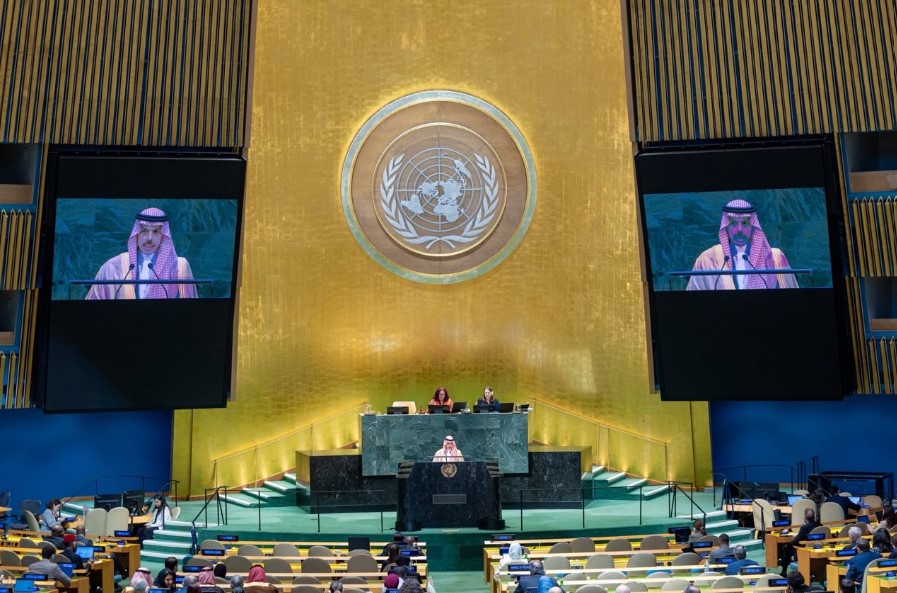
Addressing the UN General Assembly (UNGA), Riyadh has once again asserted its role as the anchor of the global economy and energy security, taking a proactive stance to safeguard maritime trade routes.
A Shared Responsibility
Driving the News: Foreign Minister Prince Faisal bin Farhan delivered Saudi Arabia’s speech at the 81st session of the UNGA, underlining the Kingdom’s position on maritime security.
The Big Picture: Prince Faisal stressed that safeguarding international navigation and the sustainability of global supply chains is a shared responsibility that requires serious international cooperation to prevent disruptions to global commerce.
He also noted that the security of the Gulf region is directly connected to global energy security, international trade, and supply chains.
In His Words: “The security of the Gulf region is part and parcel of the security of the region and the world at large.” – Prince Faisal bin Farhan, Saudi Arabia’s Foreign Minister.
Defending Maritime Chokepoints
The Context: The Saudi Foreign Minister reiterated the Kingdom’s categorical rejection of any party’s use of vital maritime corridors as a tool for pressure, threat, or harm to the interests of states, in a manner consistent with international law and relevant UN resolutions.
State of Play: Prince Faisal reaffirmed the importance of ensuring freedom of navigation in all international waterways, including:
- The Strait of Hormuz.
- The Bab al-Mandab Strait.
- The Red Sea.
- The Gulf of Aden.
Furthermore, he called for the return of conditions in Hormuz to their pre-February 28 status, without the imposition of any fees or restrictions.
Between the Lines: In his speech, the Saudi Minister urged the international community to reject the Houthi militia’s attacks and attempts to threaten navigation in the Red Sea and the Bab al-Mandab Strait.
Saudi Arabia: The Anchor of Stability
Zoom In: Strategically located along the coasts of the Red Sea in the west and the Arabian Gulf in the east, and given its status as the world’s energy artery, Saudi Arabia has been a proactive player in protecting maritime security and freedom of navigation to maintain the stability of global energy markets and supply chains.
The Strait of Hormuz
Since the outbreak of the US-Iran conflict in late February 2026 and the ensuing disruptions near the Strait of Hormuz, Saudi Arabia has leveraged its membership in international platforms, such as the International Maritime Organization (IMO), to ensure the smooth movement of maritime transport and the sustainability of supply chains.
The Kingdom has also condemned attacks that threaten the security of global trade and stressed that the Strait of Hormuz is an international waterway where the right of passage is guaranteed under international law.
Furthermore, Saudi Arabia has supported de-escalation efforts undertaken by several countries, most notably Pakistan and Qatar, to restore regional stability and create conditions conducive to dialogue and diplomacy.
The Red Sea & Bab al-Mandab
Riyadh has spearheaded efforts to safeguard shipping in the Red Sea corridor amid ongoing Houthi threats. In light of this, Saudi Arabia launched the Multinational Maritime Defense Coalition in late July 2026 to address and deter the growing threats to maritime security, including attacks against commercial vessels, energy tankers, and naval infrastructure in the Bab al-Mandab Strait, the Red Sea, and the Gulf of Aden.
Moreover, the Kingdom has ramped up coordination with international allies, including the UK, France, and the European Union (EU), to protect trade and energy flows through the Red Sea.
The Strategy: Saudi Arabia’s top diplomat reaffirmed that security enforcement against Red Sea threats works hand-in-hand with Riyadh’s continued backing of a peaceful political resolution in Yemen and the Kingdom’s ongoing humanitarian support to ensure lasting stability.
The Road to Regional Peace
The Deep Dive: In his address to the UNGA, Prince Faisal bin Farhan outlined the blueprint for regional peace. He noted that restoring the region’s stability and security cannot be based on hegemony, the imposition of influence, or the exploitation of crises. Rather, it must be based on mutual respect, shared interests, good neighborliness, respect for state sovereignty, and full compliance with international law and international humanitarian law.
The Saudi Foreign Minister also emphasized the importance of ensuring that any arrangements related to regional security are comprehensive, effective, and sustainable, directly addressing the sources of threat and instability.
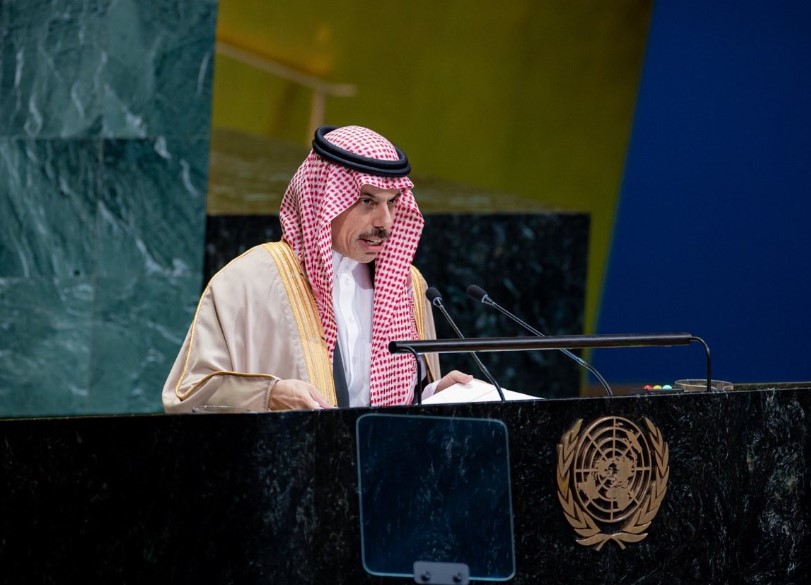
What to Watch: The Foreign Minister stressed that comprehensive regional security cannot be decoupled from non-proliferation, reiterating the Kingdom’s call for a Middle East completely free of weapons of mass destruction (WMDs). He noted that this requires peaceful nuclear programs to be subject to international oversight, verification, and safeguards, thereby enhancing confidence and safeguarding regional and international security.
The Bottom Line: Saudi Arabia’s speech at the UNGA serves as a firm warning against using maritime chokepoints for political leverage, a commitment to global economic resilience, and a blueprint for regional peace, reaffirming Riyadh’s role as an anchor of regional stability and international trade.