Backing Legitimacy: Saudi-Led Coalition Vows Support for Yemen Army Against Houthi Coup

The Saudi-led Arab Coalition to Restore Legitimacy in Yemen has reiterated its commitment to supporting the internationally recognized government of Yemen to end the Houthi coup and restore the state.
This statement comes amid accelerating developments as the Yemeni Presidential Leadership Council announced the start of military operations against the Iranian-backed Houthi militia to recapture remaining territory held by the group.
Furthermore, the statement reaffirms Saudi Arabia’s unwavering resolve to secure its borders and safeguard its national security while supporting regional stability and sovereignty.
Safeguarding Regional Security
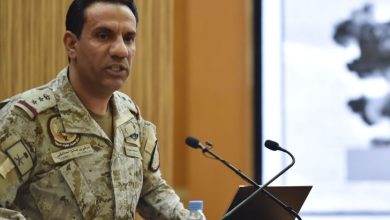
Driving the News: In a statement on Sunday, October 4, 2026, the Coalition’s Spokesperson, Major General Turki Al-Malki, pledged “full operational support” for the Yemeni Armed Forces, the legitimate Yemeni government, and the brotherly Yemeni people to eliminate the Houthi threat and restore the state and its national institutions.
The Big Picture: Al-Malki stated that Houthi actions necessitated measures to deter their attacks and protect regional and international stability. He also emphasized Saudi Arabia‘s commitment to defending its sovereignty and ending the militia’s threat to freedom of navigation in the southern Red Sea and the Bab al-Mandab Strait, which jeopardizes international trade, undermines the global economy, and threatens regional and international security.
In His Words: “The Kingdom has an inherent right to defend its sovereignty, protect its security, and take all operational measures to deter this militia and halt its grave violations, stemming from its national responsibility toward the Two Holy Mosques, its citizens, its national assets, and the residents on its lands.” – Turki Al-Malki, Spokesperson for the Coalition.
Houthi Escalations
Zoom In: In the statement, Al-Malki outlined the Houthi militia’s repeated violations and assaults against the Yemeni people, including an internal blockade, forced displacement, starvation, looting of national resources, and recruiting child soldiers.
The Iranian-backed militia has escalated attacks against Saudi Arabia, targeting civilians and civilian facilities in the cities of Riyadh, Abha, Khamis Mushait, Jazan, Najran, Taif, and Yanbu. It has also attempted to target the Holy City of Makkah Al-Mukarramah and the City of the Prophet, Al-Madinah Al-Munawwarah.
Moreover, the Houthis have increased their attempts to target the Kingdom’s vessels in the southern Red Sea and the Bab al-Mandab Strait.
A Battle of Liberation
State of Play: The Coalition’s statement followed an announcement by the Chairman of Yemen’s Presidential Leadership Council, Rashad al-Alimi, on Sunday, in which he declared the launch of a major military campaign to retake all territory under Houthi control, restore government institutions, and establish full state sovereignty in what he called a “battle of liberation.” Al-Alimi noted that the move came after exhausting opportunities for de-escalation, calling on the militia members to lay down their weapons.
Flashback: The Iranian-backed Houthis seized the capital Sanaa in 2014. The Saudi-led Coalition supports the internationally recognized government in Yemen, aiming to restore legitimacy to the country and alleviate the suffering of the Yemeni people.
Following nearly four years of de-escalation, the Houthis have escalated attacks against the Kingdom’s civilian and energy infrastructure and commercial shipping since mid-July. The militia also seized strategic locations near the Bab al-Mandab Strait, threatening commercial shipping and international trade.
Standing Up to the Threat
The Impact: In response to the Houthi threat, regional and international allies have rallied behind Saudi Arabia against the militia’s blatant attacks. The Makkah Defense Alliance partners Pakistan and Türkiye underscored their unwavering commitment to defending Saudi Arabia under the pact. Meanwhile, the US, GCC countries, Egypt, and Morocco reiterated their steadfast support for the Kingdom’s sovereignty and security.
Recognizing the scale of the threat and its implications for global energy supplies and trade, the UK said it would dispatch a single RAF Voyager air-to-air refueling aircraft to Saudi Arabia for defensive missions, while France announced it would deploy military assets to help protect energy facilities in Yanbu.
Moreover, the European Union (EU) has raised the alert level of its EUNAVFOR ASPIDES naval mission in the Red Sea to enhance security in this critical maritime route amid the escalating Houthi threats, saying that the bloc would reinforce coordination with the Saudi-led Multinational Maritime Coalition.
Yemen Stability First
Between the Lines: In line with Riyadh’s dual-track approach of diplomacy and deterrence, Saudi Arabia has prioritized Yemen‘s stability and security, ramping up economic and developmental support for the country’s government.
Most recently, the Kingdom provided SAR 224 million ($59.7 million) in direct aid to cover critical public budget shortfalls and secure public-sector salary payments.
The Backstory: Saudi Arabia’s economic and developmental support for Yemen is channeled through the Saudi Development and Reconstruction Program for Yemen (SDRPY). This support has taken the form of deposits and grants to the Yemeni Central Bank, as well as several projects and initiatives across the country.
By the Numbers:
- Over $12.6 billion: Saudi Arabia’s economic and development support to Yemen between 2012 and 2026.
- $1.14 billion: The total cost of SDRPY’s projects in Yemen.
- 268: SDRPY’s projects and initiatives across 14 Yemeni governorates.
- 8: Number of developmental sectors covered by SDRPY’s projects.
The Bottom Line: While Saudi Arabia prioritizes de-escalation and peace in Yemen, the Kingdom stands firm against any attempt to compromise its sovereignty or security. This underscores Riyadh’s balanced dual-track approach: pursuing a sustainable political path in Yemen while maintaining an unyielding defensive posture against actions that threaten regional stability and global economic security.