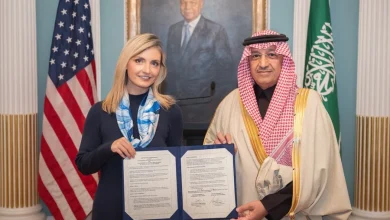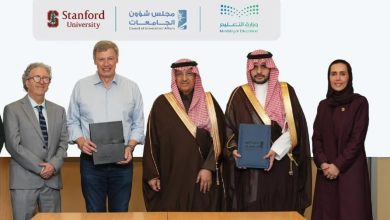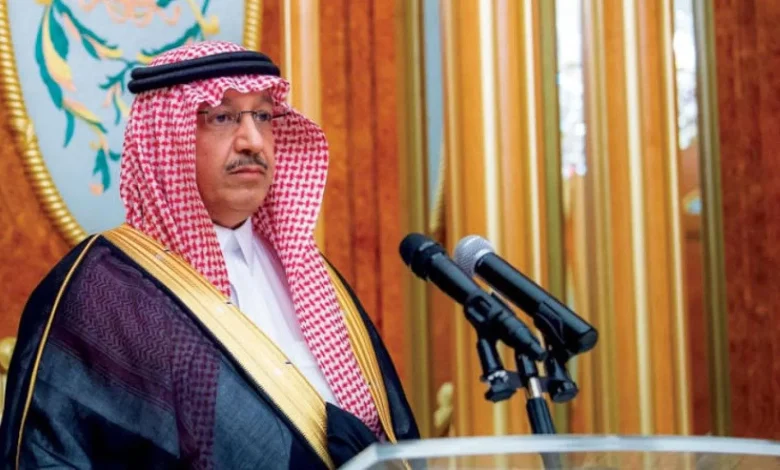
Driving the news: Saudi Minister of Education Yousef Al-Benyan explored new avenues for academic and investment cooperation with Duke University during a high-level meeting at the university’s center in Washington, D.C.
Why it matters: Saudi Arabia aggressively attracts top international universities to establish local branches, research hubs, and joint degree programs under the Human Capability Development Program. These partnerships build a globally competitive workforce and diversify the Kingdom’s knowledge economy.
What happened in Washington
During the Washington meeting, Minister Al-Benyan discussed expanding educational services across Saudi Arabia alongside senior Duke University officials.
- The centerpiece: Maarif Education and Duke University officially launched a strategic partnership by activating a previously signed memorandum of understanding (MoU).
- Core pillars: The alliance targets applied research, specialized academic programs, executive training, and professional development for Saudi educators.
- Local footprint: Both institutions will work directly toward opening an official Duke University Center of
Excellence inside the Kingdom.
The big picture: This engagement reflects the Ministry of Education’s broader mandate to attract international expertise and elevate domestic teaching standards. Furthermore, Riyadh actively encourages foreign universities to invest in the local education sector, which now allows 100% foreign ownership for educational institutions.
What they’re saying: “The meeting comes within the framework of the Ministry of Education’s continuous efforts to strengthen cooperation with prestigious international institutions and attract global expertise in delivering premier educational programs and services,” the Ministry noted in an official statement.
Strategic Global Alliances Reshaping Saudi Higher Education
Saudi Arabia continues to forge high-impact agreements with leading universities across North America, Europe, and Asia. Consequently, domestic institutions gain immediate access to cutting-edge curricula, joint research grants, and international accreditation standards.
- King Abdullah University of Science and Technology (KAUST): KAUST regularly signs joint research agreements with institutions like MIT, Stanford University, and the University of Oxford to advance clean energy, artificial intelligence, and marine science.
- King Saud University (KSU) and King Fahd University of Petroleum and Minerals (KFUPM): Both flagship universities maintain dual-degree pathways and faculty exchange programs with top global engineering and business schools.
- Royal Commission for Riyadh City (RCRC): The RCRC actively courts leading international universities to open physical branch campuses in the Saudi capital, boosting Riyadh’s status as a regional education hub.
- Scholarship modernization: Through the revamped Custodian of the Two Holy Mosques Scholarship Program, the Kingdom sends thousands of students to the world’s top 200 universities, tying funding directly to priority economic sectors.
By the numbers:
- SAR 195 billion ($52 billion): The total budget allocation for Saudi Arabia’s education sector in 2024, representing roughly 15.5% of total government spending.
- SAR 100 billion ($26.6 billion): Projected private investment opportunities in the Saudi education market through 2030, driven by public-private partnerships and foreign campus entries.
- 200: The exact number of elite global universities eligible under the Kingdom’s updated Path of Excellence and Custodian of the Two Holy Mosques Scholarship initiatives.
- 70,000: Approximate number of Saudi students currently studying at accredited international universities worldwide, with the United States hosting the largest cohort.
- 100%: The maximum foreign equity ownership allowed by the Ministry of Investment (MISA) for international universities and training providers operating in Saudi Arabia.
Regulatory Reforms Fueling Foreign Academic Investment
To turn memoranda of understanding into operational campuses, Saudi authorities streamlined licensing rules and introduced targeted financial incentives. As a result, global education providers face fewer bureaucratic hurdles when entering the Gulf market.
- Simplified licensing: The Ministry of Education and the Ministry of Investment established a unified digital portal to fast-track approvals for international branch campuses and specialized academies.
- Infrastructure support: Authorities offer long-term land leases at competitive rates in major economic zones, including King Abdullah Financial District (KAFD) and the Red Sea developments.
- Quality assurance: The Education and Training Evaluation Commission (ETEC) aligns local accreditation frameworks with international benchmarks, ensuring seamless credit transfers and degree recognition.
Between the lines: Ministry of Education’s activation of the Duke University partnership highlights the growing role of Saudi private-sector operators. Rather than relying solely on state-run universities, Riyadh empowers major private education groups to import world-class executive training and teacher-upskilling programs.
Teacher empowerment: The National Institute for Educational Professional Development collaborates with global faculties to train over 500,000 Saudi teachers in modern pedagogy and digital classroom tools.
Executive readiness: Partnerships like the Duke Center of Excellence directly prepare mid-career Saudi professionals for leadership roles across emerging industries, including biotechnology, fintech, and renewable energy.
Saudi Arabia builds domestic capacity
What’s next: As Saudi Arabia prepares to host major global events, including Expo 2030 and the 2034 FIFA World Cup, demand for specialized talent continues to surge. Therefore, international universities view the Kingdom not merely as a source of outbound students, but as a premier destination for campus expansion and collaborative innovation.
The bottom line: Minister Al-Benyan’s talks with Duke University signal a clear strategic shift from simple student recruitment to deep institutional integration. By embedding global centers of excellence directly within Saudi borders, Riyadh accelerates its transformation into the Middle East’s foremost hub for education, research, and human capital development.