
Saudi Arabia, US Launch Twin Initiatives to Boost Superintelligence and Cybersecurity Education
Driving the news: Saudi Arabia and the United States have launched two education initiatives to build Saudi expertise in superintelligence, cybersecurity and emerging technologies.
Why it matters: Riyadh wants a knowledge-based economy. These programs link Saudi students with American universities and industry.
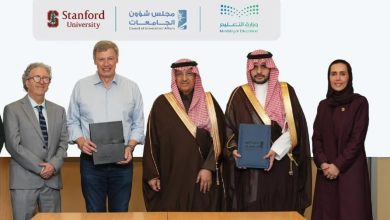
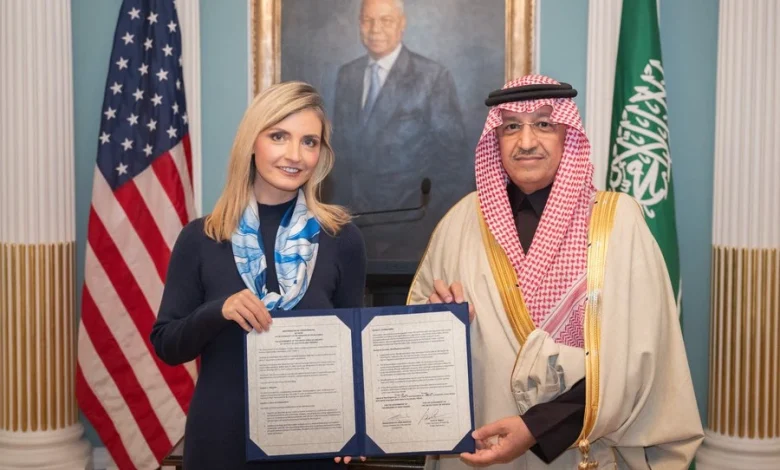
The big picture: Education Minister Yousef Al-Benyan met US Under Secretary of State for Public Diplomacy Sarah B. Rogers at the State Department on Wednesday. Al-Benyan also chairs the Council of Universities’ Affairs. Together, they announced the University-led Networks for Innovation, Technology, and Expertise (UNITE) and the Saudi-US Graduate Talent Pipeline Program (GTPP).
The US State Department funds both programs. Their goal is simple: connect American expertise with Saudi students and universities.
How the Two Programs Work
First, UNITE builds applied partnerships between Saudi and American universities. Industry experts join these teams. Together, they develop practical solutions to shared priorities, especially superintelligence and cybersecurity.
A US Embassy Riyadh funding notice adds detail. It describes four to five project teams that link US universities, US companies and Saudi institutions. Each team can receive seed awards of up to $25,000 (SAR 93,750). The teams will target workforce gaps in AI, cybersecurity, critical minerals and other strategic sectors. They will also produce practical deliverables, such as a curriculum or a technical roadmap.
Second, the GTPP offers specialised academic advising. It helps top-performing Saudi students win places in American graduate programs. The focus stays on superintelligence and emerging technologies.
Both initiatives deliver on education memorandums of understanding that the two countries signed in 2024 and 2025. In addition, they extend the US-Saudi Strategic Superintelligence Partnership.
Why Riyadh is Betting on AI
Saudi Arabia is turning ambition into infrastructure. The Public Investment Fund (PIF), which manages about $900 billion (SAR 3.4 trillion), set up HUMAIN in May 2025 to lead the national AI push.
Aramco has since taken a 49% stake in HUMAIN. Its 2026 cash contribution reaches about SAR 9.9 billion ($2.6 billion). HUMAIN plans 3 gigawatts of AI data center capacity by 2030.
Capacity is already climbing. Official figures show data center capacity rose from 68 megawatts in 2021 to 467 megawatts in the first quarter of 2026. Meanwhile, HUMAIN invested $3 billion (SAR 11.25 billion) in xAI this year. It also secured financing of up to SAR 2.5 billion ($667 million) for data center computing and power infrastructure.
Analysts see a broader shift. The Middle East Institute says the partnership moves US-Saudi ties beyond the traditional energy-for-security framework and anchors them in AI and digital infrastructure. The Washington Institute adds that most of HUMAIN’s partners are American companies.
By the numbers:
- 2: new education initiatives, UNITE and the GTPP
- 2024 and 2025: years the two countries signed the education memorandums
- Up to $25,000 (SAR 93,750): seed award per UNITE project team
- SAR 9.9 billion ($2.6 billion): Aramco’s 2026 cash contribution to HUMAIN
- 3 gigawatts: HUMAIN’s AI data center target for 2030
- 467 megawatts: data center capacity in Q1 2026, up from 68 in 2021
- SAR 16.3 billion ($4.35 billion): size of the Saudi cybersecurity market
- 21,000+: cybersecurity professionals in 2024, with women making up 32%
- 1 million+: Saudis certified in AI through the SAMAI initiative
- 80+: universities at the 2024 Saudi-US higher education forum
Cybersecurity: A Global Leader
The new programs arrive as Saudi Arabia tops global cybersecurity benchmarks. The IMD World Competitiveness Yearbook ranked the Kingdom first in its cybersecurity index for 2026, its third consecutive year at the top. In addition, the UN’s International Telecommunication Union places
The sector also drives growth. The National Cybersecurity Authority reports that the workforce topped 21,000 professionals in 2024, up 9%. Women made up 32% of that workforce, against a global average of 24%. Furthermore, the sector added $4.9 billion (SAR 18.4 billion) to GDP. That talent base explains why Washington sees Riyadh as a natural cyber partner.
Education: From Reform to Global Partnerships
Education underpins the strategy. In November 2024, the Ministry of Education, the US Embassy and the Institute of International Education co-organised the Saudi-US Higher Education Partnerships Forum. More than 80 American and Saudi universities attended. There, Al-Benyan said the Kingdom aims to become a global education hub and to cultivate “globally competitive students.” The forum also produced an agreement that lets American graduate students study in Saudi Arabia for the first time.
At home, the government trains citizens at scale. The SAMAI initiative has certified more than one million Saudis in AI. Earlier, the Ministry of Education signed agreements with the Saudi Data and AI Authority (SDAIA). They created a center of excellence for AI in education and an AI scholarship program. Consequently, the new US partnerships build on a foundation that Saudi institutions already laid.
What’s next: Timing details remain limited. Watch for the selection of UNITE project teams and the first GTPP cohort. Both will test whether universities can turn policy into talent.
The bottom line: If the programs deliver, Saudi Arabia gains a deeper pipeline of AI and cybersecurity specialists, and American universities gain a closer partner in the Gulf.