As more Saudi women pursue studies in science, technology, engineering and mathematics (STEM), the Kingdom is seeking to turn their academic achievements into a stronger presence in the energy industry.
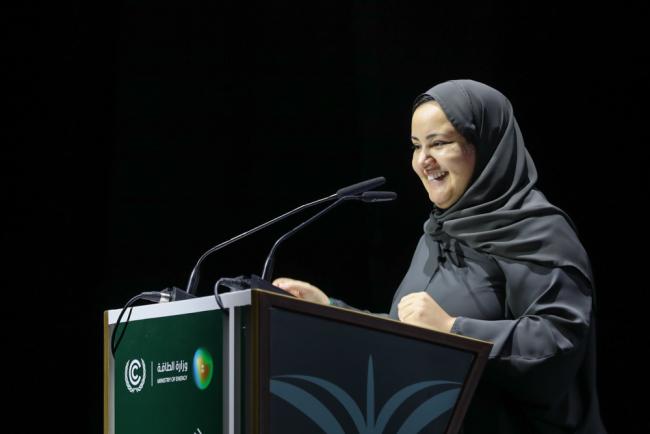
Princess Mashael Al-Shalan, co-founder of AEON Collective and the Women and Energy Association, told Arab News that broadening women’s participation in the sector is crucial to ensuring they have a greater role in shaping its future.
Speaking on the sidelines of the 25th WPC Energy Congress in Riyadh, she noted that women account for more than half of STEM students in Saudi Arabia. However, their representation in the energy workforce has yet to reflect their educational progress.
The 30% Target Has Been Met
Institutional leadership has played a significant role in reinforcing women’s presence in Saudi Arabia’s energy sector.
Princess Mashael pointed to the Ministry of Energy and its related institutions as compelling examples of this progress, noting that they had already met the national target of 30% female representation.
For years, women had long contributed ideas and perspectives across fields, she said, even as access to formal positions in energy remained limited.
“I think for the longest time … women were filling every single space and domain, giving feedback across them. But the formality of jobs was a little bit limited, primarily within the energy sector,” she said.
That is why the gap persists across the wider energy ecosystem, particularly in the private and semi-private sectors, where progress has been less consistent.
The Gap Is Global
Addressing the main issue, Princess Mashael underscored that the gap between women’s educational achievements and their representation in the energy workforce is not unique to Saudi Arabia. She even described it as a global challenge that necessitates more targeted actions.
That conviction helped drive the establishment of the Women and Energy Association, Princess Mashael said, with a bold goal of identifying the barriers that prevent women from entering the industry and creating pathways from education to employment.
“What are the barriers to entry? Why don’t they imagine themselves in those rooms? And how can you start developing programmes that would get young women engaged?” she said.
In Saudi Arabia, the challenge is particularly evident in the contrast between women’s participation in STEM education, which she estimated at more than 50%, and their representation in energy-sector employment.
What Makes a Programme Matter?
Building a stronger presence for women in energy requires support at every stage of their careers. Through the Women and Energy Association, aspiring researchers can connect with specialists locally and internationally, while mid-career professionals have opportunities to strengthen their leadership capabilities.
The association’s Women’s Leadership in Energy Diplomacy programme reflects this approach, helping women develop the skills needed to navigate energy diplomacy and leadership roles.
Princess Mashael emphasized that such initiatives must deliver tangible professional value rather than focus on representation alone.
“By inception, we never do anything that’s women-led or women-first just for its sake. It has to be a solid programme that helps upskill men or women within that particular domain,” she said.
Training Women for Energy Leadership
Building a well-established presence for women in energy requires support at every stage of their careers.
Through the Women and Energy Association, aspiring researchers can engage with specialists locally and internationally, while mid-career professionals have opportunities to enhance their leadership capabilities.
This approach is vividly reflected in the association’s Women’s Leadership in Energy Diplomacy programme, helping women nurture the skills needed to navigate energy diplomacy and leadership roles.
In this context, Princess Mashael emphasized that such initiatives must deliver tangible professional value instead of focusing on representation alone.
“By inception, we never do anything that’s women-led or women-first just for its sake. It has to be a solid programme that helps upskill men or women within that particular domain,” she said.
Can Policy Close the Gap?
For Princess Mashael, strengthening women’s participation in energy requires more than targeted training programmes. It also means understanding the structures that define access to opportunities and identifying where policy can help address persistent barriers.
That strategy informs the association’s plans to establish a separate research and policy department, which would investigate these challenges through evidence-based research.
Princess Mashael said some existing programmes could also eventually open to men in response to rising demands, reflecting the association’s growing attention to professional development and skills-building.
“How do we ensure that we’re engaging with policy? How do you do it with an evidence-based approach to policymaking?” she said.
The proposed department remains in its early stages, with plans to engage relevant institutions and draw on the association’s existing initiatives. She explained that its work should rely on an understanding of systemic needs rather than individual accounts alone.
“I don’t want it to be based on experiences of individuals, of sentiments … but rather on what the system really requires.”
This requires a comprehensive view of the energy ecosystem, taking into consideration the relationships between its different institutions and professional domains.
“We need to see all of the system, have a 360 vision, not just … fixated on our domains.”
Measuring Progress Beyond the Numbers
The association’s ambitions are also reflected in the community taking shape around its programmes.
Princess Mashael highlighted that the continued engagement of women who have completed them has become a significant measure of progress, signaling a level of enthusiasm she had not anticipated.
“This was a space where I did not imagine the amount of excitement and sustained engagement with women,” she said.
She also added that the connections formed through the association have created a distinctive network of women united by shared aspirations.
“It’s creating this community of like-minded sisters.”
For Princess Mashael, sustaining that community means pursuing an approach to empowerment rooted in mutual support and shared values.
In this sense, she emphasized that meaningful progress must reflect the identity of the society it serves, rather than become a symbolic exercise in representation.
Her vision places lasting relationships and culturally grounded professional development as well as participation figures as strong measures of how women’s roles in the energy industry can evolve.
A Career Shaping Sustainability Policy
Princess Mashael Al-Shalaan received the Princess Nourah Award for Women’s Excellence in Health Sciences in 2025, recognizing her contributions to the field.
She is a founding partner of AEON Strategy, an interdisciplinary advisory firm focused on advancing environmental, economic, and social sustainability. She also co-founded AEON Collective, a cross-disciplinary waqf dedicated to generating and sharing culturally grounded, evidence-based knowledge on sustainability in Saudi Arabia.
With nearly a decade of experience, Al-Shalaan has developed expertise in international climate negotiations, climate policy, and regulatory frameworks. She has co-authored numerous research papers on climate policy and continues to contribute to global discussions on climate change, carbon neutrality, and sustainability.
She holds a master’s degree in International Affairs from Columbia University’s School of International and Public Affairs (SIPA), where she specialized in earth sciences, energy economics, and climate policy.
Related Topics:
Saudi National Day 2025: Trailblazing Women Defining New Era of Leadership
Desert Expedition: Female Explorer Embarks on Historic Journey Across Saudi Arabia on Foot
Saudi Pavilion at Expo 2025 Osaka Showcases Inspiring Stories of Women