Saudi Arabia, Egypt Deepen Historic Alliance: Inside the Crown Prince’s Cairo Visit
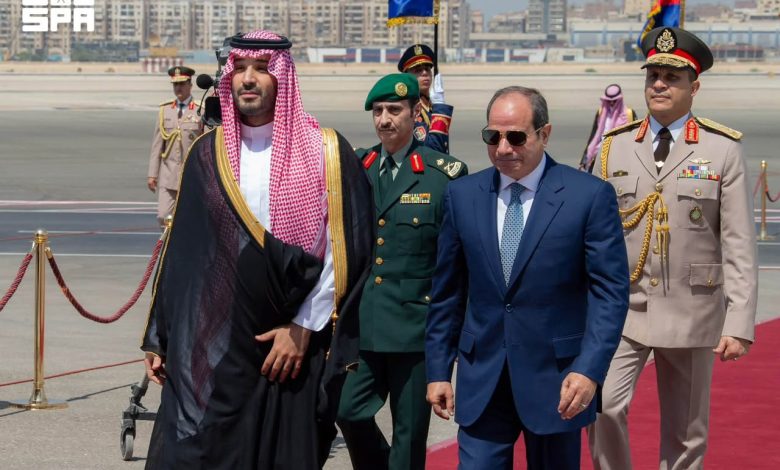
Driving the news: Crown Prince Mohammed bin Salman touched down in Cairo on Tuesday, and the visit instantly signaled something bigger than a routine diplomatic stop.
Why it matters: Saudi Arabia and Egypt anchor the Arab world’s two largest economies, and their coordination now shapes everything from Red Sea security to regional investment flows. Houthi attacks currently threaten shipping through the Bab Al-Mandeb Strait, so the two nations are choosing to pull closer together rather than apart.
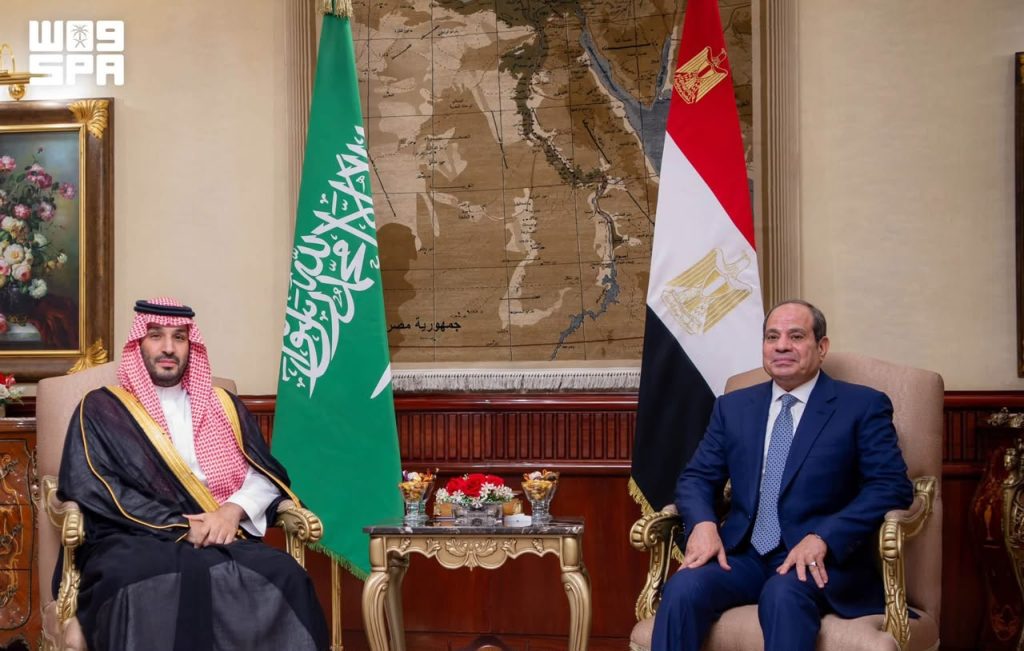
President Abdel Fattah Al-Sisi personally received the crown prince at Cairo International Airport. He then escorted him to Al-Ittihadiya Palace for a reception ceremony, and the two leaders held a bilateral meeting followed by expanded talks on strategic ties. Egyptian Prime Minister Mostafa Madbouly joined the wider session, and Al-Sisi later hosted a lunch banquet honoring his guest and the accompanying Saudi delegation.
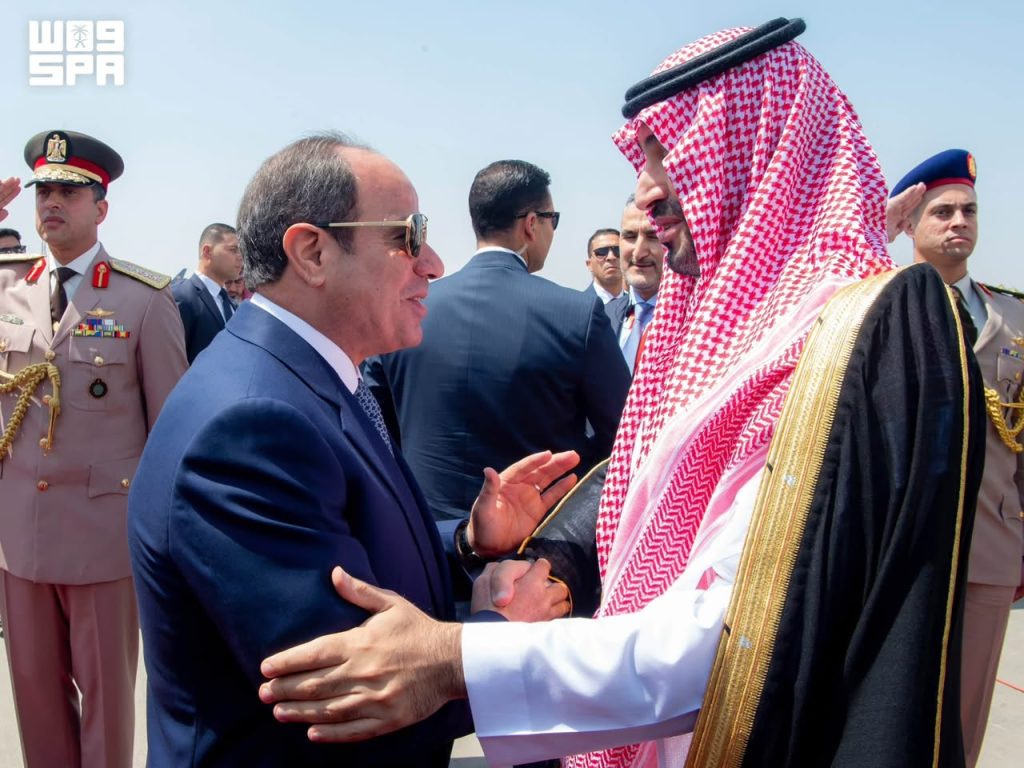
The big picture: Saudi Arabia remains Egypt’s paramount economic partner. When Crown Prince Mohammed bin Salman headed to Cairo, he reaffirmed the Kingdom’s unwavering commitment to deepen mutual cooperation. Indeed, the bilateral relationship has evolved from traditional diplomatic support into a comprehensive, forward-looking economic synergy.
Between the lines: Saudi Arabia is transitioning its regional engagement strategy from traditional financial support toward sustainable, commercial investment. During previous summit meetings, both leaders established the institutional infrastructure for long-term bilateral growth. Analysts recognize the two leaders as key architects of regional order meeting in Cairo to safeguard regional equilibrium.
The joint diplomatic statement released following high-level summit discussions highlighted this shared conviction: “The solid historical ties and close fraternal bonds bind the leaderships and brotherly peoples of the Kingdom of Saudi Arabia and the Arab Republic of Egypt. Both sides affirm their determination to expand trade and investment integration continuously.”
Unprecedented Economic Expansion and Capital Investment
Economic cooperation between Riyadh and Cairo is reaching historic highs. Furthermore, official Egyptian financial sources confirm that Saudi public and private enterprise sectors are deploying massive foreign direct investment across Egyptian infrastructure, tourism, and energy.
The Kingdom already maintains a dominant financial position in the Egyptian economy, solidifying its rank as the largest investor in Egypt with total investments of $55 billion across 5,350 projects.
Furthermore, Arabic financial analysts report that Egyptian business leaders expect this diplomatic momentum to translate joint political will into high-yield commercial ventures. Egyptian parliamentary leaders noted in recent press briefings that regular coordination between President Al-Sisi and Crown Prince Mohammed bin Salman opens expansive horizons for private sector growth across both nations.
By the numbers:
- SAR 206.25 billion ($55 billion): Total historical Saudi investments operating across 5,350 active commercial projects in Egypt.
- SAR 112.5 billion ($30 billion): Additional projected Saudi capital investments targeted for upcoming Egyptian industrial, logistics, and real estate development.
- SAR 18.75 billion ($5 billion): The initial capital commitment from the Saudi Public Investment Fund (PIF) announced for strategic enterprise acquisitions in Egypt.
- SAR 18.75 billion ($5 billion): Central Bank deposit renewed by Saudi Arabia to reinforce Egypt’s monetary stability and foreign exchange reserves.
- SAR 30 billion ($8 billion): The total monetary value of 14 key commercial agreements signed during recent summit proceedings in Cairo.
- 3,000 Megawatts: The total transmission capacity of the joint electrical interconnection project connecting the Saudi and Egyptian national power grids.
These numbers matter because they show real capital following the political rhetoric, not the other way around. Trade and investment now move in step with diplomacy, and that pattern looks set to continue.
Consequently, Saudi sovereign and private capital targets critical growth sectors within the Egyptian economy. Specifically, investors favor logistics corridors, healthcare networks, educational facilities, real estate, and agricultural ventures.
Riyadh expanded this capital deployment when the Saudi Public Investment Fund unveiled a $5 billion investment plan in Egypt. This capital injection prioritizes high-growth tech enterprises, financial services, and coastal Red Sea tourism megaprojects.
Energy grid integration: The flagship electrical interconnection project represents the crown jewel of cross-border infrastructure. The project enables Saudi Arabia and Egypt to exchange up to 3,000 megawatts of electricity between their respective power grids. Consequently, this link creates the largest power-sharing infrastructure network in the entire Middle East.
Additionally, both nations are exploring joint venture opportunities in green hydrogen production, carbon reduction technologies, and artificial intelligence applications for smart grid management.
Institutional frameworks: Institutional progress accelerated after President Al-Sisi approved the formation of the Saudi-Egyptian Supreme Coordination Council. President Al-Sisi and Crown Prince Mohammed bin Salman co-chair this apex executive body. Furthermore, the council enforces operational accountability, streamlines regulatory approvals, and protects mutual investments under a binding bilateral treaty framework.
Regional Leadership, Maritime Security, and Future Outlook
The bigger picture: Sustainable economic growth requires regional stability. Therefore, Crown Prince Mohammed bin Salman and President Al-Sisi dedicate significant summit discussions to diplomatic and geopolitical coordination.
Both leaders continuously align their foreign policies to address complex regional crises across Gaza, Sudan, Yemen, and Lebanon. Additionally, Riyadh and Cairo advocate strongly for a two-state solution to secure lasting peace and stability for the Palestinian people.
Red Sea security: Saudi Arabia and Egypt hold primary responsibility for maintaining maritime security along the vital Red Sea corridor. Because millions of barrels of crude oil and massive global maritime freight pass through the Bab Al-Mandeb strait daily, any commercial disruption threatens world trade.
Accordingly, joint naval exercises and intelligence sharing between Saudi Arabia and Egypt safeguard this crucial maritime route against asymmetric threats. Egyptian political observers emphasize that Cairo views Saudi Arabia as an indispensable partner in preventing wider regional conflict escalation.
Between the lines: The partnership benefits both economies symmetrically. Saudi Arabia gains access to a resilient, highly populated market for its expanding commercial enterprise sector under Vision 2030. Meanwhile, Egypt gains vital foreign currency flows, industrial technology transfers, and steady job creation for its youth. Furthermore, Saudi companies operate over 6,225 industrial ventures within Egypt, employing tens of thousands of local engineers, technicians, and specialized workers.
The joint supreme council will convene regular working groups across Riyadh and Cairo in the coming months. Investors anticipate accelerated regulatory approvals for cross-border projects following the complete ratification of the Investment Protection Agreement.
Overall, the unified vision of Crown Prince Mohammed bin Salman and President Al-Sisi continues to transform the Middle East into an integrated, prosperous economic powerhouse.
What Comes Next
What’s next: Looking ahead, both governments plan to lean harder on the institutions they’ve already built. The Egyptian-Saudi Supreme Coordination Council gives ministers a standing forum to track investment commitments, and it meets alternately in Cairo and Riyadh so neither side loses momentum between summits. Meanwhile, the newly ratified investment protection agreement should give Saudi firms more confidence to commit capital across energy, real estate, industry, and tourism — the four sectors the Saudi-Egyptian Business Council flagged as the biggest near-term opportunities.
PM Madbouly has already signaled where he sees the relationship heading. During earlier talks with the crown prince, he praised the transformative progress Saudi Arabia has made under Vision 2030, and he pointed to infrastructure and industrial cooperation as priority areas for deeper collaboration. That framing lines up neatly with Egypt’s own development goals, which explains why officials on both sides keep describing this partnership as strategic rather than transactional.
Bottom line: This visit reinforces a relationship that already ranks among the most consequential in the Arab world, and it does so at a moment when regional stability genuinely depends on Cairo and Riyadh staying aligned. The investment figures back up the diplomatic language, the institutional scaffolding keeps expanding, and both governments show every sign of treating this partnership as a long-term strategic priority rather than a one-off show of solidarity.