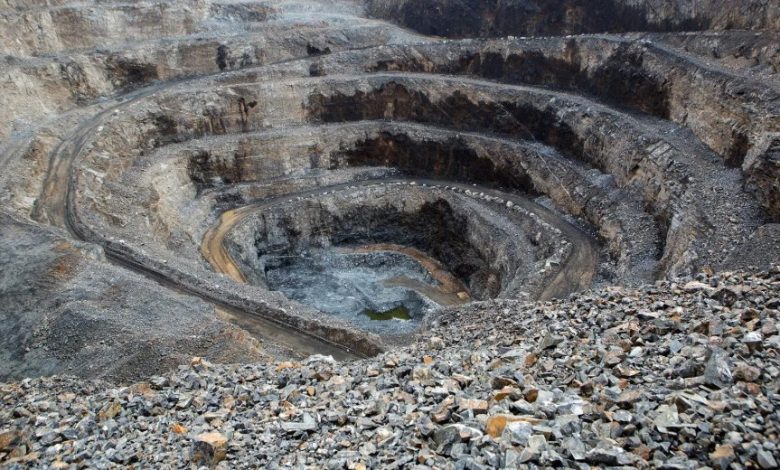
Saudi Arabia has unveiled an estimated 110 to 114 million tons of rare earth minerals and uranium ore in Jabal Sayid – a treasure trove of resources that could reshape the Kingdom’s energy and industrial landscape.
This landmark discovery advances Saudi Arabia’s National Atomic Energy Project and civilian nuclear energy goals, while positioning it as a vital node for green tech and defense.
A Breakthrough Announcement
The Big Picture: During the 70th Regular Session of the International Atomic Energy Agency (IAEA) General Conference in Vienna, Saudi Arabia’s Minister of Energy, Minister of Industry and Mineral Resources Prince Abdulaziz bin Salman announced the discovery of around 114 million tons of heavy rare earth minerals and uranium ore at the Jabal Sayid project in Madinah Region, according to the Saudi Press Agency (SPA).
In His Words: “This places the project among the most significant rare earth resource sites currently under development globally.” – Prince Abdulaziz bin Salman, Saudi Energy Minister.

Why It Matters: Heavy rare earth minerals (HREEs) are essential for powering high-tech defense systems, electric vehicle (EV) motors, and wind turbines. Initial geological estimates project that the Jabal Sayid deposit hosts approximately 552,000 tons of HREEs, 355,000 tons of Light Rare Earths, and 31,000 tons of co-located uranium, placing it fourth globally by overall resource value.
While China currently dominates the global supply of HREEs, the recent discovery positions Saudi Arabia as a viable alternative for Western markets.
A Boost for Saudi Nuclear Ambitions
State of Play: The uranium findings support Saudi Arabia’s goal of establishing a domestic nuclear power sector for clean energy production and water desalination. Moreover, the discovery drives the Kingdom’s ambitions to become a nuclear energy producer and exporter.
Between the Lines: Riyadh is strengthening its global partnerships to develop its capabilities and facilitate investment in critical minerals and civil nuclear energy sectors.
US-Saudi Critical Minerals Framework
Saudi Arabia and the US signed the Strategic Framework for Cooperation on Critical Minerals, Permanent Magnets, and Uranium, during Crown Prince Mohammed bin Salman’s landmark visit to Washington in November 2025.
This framework features a joint high-tech rare earths refinery between Saudi Arabia’s national champion Ma’aden (51% equity) and US partner MP Materials. It aims to refine both light and heavy rare earth oxides for advanced industries. The US government is directly backing the initiative by funding the 49% US equity stake.
By leveraging Saudi Arabia’s low-cost industrial power and infrastructure, the facility will process raw ores into defense- and energy-grade magnets – creating an alternative supply chain that bypasses traditional single-country refining bottlenecks.
Nuclear Cooperation Agreement
In July 2026, the Saudi-US cooperation was further solidified by the signing of the 123 Agreement on cooperation in the peaceful uses of nuclear energy.
Such a civil nuclear framework provides the regulatory, legal, and nonproliferation foundation required to extract and process these uranium-bearing rare-earth ores at scale. It also paves the way for clean baseload nuclear power to run the Kingdom’s energy-intensive industrial processing corridors, creating a closed loop between raw mineral processing and zero-carbon energy.
France’s Orano Partnership
Pilot work related to uranium exploration and extraction is carried out in cooperation with the French company Orano, yielding promising economic indicators for uranium recovery from these operations, according to Prince Abdulaziz bin Salman.
This cooperation culminated in the signing of a memorandum of understanding (MoU) during the visit of Saudi Arabia’s Crown Prince Mohammed bin Salman to France last August.
Critical Minerals: Saudi Economy Third Pillar
Go Deeper: Under Vision 2030, Saudi Arabia has defined the mining sector as the third pillar of the national economy, driving modern industries such as EVs, smartphones, wind turbines, aircraft systems, and data centers. The Kingdom’s critical minerals deposits are estimated at $2.5 trillion.

The majority of critical minerals and rare earths concentrates are found in the Arabian Shield along the Kingdom’s western coast, in key mining areas such as Jabal Sayid, Jabal Al-Hamra, Jabal Tawlah, Ghurrayyah, and Umm Al-Birak.
Other mining areas in the Kingdom include the Arabian Plate and the marine areas (the Red Sea and the Arabian Gulf).
Saudi Arabia’s Key Mineral Resources:
Precious & Base Metals
- Gold and Silver
- Copper, Zinc, Lead, Nickel, and Iron Ore
- Transition Metals
Critical, Energy & Strategic Minerals
- Rare-Earth Minerals
- Uranium
- Bauxite
- Magnesium
Industrial & Non-Metallic Minerals
- Phosphate Ores
- Silica
- Gypsum
A Robust Value Chain
The Strategy: Speaking at the IAEA General Conference in Vienna, Prince Abdulaziz bin Salman, who is also the Chairman of the Board of Directors of King Abdullah City for Atomic and Renewable Energy and the Chairman of the Board of Directors of the Nuclear and Radiological Regulatory Commission, outlined the Kingdom’s strategy for its mining sector.

This includes establishing a complete, domestic value chain for all minerals, moving beyond raw material exports to local exploration, processing, separation, and refining, including the production of rare earth oxides.
As for uranium, the Kingdom’s strategy encompasses four steps:
- Recovery and Separation: Extracting and separating uranium that occurs naturally alongside other ores and critical minerals.
- Purification: Processing the recovered raw uranium to remove impurities and raise its concentration levels.
- Yellowcake Production: Converting the purified uranium into yellowcake (uranium concentrate), subject to economic feasibility studies.
- Value Chain Development: Building out the downstream commercial and industrial infrastructure for the yellowcake, in compliance with international transparency standards and obligations.
The Takeaway: The recent discovery at Jabal Sayid proves that Saudi Arabia has the potential to rapidly transform these resources into tangible geopolitical and economic leverage.