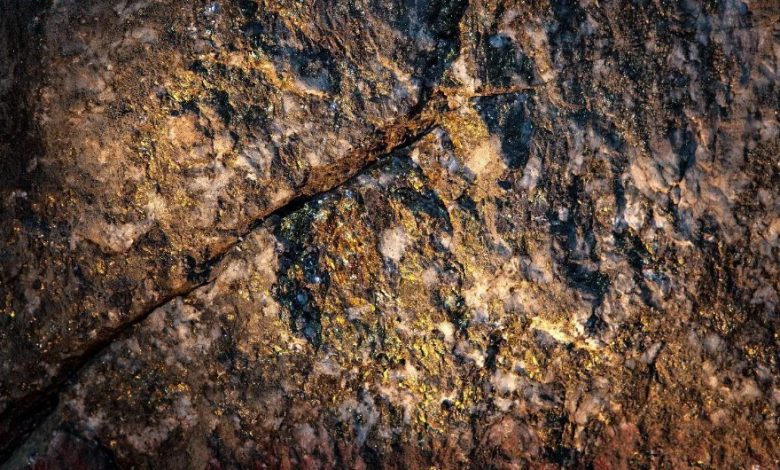
Deep within the ancient Precambrian rocks of the Arabian Shield lies a national wealth that powers modern industries: a treasure trove of critical and rare-earth minerals needed for electric vehicles (EVs), smartphones, wind turbines, aircraft systems, and data centers.
Positioned as the third pillar of the national economy, Saudi Arabia’s mining sector is undergoing a high-speed transformation, as the Kingdom accelerates efforts to harness its critical minerals reserves and establish itself as a global hub for mining investment.
The Arabian Shield: What Lies Beneath?
Saudi Arabia is home to one of the world’s largest deposits of critical minerals, valued at over $2.5 trillion. These elements are concentrated in the Arabian Shield – a 500-to-900-million-year geological formation spanning 600,000 km2 along the Kingdom’s western coasts and hosting a heavy concentration of critical minerals and rare earths.
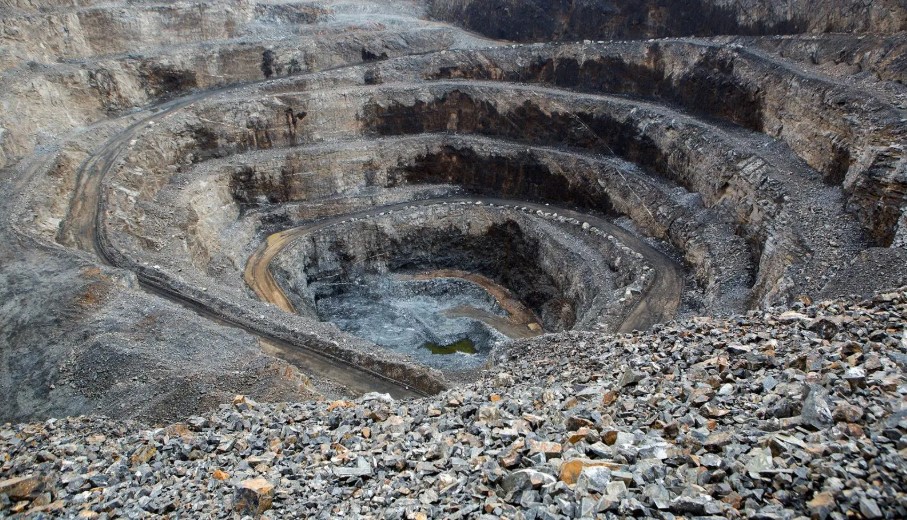
The Arabian Shield comprises key mining areas such as Jabal Sayid, Jabal Al-Hamra, Jabal Tawlah, Ghurrayyah, and Umm Al-Birak. The region is home to 48 identified materials.
Arabian Shield Key Minerals:
- Base & Transition Metals: High-grade deposits of copper, nickel, cobalt, and zinc – essential components for power grids, defense electronics, and energy storage systems.
- Rare Earth Elements (REEs): Significant hard-rock deposits of both light REEs (such as neodymium and praseodymium) and heavy REEs (such as dysprosium and terbium) concentrated at locations like Jabal Sayid and Ghurrayyah.
- Precious & Base Metals: Substantial, proven reserves of gold, silver, iron ore, and lead.
Other mining areas in the Kingdom include the Arabian Plate and the marine areas (the Red Sea and the Arabian Gulf). The Arabian Plate is rich in industrial minerals such as bauxite and phosphate, while the Red Sea region contains some chemical industry minerals like potassium.
Key Minerals Beyond the Shield:
- Industrial & Agricultural Minerals (Arabian Plate): World-scale sedimentary deposits of phosphate in northern sites like Wa’ad Al Shamal (accounting for ~7% of global reserves) and bauxite (aluminum ore) in central-northern regions like Al Ba’itha.
- Lithium (Subsurface Oilfield Brines): Extracted from deep subterranean saline waters brought up during petroleum operations in the Eastern Region.
- Chemical & Evaporite Minerals (Marine & Coastal Basins): Significant deposits of potassium, industrial salt (halite), and gypsum situated along the Red Sea marine shelf and Arabian Gulf coastal zones.
The Strategy: From Raw Metals to High-Tech Industry
Saudi Arabia is establishing a resilient, integrated value chain encompassing mining, processing, refining, and advanced manufacturing. To this end, the Kingdom is adopting a three-pronged strategy:
- High-Tech Mapping: Through the Saudi Geological Survey, the government is using satellite data, advanced aerial imaging and AI for geological mapping. By making high-resolution data accessible via the National Geological Database, the Kingdom lowers initial exploration capital risks for global investors.
- Redesigning the Investment Landscape: Under the updated Mining Investment Law, Saudi Arabia reduced corporate mining taxes and offered substantial financial incentives to international mining companies seeking exploration and mining licenses.
- Building Processing Corridors: The Kingdom is expanding refineries and processing plants in 13 coastal industrial cities, such as Yanbu and Ras Al Khair, to process raw ores and export refined, battery-grade materials.

Global Partnerships
Recognizing the significance of critical minerals as a cornerstone of modern industries, Saudi Arabia is forging strategic international partnerships to boost its processing and refining capabilities.
US-Saudi Critical Minerals Framework
During Crown Prince Mohammed bin Salman’s landmark visit to Washington in November 2025, Saudi Arabia and the US signed the Strategic Framework for Cooperation on Critical Minerals, Permanent Magnets, and Uranium. Designed to facilitate two-way investment in this vital sector, this multi-billion-dollar partnership is highlighted by:
- A Joint High-Tech Rare Earths Refinery: A flagship joint venture between national champion Maaden (51% equity) and US partner MP Materials. The US government reinforced the project by funding the 49% US equity stake, aimed at producing refined light and heavy rare earth oxides for advanced industries.
- Capitalizing on Competitive Advantages: The partnership leverages Saudi Arabia’s low-cost industrial power and infrastructure to refine raw ores into defense- and energy-grade magnets, bypassing traditional single-country processing bottlenecks.
The Civil Nuclear Bridge
A critical component tied to the Washington agreements is the formal framework for US-Saudi Civil Nuclear Cooperation. Geologically, Saudi Arabia’s richest rare earth deposits, such as those at Jabal Sayid, occur in tandem with substantial uranium deposits (~31,000 tons).
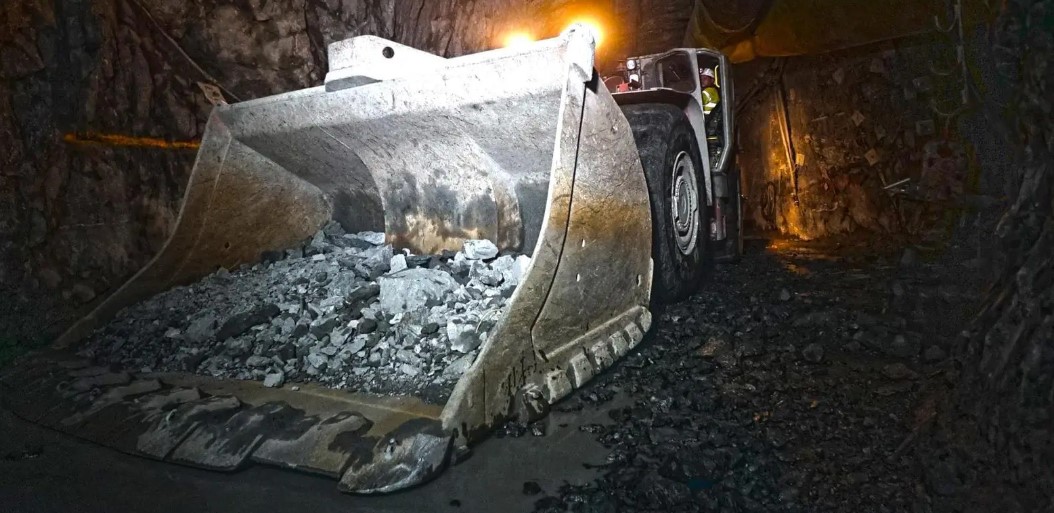
Securing a civil nuclear framework provides the regulatory, legal, and nonproliferation foundation required to extract and process these uranium-bearing rare earth ores at scale. Additionally, it paves the way for clean baseload nuclear power to run the Kingdom’s energy-intensive industrial processing corridors, creating a closed loop between raw mineral processing and zero-carbon energy.
Saudi Arabia’s Energy Minister Prince Abdulaziz bin Salman unveiled ambitious plans for uranium enrichment. “For those who question our mining capabilities, we will not only mine and manufacture uranium, but we will also enrich it and sell it. We will produce yellowcake,” he said in January 2025.
Cross-Border Equity Investments
Saudi Arabia is deploying sovereign capital globally to diversify supply chains. Through Manara Minerals (a joint venture between Maaden and the Public Investment Fund), the Kingdom secured a 10% equity stake in Vale Base Metals, gaining direct strategic access to global copper and nickel supply lines.
Fueling the Future
Beyond export, the mineral wealth drives the megaprojects of Saudi Vision 2030:
- EV Ecosystem: Local copper and lithium will go directly to EVs assembled at domestic car factories like Lucid and Ceer.
- Clean Energy: Local metals will be turned into solar panels and wind turbines to meet the Kingdom’s massive green energy goals.
By combining $2.5 trillion in mineral wealth with fast-track regulations, low-cost energy, and high-level global alliances, Saudi Arabia is evolving from an oil exporter into a central processing pillar of the global tech economy.