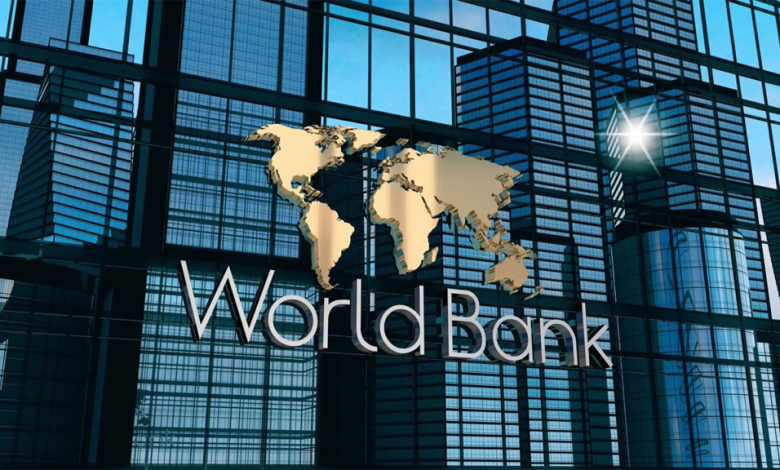
The big picture: Saudi Arabia has solidified its position as a major global power in data and artificial intelligence (AI). The World Bank Group’s World Development Report 2026 places the Kingdom among the top 10 nations for private AI investment. This milestone directly reflects sustained national leadership backing under Saudi Vision 2030 to build a dynamic, vibrant, knowledge-based innovation economy.
Why it matters: Saudi Arabia champions digital innovation to build a modern economy centered on data, compute power, and technology adoption.
- The World Bank report explicitly states: “The Kingdom has become an attractive destination for AI talent and a model for government data integration.”
- Furthermore, Crown Prince Mohammed bin Salman chaired the March 10 Cabinet session, designating 2026 as Saudi Arabia’s “Year of AI”.
- Consequently, global technology companies and venture investors recognize the Kingdom as a premier destination for artificial intelligence capital.
- As a result, national initiatives accelerate sustainable economic growth, high-value jobs, and digital competitiveness across priority economic sectors.
Building Next-Generation AI Infrastructure and Talent
The World Bank structures its analytical framework around three core dimensions: Capabilities, Concentration, and Complements. Saudi Arabia excels across all three dimensions through targeted national policies, forward-looking investments, and cohesive institutional execution.
- Capabilities: Saudi Arabia actively attracts top-tier global AI professionals, researchers, and scientific innovators. In 2025, the Kingdom achieved one of the highest net inflows of AI experts per 10,000 LinkedIn members globally. Additionally, Saudi Arabia recorded a net inflow score of 3.08 among leading international AI authors and technological creators.
- Concentration: The Kingdom successfully combines strategic tax incentives with specialized economic zones to expand hyperscale data center capacity. Furthermore, Saudi Arabia integrates foreign direct investment with local talent development, clean energy, and fast-growing technology startups.
- Complements: The Saudi Data and Artificial Intelligence Authority (SDAIA) provides a benchmark model for public data infrastructure. Specifically, SDAIA integrates data across more than 60 government entities while keeping sensitive data securely within native systems.
By the numbers:
- $40 billion: Total target size of Saudi Arabia’s planned global AI investment fund in partnership with major venture capital institutions.
- 467 MW: Saudi data center capacity reached in Q1 2026, representing a sevenfold expansion compared with 2021 levels.
- 426,000: Total technology workforce in Saudi Arabia, reflecting 186.6% cumulative growth since 2018.
- 35%: Women’s participation rate across communications and information technology professions in Saudi Arabia.
- 99%: Combined 4G and 5G mobile network coverage reached across Saudi Arabia by late 2025.
- 216 Mbps: Average internet speed recorded across Saudi network infrastructure to support cloud expansion.
- 16%: Direct contribution of the digital economy to total Saudi gross domestic product.
- SAR199 billion: Total market size of the Saudi communications and information technology sector in 2025.
- 2nd globally: Saudi Arabia’s national ranking in the World Bank Group’s 2025 GovTech Maturity Index.
Government Data Follow the Same Trend
On government data, the report highlights a platform run by the Saudi Data and Artificial Intelligence Authority (SDAIA) that links more than 60 government entities while letting each keep its own data. The World Bank frames this as a model for structured data exchange that strengthens governance and trust without centralizing everything in one place.
Minister of Communications and Information Technology Abdullah Alswaha sat on the report’s High-Level Advisory Panel, and Saudi institutions contributed expertise on data, telecommunications, compute, and innovation throughout its preparation.
Expanding Strategic AI Investments and Global Alliances
Saudi Arabia continually expands its financial commitments to lead global artificial intelligence deployment. Specifically, the Public Investment Fund (PIF) collaborates with prominent international venture capital firms like Andreessen Horowitz to finance transformational tech ventures. In addition, state-backed entities like the Saudi Company for Artificial Intelligence (SCAI) commercialize cutting-edge machine learning and robotics tools.
Meanwhile, global tech titans including Microsoft, Amazon Web Services, and Google deploy hyperscale cloud regions across the Kingdom. As a result, these multi-billion-dollar investments accelerate microchip deployment, predictive analytics, and enterprise computing systems across key economic sectors. Therefore, local startups gain access to capital, mentorship, and incubator programs that propel commercial technology deployment worldwide.
Driving Global Policy and Regional Tech Leadership
The World Bank report highlights the vital role of Saudi Arabia’s senior leaders in international technology policy discussions. Minister of Communications and Information Technology Abdullah Alswaha served on the report’s High-Level Advisory Panel. Moreover, the Saudi Competitiveness and Business Center contributed technical expertise to the global team alongside national research entities. Additionally, the WBG-Saudi Arabia Knowledge Hub facilitated extensive consultation sessions with public and private sector representatives. Ultimately, Saudi Arabia continues to establish benchmark standards for responsible, high-growth technology transformation across the Gulf region and worldwide.
The bottom line: Saudi Arabia isn’t just spending on AI, it’s building the talent pipeline, regulatory environment, and government-data architecture to sustain it. That combination is exactly what convinced the World Bank to hold the Kingdom up as a global reference point, and it keeps Vision 2030’s data-and-innovation goals on track.