Saudi Arabia Makes Global First with Frehemgo Haemophilia A Approval
Saudi Arabia has marked a remarkable milestone in haemophilia A treatment.
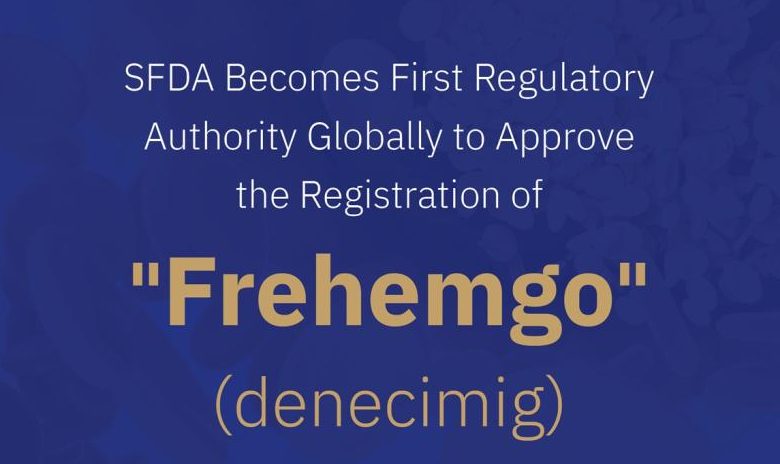
The Saudi Food and Drug Authority (SFDA) has become the first regulatory body in the world to approve Frehemgo (denecimig) for the routine prevention of bleeding episodes in patients with haemophilia A, including those with or without factor VIII (FVIII) inhibitors.
Understanding Haemophilia A
Haemophilia A is an inherited disorder that disrupts the body’s ability to control bleeding. Caused by a deficiency or absence of FVIII, a protein central to normal blood clotting, the condition can expose those patients who face an increased risk of recurrent bleeding episodes.
The SFDA’s approval makes it the first regulatory authority globally to register Frehemgo, following the treatment’s designation under the Breakthrough Medicines Program.
The move reinforces Saudi Arabia’s broader push to accelerate and streamline access to specialized treatments for patients across the Kingdom.
How Does Frehemgo Work?
Through its bispecific-antibody mechanism, Frehemgo hinges on a targeted approach to bleeding prevention. By mimicking the function of activated factor VIII, it brings coagulation factors IXa (FIXa) and X (FX) together on activated platelets. This unity promotes thrombin generation and supports the body’s clotting process.
Crucially, this mechanism operates independently of the presence or absence of factor VIII inhibitors.
To offer greater flexibility, Frehemgo is administered as a subcutaneous injection once a week, every two weeks, or once a month, depending on the patient’s body weight and the physician’s assessment.
Inside the Clinical Evidence
Before securing approval, the SFDA conducted a comprehensive review of Frehemgo’s efficacy, safety, and quality, assessing the full body of evidence submitted as part of its registration dossier.
Clinical trials further enriched Frehemgo’s profile, with denecimig’s efficacy and safety evaluated across four Phase 3 studies involving participants with all severities of haemophilia A, both with and without FVIII inhibitors.
The studies featured adult and adolescent participants, paediatric patients, an all-age open-label extension, and an adult and adolescent safety study involving participants who switched from emicizumab.
What Does the Safety Profile Show?
More significantly, the clinical evidence casted a wider lens on Frehemgo’s safety profile. Among the most commonly reported adverse reactions were injection-site reactions, including erythema and pruritus, as well as pyrexia, headache, and upper respiratory tract infections.
Researchers also observed increases in laboratory markers associated with coagulation activation such as prothrombin fragment 1+2 and D-dimer.
Related Topics:
Global Milestone: Saudi SFDA Becomes First to Approve ZENBEXUS for Myeloma Patients
Foundaio: SFDA Opens the Door to Next-Generation Obesity Treatment
Saudia Cargo, SFDA Partner to Streamline Medical Supply Chains