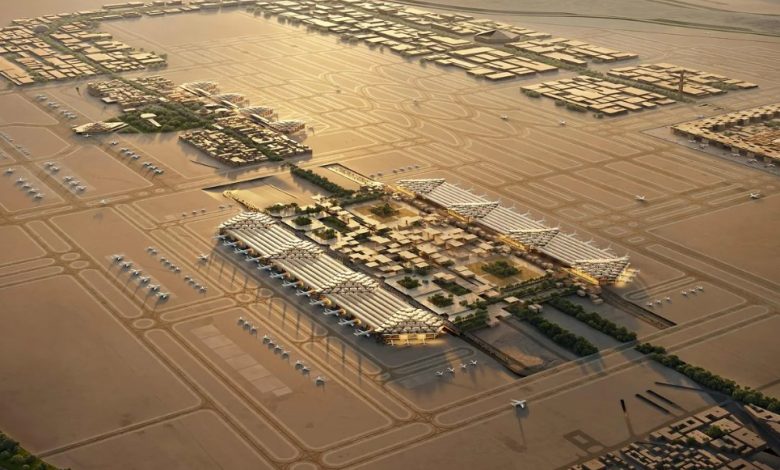
Saudi Arabia’s King Salman International Airport (KSIA), currently under construction in Riyadh, is set to position the Kingdom as a leading global logistics hub and an aviation powerhouse.
Why It Matters: Given Saudi Arabia’s unique geographic location, KSIA is set to connect three continents (Asia, Europe and Africa), positioning Riyadh as a global hub as well as driving economic growth and strengthening the Kingdom’s logistics sector under Vision 2030.
By The Numbers:
- KSIA spans a total area of 57 square kilometers, located to the North of Riyadh as an expansion of the existing King Khalid International Airport (KKIA).
- In its initial phase, KSIA aims to handle 120 million passengers per year by 2030.
- It targets an annual capacity of 185 million passengers by 20250.
- It aims to process 3.5 million tons of cargo annually by 2050.
Context: Once completed, the airport’s capacity will exceed the current annual passenger volumes of today’s busiest global hubs, including Atlanta and Dubai, combined, according to Simple Flying.
The Details: The new airport will feature six parallel runways and airport support facilities, in addition to residential and recreational facilities, and retail outlets.
It is also targeting LEED Platinum certification – the US Green Building Council’s highest designation – by incorporating cutting edge green initiatives into its design and utilizing renewable energy.
At #KSIA, we shaped a master plan that looks at the full journey, from a clear vision to a defined design direction. pic.twitter.com/6pm30qVAxj
— King Salman International Airport (@KSIA) December 23, 2025
The Impact: On the economic front, the new airport is expected to contribute SAR 27 billion annually to non-oil GDP and to create 103,000 direct and indirect jobs once fully operational.
The Bottom Line: KSIA’s commercial zones and advanced logistics facilities will support regional growth and strengthen the Kingdom’s position as a global hub for tourism, business, and investment.